
电池数字护照

Search documents
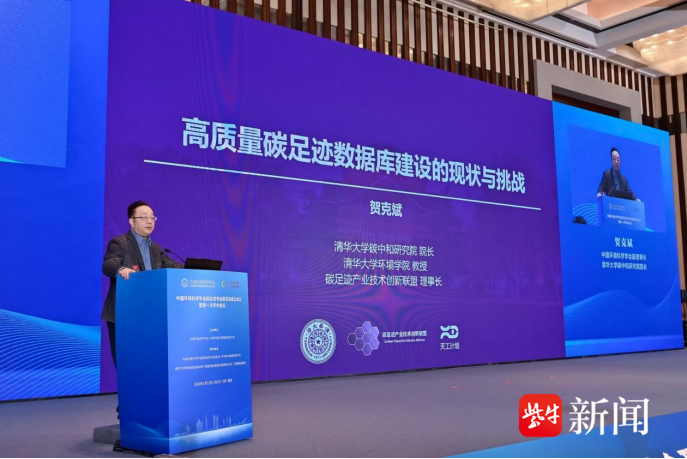
碳足迹管理成产业转型“必修课”,南京玄武区先行探路“绿色新赛道”
Yang Zi Wan Bao Wang· 2026-02-05 10:06
Group 1 - The establishment of the Carbon Footprint Professional Committee by the Chinese Society for Environmental Sciences aims to explore low-carbon transformation and cultivate green competitiveness under the "dual carbon" goals [1] - Carbon footprint management is transitioning from a single accounting tool to an institutionalized management system, which is essential for promoting pollution reduction and industrial green transformation [3] - The introduction of the EU's new battery law, effective from August 2023, mandates that all battery products entering the market must include a digital product passport (DPP) detailing carbon footprints and supply chain due diligence [3] Group 2 - Jiangsu Province is proactively developing a public service platform for product carbon footprints, which is expected to be officially launched by the end of 2024, with over a thousand companies already registered [5] - The "Tiangong Database," launched in November 2023, is China's first open and transparent lifecycle unit process database, containing over 70,000 publicly available data points across 55 industries [6] - The collaboration between the Jiangsu government and the British Standards Institution (BSI) aims to establish a Carbon Neutrality Innovation Research Center in Nanjing, focusing on developing low-carbon technologies and standards suitable for China [7]

“无中生有”数据产业如何成长?——解码南京玄武区数据产业生态跃迁之路
Xin Hua Cai Jing· 2025-06-05 06:58
Core Insights - The article highlights the transformation of Nanjing's Xuanwu District into a key hub for data element circulation in the Yangtze River Delta, driven by the shift from traditional growth models to a focus on data as a new production factor [1][3][4]. Group 1: Data Economy Development - Xuanwu District has embraced data as a new "land" to overcome limitations posed by land scarcity and slow growth in traditional commerce and services [3][4]. - The establishment of the Jiangsu Data Exchange and various data-related initiatives, such as the first battery digital passport innovation center and a compliance data cross-border service platform, marks significant progress in the region's data economy [1][4][5]. - The district's proactive approach to data cross-border services positions it as a leader in the national data element reform landscape, despite not being part of the initial pilot areas [4][5]. Group 2: Integration of Data and Industry - The integration of data elements with Jiangsu's manufacturing capabilities is crucial for fostering new productive forces, as evidenced by the establishment of national industry clouds in the district [5][8]. - The Xuanwu Big Model Factory has attracted numerous AI companies, facilitating collaboration between traditional manufacturing and advanced data technologies, thus driving digital transformation in the manufacturing sector [9][10]. - The district's initiatives, such as the development of a digital passport for batteries, enhance the competitiveness of local industries in international markets by ensuring traceability and compliance with new regulations [9][10]. Group 3: Institutional Innovation and Ecosystem Building - Xuanwu District is actively exploring legal frameworks and institutional innovations to support data asset rights, compliance transactions, and data security governance [13][14]. - The establishment of a data quality assessment base and a data element legal service laboratory reflects the district's commitment to creating a robust ecosystem for data transactions [13][14]. - The district's shift from a land-centric to a data-centric development model signifies a broader transformation in governance and economic strategy, emphasizing the importance of data in urban development [14][15]. Group 4: Future Prospects and Strategic Vision - The article suggests that the future of urban development will increasingly rely on the richness of data ecosystems rather than physical space, positioning Xuanwu District as a model for other cities facing similar challenges [17]. - The district's experience illustrates that data elements can serve as a catalyst for traditional industries to evolve, highlighting the need for continuous exploration and innovation in the digital economy [17].