皮雕文创产品

Search documents
非遗文创成畅销新春礼物
Xin Lang Cai Jing· 2026-02-18 19:17
Core Insights - The article highlights the vibrant cultural activities taking place in the Xilin Gol Grassland during the Spring Festival, particularly focusing on the "Intangible Cultural Heritage" (ICH) workshops in Sunite Right Banner, which attract visitors and promote traditional crafts [1][2]. Group 1: Cultural Activities - The "Non-Heritage New Year" series of events features 33 ICH techniques and 10 specialty workshops, showcasing traditional crafts such as leather carving, felt embroidery, and bone carving [1]. - The atmosphere in the cultural park is lively, with artisans demonstrating their skills and creating festive decorations that embody cultural significance [1]. Group 2: Artisan Contributions - Artisan Baoran, who returned to his hometown after university, has modernized traditional leather carving by creating contemporary cultural products that are popular among locals and tourists [2]. - The felt embroidery workshop, led by artisan Chana, produces vibrant custom products that appeal to younger generations, utilizing online platforms to reach a wider audience [2]. Group 3: Educational and Economic Impact - The integration of "ICH + Education + Cultural Tourism" has revitalized over 30 ICH techniques, transforming them into experiential and consumable cultural products, thus fostering both cultural transmission and economic benefits [2]. - The cultural park has successfully trained over 300 young inheritors, ensuring the continuation of these traditional crafts while generating significant income during the festive season [2]. Group 4: Institutional Support - The cultural center's director, Barisihote, emphasizes the importance of developing ICH through immersive experiences, creating a comprehensive system for research, production, and sales to ensure the sustainability of these cultural practices [3]. - The ICH workshops have become vital platforms for promoting traditional Chinese culture, enhancing cultural tourism, and improving local residents' livelihoods [3].
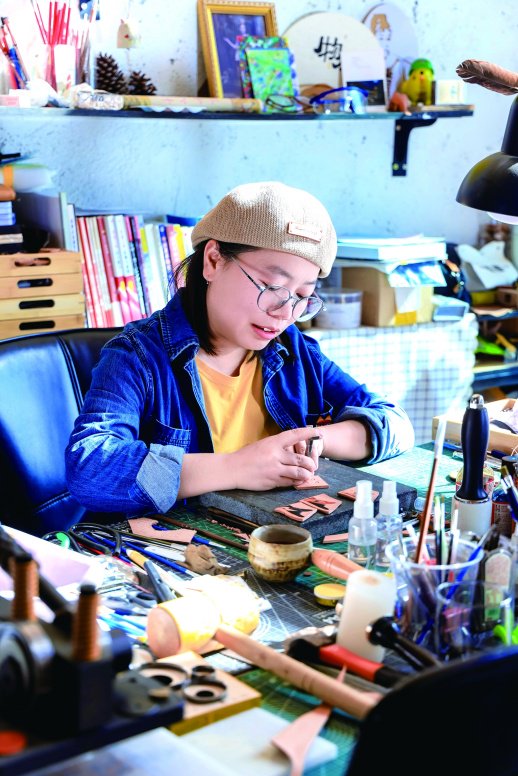
以刀为笔的“90后”女孩:让皮雕文创走进日常生活
Xin Lang Cai Jing· 2026-01-14 19:42
Core Insights - The article highlights the journey of a young artisan, Zhou Rong, who has revitalized traditional leather carving techniques by integrating modern design elements and innovative marketing strategies [2][3]. Group 1: Background and Motivation - Zhou Rong, a post-90s artisan, discovered leather carving during a trip in 2015 and became passionate about the craft, leading her to learn the intricate techniques involved [2]. - In 2016, she returned to her hometown in Hunan to pursue her passion, despite the lack of job opportunities related to leather carving, prompting her to create her own platform to promote the craft [2]. Group 2: Entrepreneurial Journey - In 2019, Zhou Rong began her entrepreneurial journey, focusing on promoting leather carving by developing modern cultural products that resonate with contemporary lifestyles [3]. - She created a range of products, including decorative paintings, practical wallets, and customizable leather pendants, blending artistry with functionality to make leather carving more accessible [3]. Group 3: Marketing and Future Plans - Zhou Rong utilized social media to showcase her crafting process, which helped her gain recognition and build a following [3]. - With support from local policies for youth entrepreneurship and cultural heritage, she plans to further promote leather carving through innovative product development and both online and offline engagement strategies [3].

(活力中国调研行)探访额尔古纳故事:绿色为基底 文化做画笔
Zhong Guo Xin Wen Wang· 2025-08-30 06:59
Core Insights - The article highlights the unique ecological and cultural landscape of Eerguna, Inner Mongolia, emphasizing its natural beauty and the local efforts to promote cultural heritage through creative industries [1][3]. Group 1: Ecological and Cultural Landscape - Eerguna boasts 2.09 million hectares of forest land, 366,800 hectares of grassland, and is home to "Asia's largest wetland" along with 85 river basins, showcasing its rich ecological foundation [1]. - The region's unique climate and pristine ecology have fostered rare herbal plants, which local artisans are utilizing to create distinctive fragrances that reflect the essence of Eerguna [3][4]. Group 2: Local Artisans and Creative Industries - Local perfumer Li Furong has developed over a hundred fragrances using more than 300 natural scents collected from the region, with her "Eerguna River Right Bank" series being particularly popular [4][6]. - The seasonal fragrance line, inspired by the local environment, has become a bestseller among tourists, illustrating the successful integration of local culture into product offerings [6]. - Artisan Su Lide is preserving local heritage through leather carving, creating unique designs that reflect the cultural identity of Eerguna [6]. Group 3: Tourism and Economic Growth - Eerguna's tourism sector is thriving, with 4.1394 million visitors in 2024, marking an 18.45% increase year-on-year, and total tourist spending reaching 9.456 billion yuan, up 16.87% [8]. - The local creative industry aims to encapsulate the natural beauty and cultural history of Eerguna, enhancing the region's appeal to visitors and fostering economic vitality [8].