盖博特Galbot G1

Search documents
再融25亿元!国内具身智能赛道“头号玩家”诞生
Robot猎场备忘录· 2026-03-02 08:43
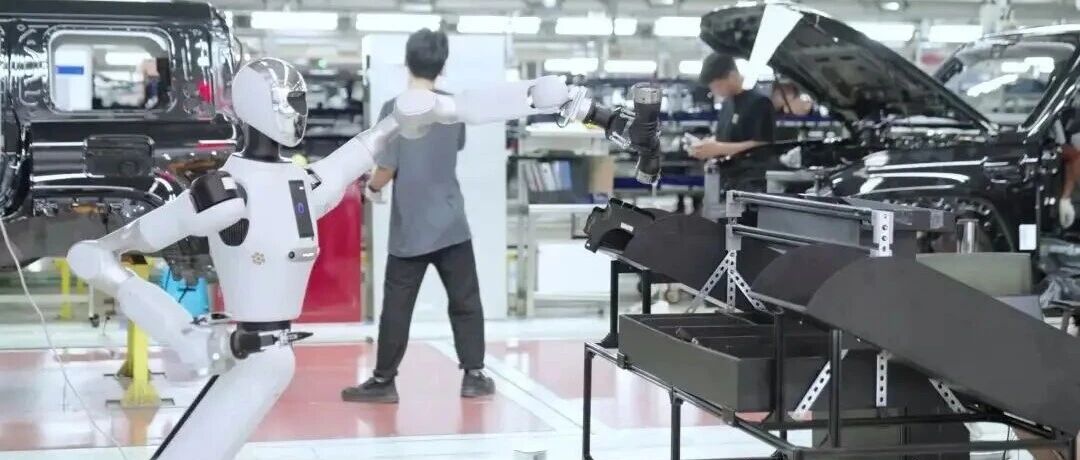
Core Viewpoint - The article highlights the recent completion of a 2.5 billion yuan financing round by Beijing Galaxy General Robotics Co., Ltd., setting a record for single-round financing in the field of embodied intelligence, and emphasizes the company's leading position in the humanoid robot sector in China [2][4]. Financing and Investment - Galaxy General has completed a total of over 7 billion yuan in five rounds of financing, maintaining its status as the highest-valued unlisted company in the humanoid robot sector in China [4]. - The latest financing round attracted several prominent investors, including the National Artificial Intelligence Industry Investment Fund and China Petroleum, marking the first investment by a national fund in an embodied intelligence enterprise [2][4]. - Following the previous financing round, the company's valuation reached 3 billion USD (approximately 21.13 billion yuan), solidifying its top position in the domestic embodied intelligence robot industry [5]. Company Developments - Galaxy General has undergone a share reform and is preparing for a potential IPO in Hong Kong, with plans to submit an application as early as the first quarter of next year, aiming for a valuation between 3 to 4 billion USD [5]. - The company has established partnerships with major industry players such as CATL, Bosch, and Toyota, achieving significant orders in the industrial manufacturing sector [20]. Technological Advancements - Galaxy General has developed a comprehensive technology stack, including the Galbot G1 and Galbot S1 robots, which are designed for various applications in industrial manufacturing and service sectors [10][12]. - The company has introduced several innovative models, such as the TrackVLA for navigation and the GraspVLA for grasping tasks, showcasing advancements in AI and robotics [15][16]. Commercialization Efforts - The company has successfully implemented its humanoid robots in multiple sectors, including industrial manufacturing, smart city services, and healthcare, with thousands of units already deployed [19][24]. - The Galaxy Space Capsule, a fully autonomous service robot, has been launched in over 100 locations across 20 cities, demonstrating the commercial viability of embodied intelligence in consumer settings [22]. Industry Context - The article discusses the competitive landscape of the humanoid robot industry, noting that many companies are rushing to IPO without having established significant technological barriers, which could lead to unsustainable business practices [7][28]. - It emphasizes the importance of strong AI capabilities and the integration of hardware and software in achieving commercial success in the humanoid robot market [28].

「银河通用」创始人王鹤:人形机器人跳舞是预先编程,马拉松是遥控操作!
Robot猎场备忘录· 2025-05-05 07:19
Core Viewpoint - The speech by Wang He emphasizes that humanoid robots are transitioning from a "performance era" to a "productivity era," highlighting the need for improved coordination of vision, hands, and brain to enhance their capabilities in various industries [4][9][10]. Group 1: Industry Overview - The humanoid robot sector in China is led by companies like Beijing Galaxy General Robotics, which has raised over 1.2 billion yuan and is positioned in the top tier of the industry [2]. - The first humanoid robot from Galaxy General, Galbot G1, is set to be released on June 14, 2024, showcasing the company's commitment to advancing humanoid robotics [2]. Group 2: Technological Insights - Current humanoid robots can perform tasks like dancing and running, but these actions often rely on remote control and pre-programmed sequences, lacking true autonomous capabilities [4][7]. - Wang He identifies four key capabilities for humanoid robots to be truly functional: mobility, operational ability, semantic understanding, and value intelligence [5]. Group 3: Market Dynamics - The industry is experiencing a "performance showcase" cycle, where companies focus on impressive demonstrations rather than practical applications, leading to a disconnect between showcased abilities and real-world utility [9][10]. - Major companies like Boston Dynamics have pointed out that while industrial robots are mature and commercialized, humanoid robots are still seen as more of a spectacle than a productivity tool [9]. Group 4: Future Prospects - The transition to a productivity era for humanoid robots hinges on developing real-time visual input and closed-loop feedback systems, which are essential for enhancing their operational capabilities [9][10]. - Companies are exploring various applications, such as the collaboration between Galaxy General and Meituan to create a 24-hour unmanned pharmacy solution using Galbot [12]. Group 5: Challenges and Opportunities - Despite significant investment and interest in humanoid robotics, many startups are still in the early stages of development, focusing on educational and research applications rather than industrial use [11][18]. - The market is expected to see a surge in deliveries of humanoid robots by 2025, but the actual effectiveness of these products remains to be seen, raising questions about the sustainability of the market [18].