硅钙基调理剂

Search documents
治酸固良田 八桂保粮安
Guang Xi Ri Bao· 2025-12-09 02:55
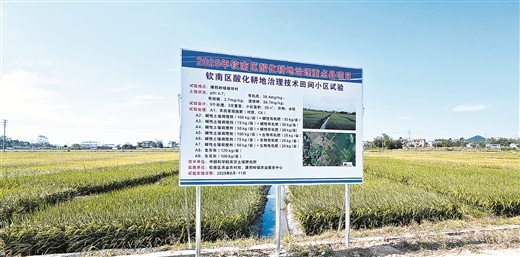
Core Viewpoint - Soil acidification poses a significant threat to agricultural productivity and food security in Guangxi, necessitating urgent and systematic remediation efforts [3][4][5]. Group 1: Current Situation and Challenges - Guangxi is a crucial agricultural base in China, producing significant amounts of grain, sugar, fruits, vegetables, and oil [3]. - Soil acidification in Guangxi has accelerated dramatically, with over 31.93 million acres of farmland having a pH below 5.5, representing more than 60% of the total arable land, an increase of 42.5 percentage points since the 1980s [3]. - The consequences of soil acidification include reduced soil fertility, increased heavy metal activity, and decreased microbial diversity, leading to crop yield reductions of over 20% in severely acidic areas [3]. Group 2: Government Initiatives and Funding - The central government has prioritized the remediation of acidic farmland, launching key county projects in 2023 and further emphasizing this in the 2025 Central No. 1 Document [3][5]. - Each key county receives an annual subsidy of 10 million yuan from the central government, focusing on areas with severe soil acidification [5]. Group 3: Implementation and Results - From 2020 to 2022, Guangxi allocated 62.21 million yuan for remediation projects across 50 counties, achieving an average pH increase of 0.22 units and an average rice yield increase of 29.6 kg per acre [4]. - In 2023, Jin Chengjiang District became the only key county in Guangxi, completing remediation on 173,000 acres and achieving an average pH increase of 0.31 units, with rice yields increasing by 40 kg per acre [5]. Group 4: Technological Support and Collaboration - The region has established partnerships with various agricultural universities and research institutes to create a multidisciplinary expert team for soil remediation [7][8]. - Eight tailored remediation techniques have been developed for different soil types and cropping structures, enhancing the effectiveness of the remediation efforts [8]. Group 5: Long-term Strategy and Planning - Guangxi has drafted a ten-year work plan for soil acidification remediation (2026-2035), identifying four key areas for targeted intervention and outlining specific strategies and goals [9]. - The plan includes the establishment of a digital platform for soil data analysis to support decision-making in remediation efforts [9]. Group 6: Community Impact and Economic Benefits - The remediation efforts have not only increased crop yields but also enhanced local tourism, as seen in Jin Chengjiang District, where improved agricultural practices have led to increased income for farmers [5][10]. - The economic benefits include reduced fertilizer costs and increased net income for farmers, with rice and sugarcane yields significantly improving post-remediation [5].