
藏粮于地

Search documents
构建高效精准金融服务体系 为粮食安全保驾护航
Jin Rong Shi Bao· 2026-02-26 05:02
Core Viewpoint - The upcoming National People's Congress in 2026 will focus on "food security," emphasizing the need for a sustainable financial support system to enhance food production efficiency amid limited arable land and changing labor structures [1][2] Group 1: Financial Support for Food Security - Financial backing is crucial for implementing the national food security strategy and strengthening food production capacity, requiring stable funding through policy loans and diversified financing [2] - A clear and efficient financial security system for food safety has begun to take shape, supported by structural monetary policy tools and significant credit investments from major financial institutions [1][2] Group 2: Agricultural Land Protection and Management - China aims to protect 1.865 billion acres of arable land and 1.546 billion acres of permanent basic farmland by 2025, with a focus on high-standard farmland construction [3] - There is a growing concern regarding the funding gap for the management of high-standard farmland, necessitating innovative financial products and services [4] Group 3: Mechanisms for Agricultural Machinery and Labor - The shortage of agricultural machinery operators due to an aging workforce poses a challenge to food production efficiency, highlighting the need for financial support that extends beyond machinery purchase to include training and operational services [5] - Financial institutions are encouraged to develop specialized products to support agricultural service centers and integrate machinery operation data into credit evaluation systems [5] Group 4: Comprehensive Financial Support for the Agricultural Industry - A complete financial chain covering research, production, and storage is essential for enhancing agricultural productivity, with a focus on connecting financial resources to the entire agricultural value chain [6][7] - Innovative financing models, such as long-term R&D loans for seed companies and the establishment of a national seed industry innovation fund, are being explored to support agricultural technology advancements [7] Group 5: Market-Oriented Grain Storage and Trade - The deepening of market-oriented reforms in grain storage requires flexible financial support to ensure fair financing opportunities for small and medium-sized grain processing enterprises [8] - The integration of digital storage facilities with financing solutions aims to create a comprehensive financial ecosystem that supports the entire grain production and trade process [8] Group 6: Risk Management and Income Protection for Farmers - Protecting the income of grain farmers is essential for sustaining food production, necessitating a robust risk management system that goes beyond basic cost coverage to include income and sustainability [9] - Future initiatives will focus on enhancing agricultural risk management capabilities and integrating ecological considerations into insurance coverage [9] Group 7: Financial Ecosystem for Food Security - The role of finance is evolving from merely providing capital to becoming a vital component in activating all elements of food production and connecting the entire industry chain [10] - The challenge ahead is to create a dynamic and secure financial ecosystem that effectively supports the integration of quality land, seeds, machinery, and methods in food production [10]
广东省加快建设农业强省 农民收入增速连续16年跑赢城镇居民
Zhong Guo Fa Zhan Wang· 2026-02-24 09:39
Group 1: Agricultural Development in Guangdong - Guangdong has implemented the "Hundred Counties, Thousand Towns, and Ten Thousand Villages High-Quality Development Project" to achieve significant agricultural growth, with the primary industry value ranking second nationally and rural incomes outpacing urban residents for 16 consecutive years [1] - The agricultural output value of five major industries in Qingyuan has increased by 15.1%, with Qingyuan chicken, bamboo shoots, and Yingde black tea each exceeding 10 billion yuan in output value [1] - The province has created 12 national advantageous characteristic industrial clusters and 24 national modern agricultural parks, focusing on cultivating agricultural industry clusters worth hundreds of billions and tens of billions [6] Group 2: Food Security and Grain Production - Guangdong has achieved record-high grain yields, with rice production exceeding 500 kg per mu for four consecutive years, contributing to local food security [2][3] - The province's comprehensive grain production capacity has increased from 12.38 million tons in 2021 to 12.98 million tons by 2025, marking a continuous increase in grain output [3] - Guangdong is enhancing its food supply system by developing marine ranches and modernizing fishing ports, leading the nation in total aquatic product output and marine fish farming [3] Group 3: Rural Infrastructure and Living Conditions - Guangdong has made significant improvements in rural living conditions, with 90% of natural villages achieving wastewater treatment and 97% of rural households having sanitary toilets [8][9] - The province has constructed or renovated approximately 46,000 green houses and planted over 42 million trees in villages, enhancing the rural environment [9] - Rural infrastructure has been upgraded, with 99.3% of rural areas having access to tap water and 83.5% of administrative villages connected to dual-lane roads [9] Group 4: Rural Industry and Employment - The development of the Baijiao sea bass industry in Zhuhai has created an agricultural value chain worth over 18 billion yuan, benefiting over 2,000 farming households [5] - The cultivation of lychee in Guangdong has reached the highest area, output, and value in the country, contributing to the growth of the Lingnan fruit industry cluster [7] - The "Meizhou pomelo" brand has achieved a public brand value of 22.75 billion yuan, showcasing the successful establishment of a complete industrial chain for local agricultural products [6][7]
锚定农业农村现代化 加快建设农业强省 广东农民收入增速连续16年跑赢城镇居民
Nan Fang Ri Bao Wang Luo Ban· 2026-02-09 01:35
Core Insights - The news highlights the significant achievements in agricultural development in Guangdong, particularly in the context of rural revitalization and food security initiatives. Group 1: Agricultural Achievements - The agricultural industry in Qingyuan has seen a 15.1% growth in the total output value of five major agricultural chains, with key products like Qingyuan chicken, bamboo shoots, and Yingde black tea each exceeding 10 billion yuan in output value [1] - Yingde black tea has been recognized as the top regional public brand value in the black tea category nationwide [1] - The implementation of the "Hundred Counties, Thousand Towns, and Ten Thousand Villages High-Quality Development Project" has led to significant improvements in rural income, with rural income growth outpacing urban residents for 16 consecutive years [1] Group 2: Food Security Initiatives - The Central Government's emphasis on food security is reiterated, with Guangdong focusing on both land and technology to ensure food supply [2] - Guangdong has achieved a record high in grain yield per unit area, with rice production exceeding 500 kg per mu for four consecutive years, surpassing the national average [2][3] - The province's comprehensive grain production capacity is projected to increase from 12.38 million tons in 2021 to 12.977 million tons by 2025 [3] Group 3: Rural Infrastructure and Living Conditions - Guangdong has made significant strides in improving rural living conditions, with 90% of natural villages achieving wastewater treatment and 97% of rural households having access to sanitary toilets [10] - The province has constructed or renovated approximately 46,000 green rural houses and planted over 42 million trees in villages [9][10] - The establishment of a digital management platform for rural collective assets has led to a total rural collective asset value of 1.35 trillion yuan, the highest in the country [10] Group 4: Development of Specialty Industries - The development of the Baijiao sea bass industry in Zhuhai has created an agricultural specialty industry with an output value exceeding 18 billion yuan, benefiting over 5,000 households [6] - The Mei County pomelo industry has formed a complete industrial chain, with the regional public brand value reaching 22.75 billion yuan [7] - The cultivation of lychee in Guangdong has positioned the province as the national leader in terms of planting area, output, and value [7]
深度关注丨精准监督守护“国之大者”
Zhong Yang Ji Wei Guo Jia Jian Wei Wang Zhan· 2026-02-04 00:48
Core Viewpoint - Food security is a national priority, with significant emphasis on political supervision to ensure effective implementation of policies and practices related to grain production and storage [2][3][15]. Group 1: Food Production and Security - In 2025, China's grain production reached a historical high of 14,298 billion jin, an increase of 168 billion jin from the previous year, maintaining stability above 14 trillion jin for two consecutive years [2][4]. - The average grain availability per capita in China increased from 483 kg in 2021 to 500 kg in 2025, surpassing the international safety line of 400 kg [4]. - The central government has emphasized the importance of grain production, with a focus on the "responsibility system" for grain supply and the implementation of strategies to enhance agricultural productivity [4][5]. Group 2: Political Supervision and Accountability - The central disciplinary inspection and supervision agencies are intensifying efforts to monitor and rectify issues in grain production and high-standard farmland construction, ensuring compliance with national policies [5][6][9]. - Local governments, particularly in major grain-producing provinces like Heilongjiang and Anhui, are prioritizing political supervision in agricultural sectors to address corruption and inefficiencies [5][6][9]. - The establishment of a comprehensive supervision mechanism is crucial for addressing issues related to land use, agricultural subsidies, and grain storage [15][17]. Group 3: Technological Innovation in Agriculture - The contribution rate of agricultural technology to production is projected to exceed 64% by 2025, highlighting the shift towards innovation-driven agricultural practices [11][12]. - The promotion of high-quality seeds and advanced agricultural machinery is essential for enhancing productivity and ensuring food security [11][12]. - The integration of technology in agriculture, such as the use of smart grain storage systems, is improving transparency and efficiency in grain management [13].

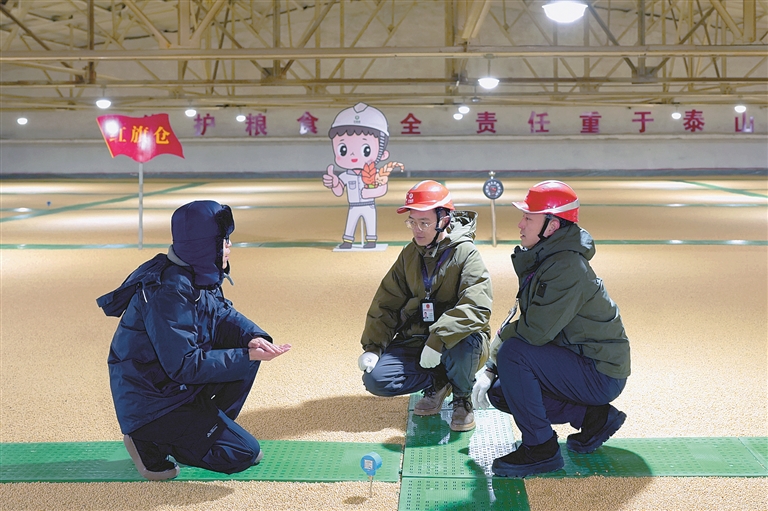
一以贯之推进乡村全面振兴
Xin Lang Cai Jing· 2026-02-03 22:56
Core Viewpoint - The 2026 Central No. 1 Document emphasizes the importance of ensuring national food security, consolidating poverty alleviation achievements, and enhancing rural industrial development, construction, and governance to support China's modernization efforts [1]. Group 1: Agricultural Production and Food Security - The document highlights the need to maintain a stable grain production target of over 1.4 trillion jin (approximately 700 million tons) for the third consecutive year, while continuously improving production capacity [2]. - Strategies such as "storing grain in the ground" and "storing grain in technology" are emphasized to enhance resilience in food production and disaster response capabilities [2]. - The focus on agricultural technology innovation includes expanding the application of drones, IoT, and robotics to improve efficiency in agricultural practices [2]. Group 2: Poverty Alleviation and Rural Development - The document identifies the consolidation of poverty alleviation results as a major political task, integrating it into the rural revitalization strategy with a stable policy framework for financial support and resource allocation [3]. - It stresses the importance of improving rural infrastructure and public services to enhance the living conditions of farmers, ensuring that rural areas can reflect the beauty of urban life [3]. - The approach to rural construction should be tailored to local conditions, with a focus on practical improvements in production and living conditions [3]. Group 3: Overall Strategy and Future Goals - The document outlines that 2026 marks the beginning of the 14th Five-Year Plan, making the work on "three rural issues" (agriculture, rural areas, and farmers) crucial for national development [1]. - It calls for a strategic commitment to advancing rural revitalization, ensuring that agricultural foundations are solid, rural areas are prosperous, and farmers' lives are improved [3].
朝着建设农业强国目标扎实迈进(政策解读·中央一号文件)
Ren Min Ri Bao· 2026-02-03 22:23
Core Viewpoint - The central government emphasizes the importance of addressing agricultural and rural issues as a priority, aiming for modernization in agriculture and improved living conditions for farmers by 2026 [3]. Group 1: Agricultural Production and Food Security - Grain production in China is expected to remain stable at around 1.4 trillion jin, with a focus on enhancing agricultural productivity and quality [4][5]. - The government aims to implement measures to increase grain yield, including optimizing agricultural production structures and improving crop quality [5][6]. - Strengthening disaster prevention and response capabilities is crucial for enhancing grain production capacity [6][7]. Group 2: Rural Development and Poverty Alleviation - The government stresses the need for continuous support to prevent large-scale poverty and ensure the sustainability of poverty alleviation efforts [9][10]. - A systematic approach to regularized assistance is proposed, focusing on maintaining financial support and optimizing existing policies to enhance effectiveness [9][10][11]. - The emphasis is placed on targeted assistance for different regions, particularly for underdeveloped areas, to ensure equitable development [11]. Group 3: Income Growth for Farmers - Increasing farmers' income is identified as a central task, with measures to broaden income channels and enhance agricultural productivity [13][14]. - The average disposable income for rural residents is projected to reach 24,456 yuan in 2025, reflecting a nominal growth of 5.8% [13]. - The government plans to support farmers through various income sources, including agricultural production, labor income, and local industries [14][15]. Group 4: Infrastructure and Rural Living Conditions - The government aims to improve rural infrastructure and public services, addressing issues such as transportation, water supply, and waste management [16][18]. - There is a focus on enhancing the quality of rural living environments and ensuring that development aligns with local needs and conditions [17][18]. - The initiative includes promoting cultural and social improvements in rural areas to foster a better quality of life [17][19].
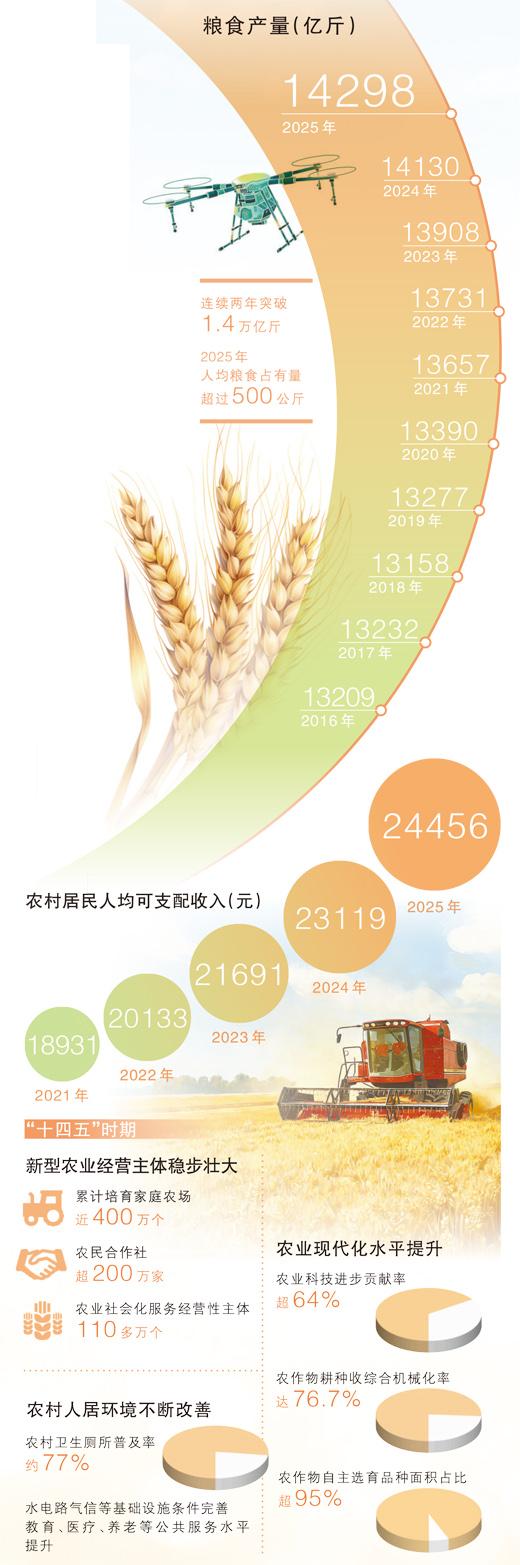
2026年中央一号文件:粮食产量稳定在1.4万亿斤左右
Zhong Guo Xin Wen Wang· 2026-02-03 13:15
Group 1 - The core objective of the 2026 Central Document is to stabilize grain production at approximately 1.4 trillion jin [1][2] - The document emphasizes enhancing agricultural comprehensive production capacity and quality efficiency, implementing a new round of actions to increase grain production capacity by 100 billion jin [1] - It highlights the importance of optimizing agricultural production structure and regional layout, promoting the cultivation of superior grain varieties and quality improvement [1] Group 2 - The document stresses the need to strengthen the agricultural disaster prevention and reduction system in response to increasingly frequent extreme weather events [2] - It promotes the diversification of agricultural product imports and supports the expansion of exports of advantageous and characteristic agricultural products [2] - The overall food security situation in China is expected to remain stable and improve, despite challenges such as resource environment issues, international trade protectionism, and extreme weather [2]
中央一号文件丨“十五五”首个中央一号文件!粮食产量稳定在1.4万亿斤左右
Xin Hua She· 2026-02-03 12:04
Group 1 - The core objective of the "Central Document No. 1" is to stabilize grain production at around 1.4 trillion jin, reflecting China's commitment to food security and agricultural stability [1][2] - The document emphasizes that food security is a top priority, especially in light of increasing demand and complex international conditions, necessitating continuous efforts in grain production [2] - The document outlines new initiatives to enhance agricultural productivity and quality, with a focus on improving grain yield through better varieties, technology, and management practices [3] Group 2 - The importance of arable land protection and quality improvement is highlighted, with a call for strict measures to safeguard farmland and enhance its quality [4] - Technological advancements are identified as crucial for increasing grain production, with current agricultural technology contributing over 64% to productivity and a mechanization rate of 76.7% for crop farming [4] - The document encourages the integration of agricultural technology into production practices, aiming to boost innovation and modernize agriculture [4]
新华鲜报·中央一号文件|“十五五”首个中央一号文件!粮食产量稳定在1.4万亿斤左右
Xin Hua She· 2026-02-03 11:47
Core Viewpoint - The central document emphasizes the importance of food security in China, setting a clear target of stabilizing grain production at around 1.4 trillion jin for the 14th Five-Year Plan period, reflecting the country's commitment to ensuring food safety and security [1][3]. Group 1: Food Security and Production Goals - The document highlights that food security is a top priority and a bottom line that must be maintained, especially as food demand continues to rise and supply-demand balance tightens [3]. - Despite achieving record grain production last year, challenges such as natural disasters and market fluctuations necessitate ongoing efforts to enhance food production [3]. - The new plan includes a significant initiative to increase grain production capacity by 100 billion jin, focusing on integrating high-quality land, seeds, machinery, and methods to boost yields [3][6]. Group 2: Agricultural Technology and Innovation - The document stresses the critical role of technology in increasing grain production, with a current agricultural technology contribution rate exceeding 64% and over 95% of crop varieties being independently bred [6]. - It calls for the acceleration of breakthrough variety breeding, expansion of applications for drones, IoT, and robotics, and the promotion of agricultural technology achievements at the grassroots level [6]. - The aim is to enhance agricultural modernization through technological advancements, ensuring that agricultural practices are efficient and effective [6]. Group 3: Land Protection and Quality Improvement - Emphasis is placed on the protection and quality improvement of arable land, which is deemed essential for food security [5]. - The document advocates for strict measures to safeguard farmland and promote high-standard farmland construction to ensure that agricultural land remains productive [5].
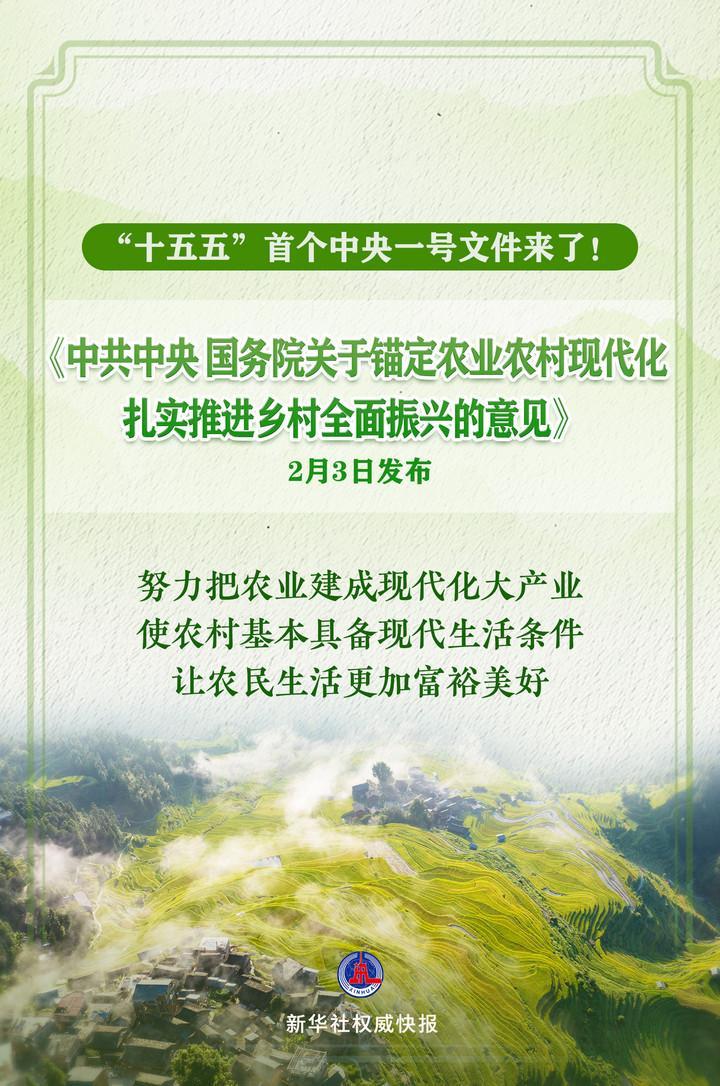
重点新闻简报 (2月2日)
Sou Hu Cai Jing· 2026-02-02 12:07
Group 1: Domestic News - Rural Revitalization - The primary task outlined in the document is to ensure national food security by focusing on the production of food and important agricultural products, implementing the strategy of "storing grain in the ground and storing grain in technology" [2] - The main line of action is to learn from the "Thousand Villages Demonstration, Ten Thousand Villages Rectification" project, transforming its concepts and methods into specific actions for promoting comprehensive rural revitalization, with a focus on enhancing rural industrial development, construction, and governance levels [2] - Key measures include strengthening the dual drivers of technology and reform, ensuring no large-scale return to poverty, enhancing rural ecological civilization, improving rural living environments, and promoting rural culture and urban-rural integration [2] Group 2: International Dynamics - Federal Reserve's Interest Rate Decision - The Federal Reserve announced that it would maintain the federal funds rate target range at 5.25% to 5.5%, aligning with market expectations [3] - The Fed's statement removed the wording "further tightening may be necessary," but emphasized that it is not appropriate to lower rates until there is greater confidence in inflation moving sustainably towards the 2% target [4] - Market reactions included a significant pullback in U.S. stock markets, particularly in technology stocks, a strengthening of the dollar index, and pressure on international gold prices, with expectations for the first rate cut being pushed from March to May or June [4]