
笔盒

Search documents
浦东美术馆卢浮宫特展:惊喜还是落差?
Jing Ji Guan Cha Bao· 2026-01-13 05:23
Core Viewpoint - The exhibition "The Wonders of Patterns" at the Louvre focuses on Islamic art from India, Iran, and the Ottoman Empire, offering a unique perspective that may differ from Western aesthetic expectations [1] Group 1: Exhibition Overview - The exhibition begins with the collection of King Louis XIV, showcasing art as a symbol of royal authority, featuring treasures from the Mughal and Ottoman empires [2] - It is divided into three main sections: Indian, Iranian, and Ottoman art, with a strong emphasis on geometric patterns and floral designs throughout [2][3] Group 2: Indian Art Section - The Indian section centers on the Mughal Empire, highlighting its innovative aesthetics that blend local, Persian, and European traditions [3] - Notable pieces include a dagger inlaid with rubies and emeralds, symbolizing the luxurious craftsmanship of the Mughal Empire [3] - A mother-of-pearl tray featuring floral designs exemplifies the intricate artistry and thematic connections to both Eastern and Western art [3] Group 3: Iranian Art Section - The Iranian section features a dreamy atmosphere with a focus on the influence of Chinese trade on Safavid ceramics, showcasing their unique adaptations of blue-and-white porcelain [4] - It explores the visual expressions of Shia religious ceremonies and includes significant historical portraits, such as that of Fath Ali Shah Qajar [4][5] Group 4: Ottoman Art Section - The Ottoman section emphasizes Arabic calligraphy and ceramic innovations, with luxurious art pieces that reflect the cultural exchanges from Damascus to Cairo [5] - It includes religious art treasures like a 16th-century Quran manuscript, showcasing the artistic contributions of the Ottoman Empire [5]
“图案的奇迹”卢浮宫大展开幕 汇聚约300件来自16至19世纪珍品
Di Yi Cai Jing· 2025-12-14 13:19
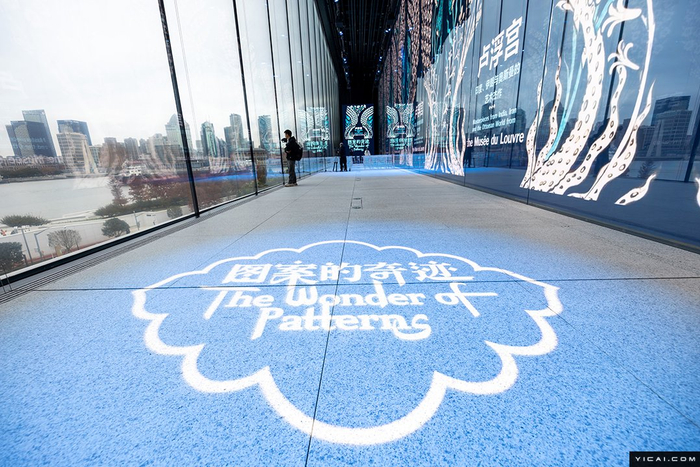
Core Insights - The exhibition "The Miracles of Patterns: Masterpieces of Indian, Iranian, and Ottoman Art from the Louvre" opened on December 13, 2025, at the Pudong Art Museum, marking the Louvre's debut in Shanghai. It features approximately 300 artifacts from the 16th to 19th centuries, showcasing a variety of mediums including ceramics, jewelry, jade, metalwork, carpets, calligraphy, painting, and sculpture, offering an immersive experience that highlights the cultural convergence of Asia, Africa, and Europe [2] Group 1 - The exhibition design emphasizes luxury and intricacy, with the Indian section characterized by soft reddish tones reminiscent of local sandstone, featuring items like a brass and silver armillary sphere that illustrate the Indian style from the 16th to 19th centuries [6] - The Iranian section transitions from warm red to deep blue-purple tones, showcasing the Safavid dynasty's influence, where increased trade and mass production significantly boosted artistic creation [12] - The Ottoman section is presented in deep navy blue, featuring artifacts such as a Turkish hanging lamp from around 1510, reflecting the empire's aesthetic trends [15] Group 2 - The exhibition includes a segment titled "From Damascus to Cairo," which features traditional wooden lattice windows and geometric patterned wooden doors, showcasing local traditions while also reflecting new aesthetic trends in the Ottoman Empire [19][20]

通讯|“天才妈妈友谊工坊”为老挝妇女带来发展新机遇
Xin Hua Wang· 2025-10-24 01:32
Core Insights - The "Genius Mom Friendship Workshop" in Vientiane, Laos, aims to enhance the skills and employment opportunities for Laotian women through training programs that incorporate Chinese experiences and techniques [1][2]. Group 1: Project Overview - The project is a collaboration between the China Women's Development Foundation and the Laos Women's Training Center, focusing on skill enhancement and income generation for Laotian women [1]. - Training sessions cover traditional crafts such as bamboo and rattan weaving, with a comprehensive curriculum from material selection to product creation [1]. Group 2: Training Impact - Participants learned to create practical items like bamboo trays and tissue boxes, with a focus on quality and durability [2]. - Trainees expressed intentions to share their newly acquired skills with other women in their communities, promoting skill development and income generation [2]. Group 3: Long-term Development - The project includes a long-term vision for cultural exchange and collaboration, with upgrades to the craft exhibition hall in Vientiane to better showcase products and cultural elements from both China and Laos [2][3]. - The workshop serves as a platform for women to exchange experiences and promote their work, contributing to community development [2].