第二代脑机接口产品

Search documents
北京脑科学与类脑研究所所长、神经生物学家罗敏敏:建议建立侵入式脑机接口技术高标准监管体系
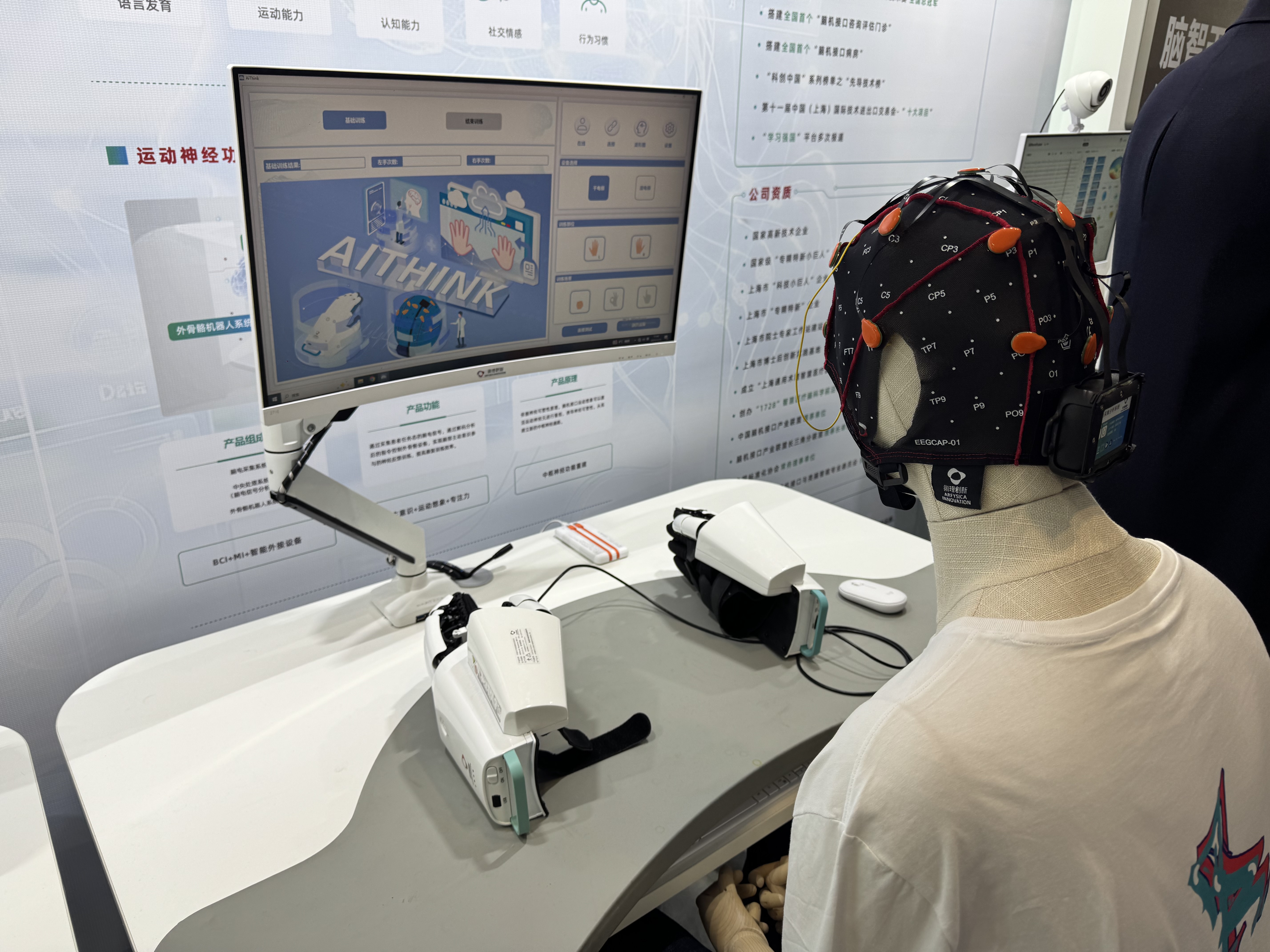
Zheng Quan Ri Bao· 2026-01-28 16:11
Core Insights - Brain-computer interface (BCI) technology has emerged as a focal point in global technological competition, with significant investments and policy support driving its development [1][2] - Zhejiang Qiangnao Technology Co., Ltd. completed a C-round financing of approximately 2 billion yuan, marking the second-largest single financing record in the BCI sector globally, excluding Neuralink [1] - The Chinese government is actively promoting BCI technology through various policies aimed at fostering innovation and addressing key technological challenges [2][3] Industry Development - There is a recognized gap between China's BCI technology and that of other countries in areas such as theoretical principles, technical accumulation, system integration, and clinical applications, but this gap is narrowing [2] - The Chinese government has outlined plans to advance BCI technology as part of its economic growth strategy, with specific goals set for 2027 to achieve significant breakthroughs in core technologies [2][3] Technological Challenges - Key challenges in the BCI industry include the need for self-optimized core chips, continuous iteration in system integration, and the development of high-performance algorithms to meet real-time decoding demands [3] - The number of channels in BCI devices directly impacts the amount of information that can be processed, with advancements in channel numbers leading to improved control and efficiency [3] Product Development - The "North Brain No. 2" prototype has been developed with 512 channels and is undergoing rapid iteration, with plans for clinical validation in 2026 [3] - The development of a 1024-channel BCI device is also underway, showcasing the potential for significant advancements in performance [3] Market Potential - The BCI sector is viewed as both a medical and technological investment opportunity, with the potential to unlock a market space worth trillions if integrated with AI and robotics [3] Regulatory Considerations - There is a call for establishing high standards and strict regulatory frameworks for invasive BCI technologies to ensure safety and efficacy before widespread adoption [4] Broader Applications - BCI technology is part of a larger field of brain science, which also shows promise in treating mental health conditions such as depression, with recent breakthroughs in understanding the mechanisms of treatment [5][6] - The development of non-drug therapies and advanced treatment methods for depression is being explored, indicating a multifaceted approach to mental health care [5][6] Entrepreneurial Landscape - The intersection of scientific research and entrepreneurship is highlighted, with successful transitions from laboratory research to market applications being emphasized [7][8] - Capital investment is deemed crucial for the advancement of BCI technology, with a call for sustained support from investors [7]
市场最前沿|加速“接入”现实!脑机接口迈入产业化快车道
Xin Hua She· 2025-12-23 09:53
Core Insights - The article discusses the rapid advancement and industrialization of brain-computer interface (BCI) technology in China, highlighting significant clinical trial results and the establishment of a supportive policy framework [1][5]. Group 1: Technological Advancements - The second clinical trial of an invasive brain-computer interface has successfully enabled high-level paraplegic patients to control devices using their thoughts, marking a shift from 2D screen control to 3D physical interactions [1]. - In December, a second-generation BCI product was launched, increasing the number of signal channels from 64 to 256, resulting in a 60% improvement in interaction efficiency [2]. - Breakthroughs in core components and decoding algorithms have been achieved, with advancements in BCI chips and implantable electrodes, leading to increased stability and performance [2]. Group 2: Application Scenarios - BCI technology is being applied in various medical scenarios, including rehabilitation for spinal cord injury and stroke patients, with dozens of clinical cases reported [3]. - Non-invasive BCIs are being developed for consumer and industrial applications, with devices already in mass production for fatigue monitoring, emotion recognition, and smart driving [3]. Group 3: Policy and Industry Support - The establishment of the "Brain Intelligence World" industrial cluster in Shanghai aims to foster collaboration among nearly 20 teams and companies, with an initial investment of 1.2 billion yuan [4]. - A joint initiative by seven government departments aims to enhance BCI innovation capabilities by 2030, with new pricing projects and medical device standards being introduced [5]. - The BCI market in China is expected to exceed 3.8 billion yuan by 2025, with over 200 companies currently operating in the sector [5]. Group 4: Future Outlook - The "14th Five-Year Plan" emphasizes the importance of BCI technology as a new economic growth point, with expectations for significant breakthroughs in medical rehabilitation and other urgent social needs [5]. - The BCI industry is anticipated to generate substantial social and economic benefits, positioning itself as a key driver of future industrial growth [6].
上海脑机接口取得系列阶段性突破,将加速从实验室到产业化
Di Yi Cai Jing· 2025-12-06 10:23
Core Insights - Shanghai is positioning itself as a leader in brain-computer interface (BCI) technology, aiming to establish an innovative ecosystem by 2027 [1][8] - The "2025 Brain-Computer Interface Conference" showcased multiple new technologies and products, including the establishment of the "Yangtze River Delta BCI Industry Alliance" [1][3] Industry Developments - Shanghai has achieved significant milestones in BCI technology, with several groundbreaking results announced by the Shanghai Municipal Science and Technology Commission [2] - Seven companies launched five invasive and two non-invasive products at the conference, focusing on areas such as neural regulation, visual reconstruction, motor function recovery, and sleep intervention [3] Product Innovations - Step Medical, a company from Pudong, introduced its second-generation BCI product, increasing the number of signal channels from 64 to 256, enhancing interaction efficiency by approximately 60%, and extending the product lifespan from 5-8 years to 8-12 years [3] - Ming Vision BCI announced the completion of the world's first visual reconstruction IIT experiment involving complex patterns and multiple colors, aiming to restore vision to patients who are completely blind [3] Data and Research Initiatives - The "iBRAIN EEG Dataset" has been established to promote the sharing of public data resources, with full access granted to iBRAIN alliance members [3][4] - The collaboration with medical institutions is crucial for data collection and clinical scenarios, as brain signals remain largely unexplored compared to other non-brain data [4] Future Industry Goals - Shanghai's "Future Industry Cultivation Action Plan for Brain-Computer Interfaces (2025-2030)" aims for high-quality brain control and clinical applications of semi-invasive BCI products by 2027, with a vision to create a global innovation hub for BCI products by 2030 [8] - The city has already initiated several clinical trials for innovative BCI products, receiving international attention from journals like Nature and MIT Technology Review [8] Industrial Cluster Development - The "Brain Intelligence Land" BCI future industry cluster is the first of its kind in the country, with a planned area of 100,000 square meters and an initial investment of 1.2 billion yuan [9] - The cluster aims to foster a collaborative ecosystem within a 1.5-kilometer radius, leveraging the Greater Hongqiao hub for innovation [9] - Financial incentives are provided to BCI companies, including subsidies of up to 20 million yuan for leading enterprises and 5 million yuan for major platform construction [9]