第四代ASIC芯片

Search documents
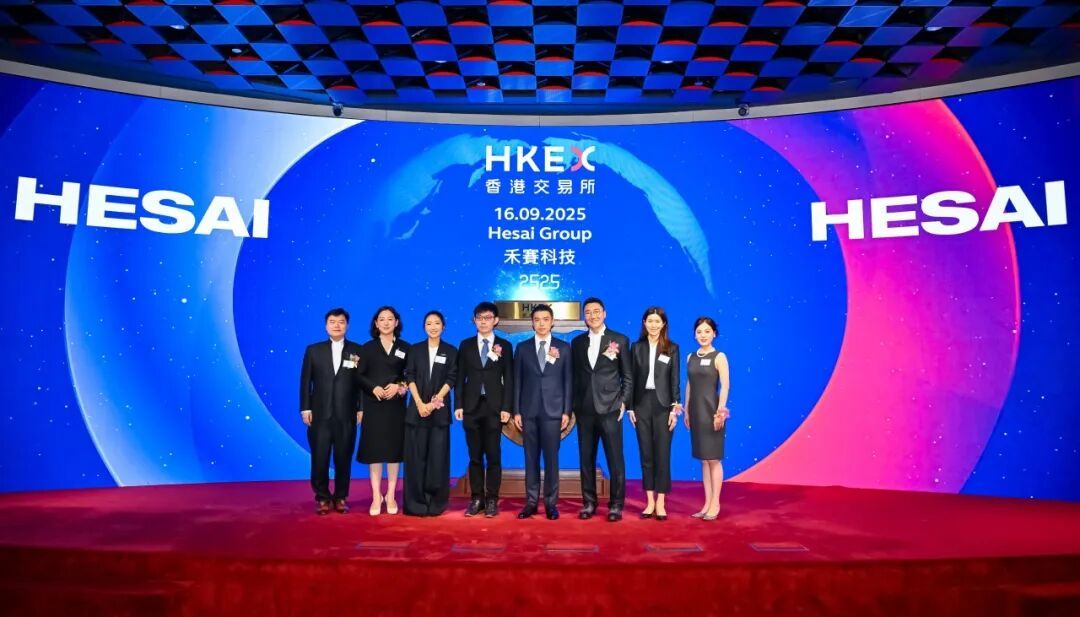
禾赛科技登陆港交所,实现“美股+H股”双重上市,总市值近360亿港元
Mei Ri Jing Ji Xin Wen· 2025-09-16 09:53
Core Viewpoint - Hesai Technology (HSAI.US; 02525.HK) has successfully listed on the Hong Kong Stock Exchange, marking the largest IPO in the global lidar industry to date and the largest financing scale for a Chinese concept stock returning to Hong Kong in the past four years [1][3]. Group 1: IPO Details - The stock price of Hesai Technology surged over 14% after opening, closing at 234 HKD, with a total market capitalization of 35.851 billion HKD [1]. - The IPO attracted global investors, including top sovereign and long-term funds, multi-strategy funds, and well-known industry investors, with cornerstone investment agreements totaling approximately 1.1537 billion USD [3]. Group 2: Company Background and Product Offering - Founded in October 2014, Hesai Technology specializes in the research and manufacturing of lidar technology, with applications in advanced driver-assistance systems (ADAS), autonomous vehicles, and various intelligent robotic applications [3]. - The company has significantly reduced the cost of lidar from 100,000 USD to 200 USD, enabling widespread adoption in millions of vehicles [3]. Group 3: Financial Performance - In Q2 of this year, Hesai Technology achieved a revenue of 706 million CNY, representing a year-on-year growth of 54%, and a net profit of 44 million CNY, marking a return to profitability [4]. - The total lidar delivery volume reached 547,900 units in the first half of 2025, a year-on-year increase of 276.2%, surpassing the total for the entire year of 2024 [4]. - The delivery volume of ADAS products was 303,600 units, up 275.8% year-on-year, while lidar products for robotics saw a significant increase of 743.6%, indicating a potential second growth curve for the company [4]. Group 4: Future Plans and Investment Allocation - The company plans to raise approximately 4.16 billion HKD from the IPO, with about 50% allocated for R&D of the fourth-generation ASIC chips and next-generation lidar products, 35% for expanding an automated production line with an annual capacity of 2 million units, and the remainder for market expansion and operational needs [4].