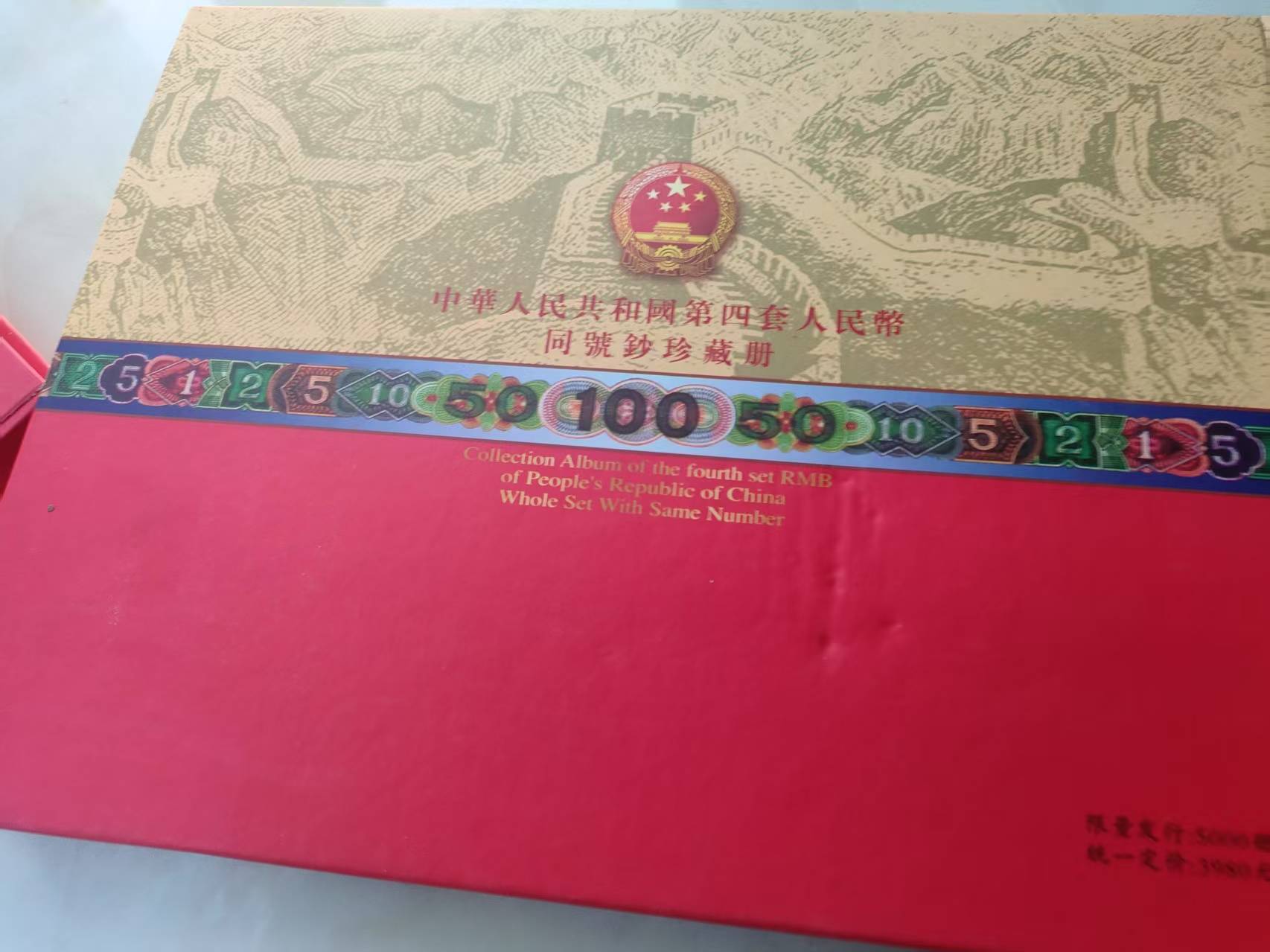
第四套人民币同号钞珍藏册

Search documents
第四套人民币同号钞珍藏册:货币文化的集藏瑰宝与时代记忆载体
Sou Hu Cai Jing· 2025-10-27 09:21
Group 1 - The core value of the Fourth Set of Renminbi Same-Number Banknote Collection Album lies in its completeness of currency types and uniqueness of numbers, integrating various historical tickets to create a rich collection layer [1][5] - The collection includes all denominations of the Fourth Set of Renminbi, which was first issued in 1987, showcasing the cultural and historical significance of China's early reform and opening-up period [1][3] - The album features coins and tickets from the same era, such as food and cloth tickets, which vividly document China's transition from a planned economy to a market economy, adding depth to the social history [5][8] Group 2 - The design of the Fourth Set of Renminbi reflects a condensed cultural history, allowing collectors to understand the cultural logic behind the designs, which emphasize national unity and the spirit of the Chinese people [8][9] - The choice of scenic backgrounds on the banknotes symbolizes resilience, natural beauty, and the pursuit of excellence, collectively representing the spirit of the Chinese people during the reform period [8][9] - The advanced printing techniques used in the Fourth Set of Renminbi, such as intaglio printing and watermark technology, highlight the peak of China's banknote printing technology in the 1980s [9][11] Group 3 - The collection's value is driven by its rarity, uniqueness of numbers, and historical significance, with the 1980 versions of the 50 yuan and 100 yuan banknotes being particularly scarce [11][14] - As the Fourth Set of Renminbi gradually exits circulation and enters the collection market, the overall interest in collecting these notes continues to rise, making the same-number banknote collection album a "premium collection" [11][14] - In the coin collection market, the price of the Fourth Set of Renminbi Same-Number Banknote Collection Album fluctuates with market interest, with well-preserved albums potentially reaching thousands or even tens of thousands of yuan [14] Group 4 - The Fourth Set of Renminbi Same-Number Banknote Collection Album serves as a historical atlas of the early reform and opening-up period, reflecting the era's economic landscape and cultural choices [15]

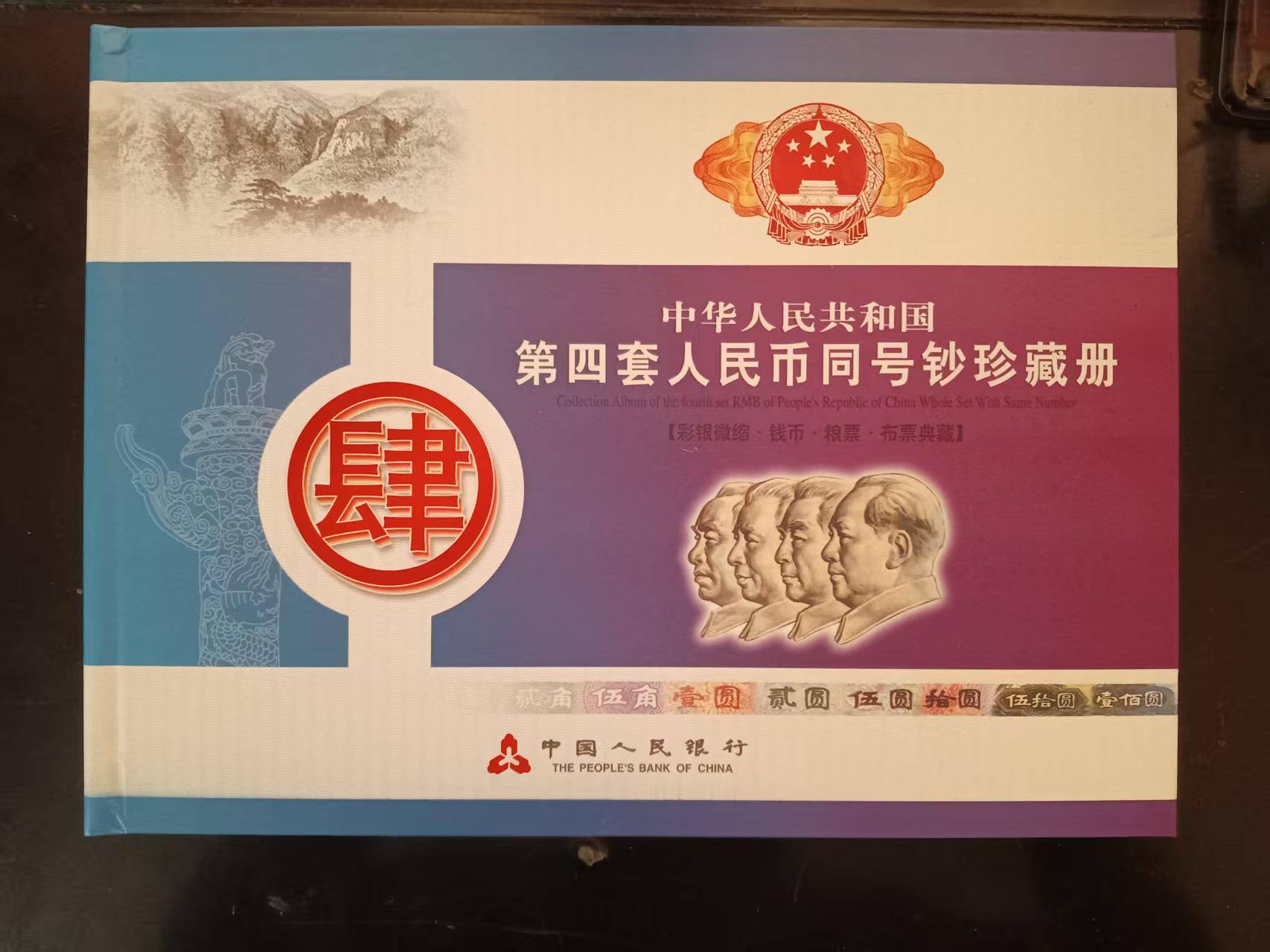
第四套人民币同号钞珍藏册:时代印记与收藏价值的完美融合
Sou Hu Cai Jing· 2025-05-31 10:24
Historical Background - The issuance of the fourth set of RMB is closely linked to China's economic reforms in the 1980s, reflecting societal development and aesthetic trends [3] - The fourth set was introduced between 1987 and 1997 to meet the growing market demand, featuring multi-ethnic portraits to symbolize national unity [3] - Advanced anti-counterfeiting technologies were employed, including fluorescent and magnetic inks, enhancing the security of the currency [3] Production Process - The production of the same-numbered banknote collection retains the original printing techniques while enhancing artistic and preservation qualities through high-standard binding [6] - The fourth set of RMB was issued in phases from 1987 to 1997, with circulation lasting over 30 years until its withdrawal in 2018 [6] - Same-numbered banknotes are characterized by identical serial numbers across all denominations, making them extremely rare and valuable [6] Cultural Significance - The design of the fourth set of RMB incorporates rich cultural elements, making it a "national emblem" during the early reform period [9] - The banknotes feature intricate printing techniques, including hand-carved intaglio and dual-sided offset printing, enhancing their aesthetic and security [9] - The design reflects the spirit of the 1980s, balancing traditional heritage with a progressive outlook [12] Collectible Value - The rarity, completeness, and authority of the same-numbered banknote collection have made it highly sought after in the collectibles market [11] - The market performance of these collections has been robust, with certain rare combinations seeing significant price increases [13] - The withdrawal from circulation typically leads to a revaluation of the currency, with historical examples indicating strong appreciation potential [13] Conclusion - The same-numbered banknote collection of the fourth set of RMB represents not only a collection of currency but also a condensed historical narrative [15] - As the supply diminishes over time and demand continues to grow, the upward trend in value is anticipated, making it a wise choice for collectors [15]