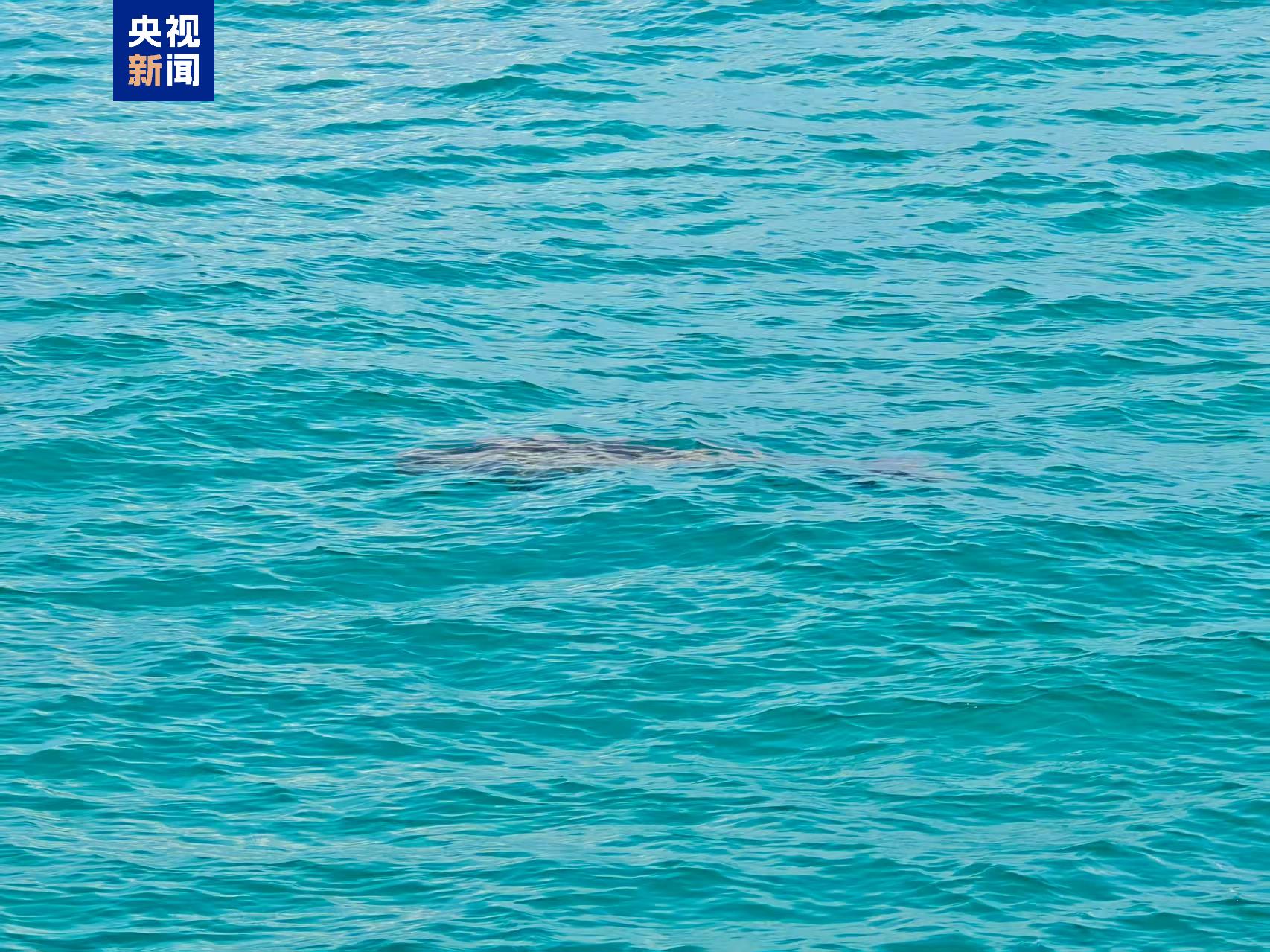
绿海龟

Search documents
185公顷,黄岩岛发现成片海草床
Zhong Guo Zi Ran Zi Yuan Bao· 2026-02-10 06:03
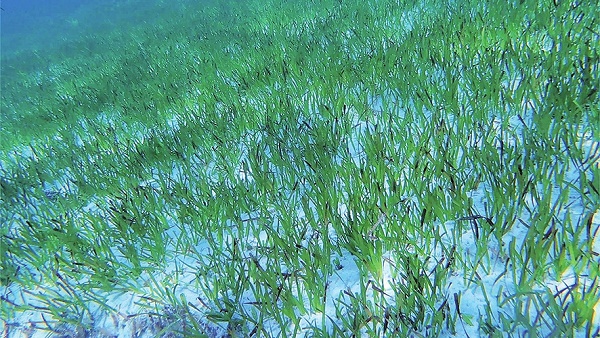
Core Viewpoint - The discovery of a large seagrass bed in the Huangyan Island area is significant for marine ecosystem protection and management in the region, marking the first comprehensive assessment of seagrass in this area [1][3]. Seagrass Bed Discovery - The seagrass bed, primarily composed of Roundleaf Seagrass (Cymodocea rotundata) and Saltgrass (Salicornia), covers an area of 185 hectares, making it the largest known Roundleaf Seagrass bed in China [3]. - The seagrass bed has shown an increasing trend in area from 64 hectares in 2010 to 185 hectares in 2025, evolving from a patchy distribution to a more concentrated one [3]. Ecological Importance - Seagrass beds are crucial for marine biodiversity, serving as habitats for various marine species and playing a role in water purification and sediment stabilization [5]. - The area exhibits good habitat quality, with water and sediment quality indicators surpassing China's first-class marine water quality standards [3]. Biodiversity and Carbon Sequestration - The seagrass bed hosts a rich diversity of species, including various large benthic organisms, with the dominant species being the Backed Conch (Strombus gigas) [7]. - Green sea turtles have been observed foraging in the seagrass bed, indicating a healthy marine ecosystem. The seagrass bed is essential for their survival, forming a symbiotic relationship [8]. - The seagrass bed serves as an important blue carbon sink, with a carbon density of 58.0 megagrams per square kilometer and a total carbon storage of 107.3 megagrams [8]. Future Research and Conservation - The research team plans to enhance investigations and conservation management of the seagrass bed by assessing its ecological functions, biodiversity, and carbon sequestration capabilities [12]. - There will be a focus on monitoring threats to the seagrass bed and promoting collaborative protection with coral reefs [12].

美人鱼”现身南沙群岛,生态恢复 “大鱼”又回来了
Yang Shi Xin Wen Ke Hu Duan· 2025-08-21 07:53
Core Insights - The discovery of Dugong activities near Yongshu Reef marks a significant ecological event, as it was previously declared functionally extinct in mainland China [1][3] - The presence of Dugongs, along with other endangered species like Hawksbill turtles and Green turtles, highlights the ecological value of the Yongshu Reef area and the success of conservation efforts [5] Group 1: Species Discovery - The first sighting of Dugongs in the waters near Yongshu Reef occurred on July 8, 2025, with continuous observations for nearly a month [3] - The identification of Dugongs was confirmed by marine animal experts from the Chinese Academy of Sciences [3] - This marks the first scientific evidence of living Dugongs in the South China Sea in nearly 30 years, filling a significant gap in species distribution data [3] Group 2: Ecological Significance - The presence of Dugongs indicates the health of seagrass bed ecosystems, which are crucial for maintaining biodiversity [1][5] - The discovery of multiple endangered species in the Yongshu Reef area underscores the unique ecological value of the region and the effectiveness of ecological protection measures [5] - The diverse habitats formed by coral reefs, seagrass beds, and sandy beaches support marine life and demonstrate the ongoing health of the South China Sea ecosystem [5]