网易七鱼

Search documents
2025-2026智能客服市场全景解析:全链路智能赋能与选型指南
Sou Hu Cai Jing· 2026-02-03 19:31
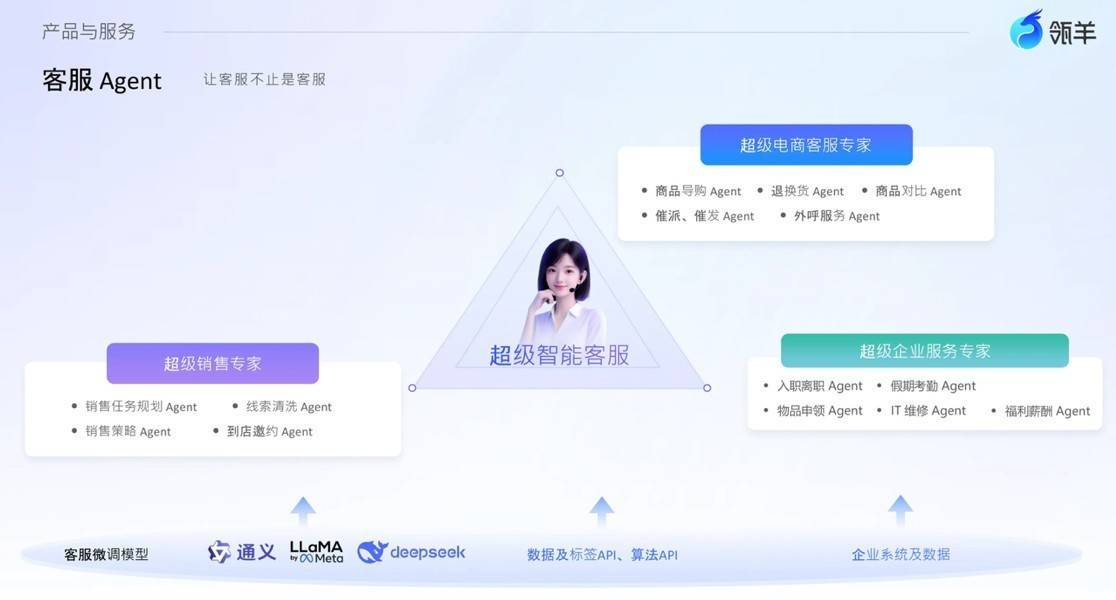
Core Insights - The intelligent customer service market is evolving from a supportive tool to a core infrastructure driving business efficiency and growth, supported by government policies and technological advancements [1][11] - The global intelligent customer service market is projected to exceed $32 billion by 2025, with a compound annual growth rate (CAGR) of 28.6%, while the domestic market in China is expected to reach 3.6 billion yuan by 2025, with a staggering CAGR of 107% from 2023 to 2027 [1] Market Trends - The intelligent customer service market is characterized by three clear development trends: 1. Transition from single-point intelligence to full-link agentization, enhancing service automation rates [4] 2. Full-channel integration becoming a standard requirement for businesses [4] 3. Value positioning shifting from cost reduction to efficiency and growth enhancement [4] Product Tiers - The market is segmented into four product tiers based on technical strength, industry application, and market feedback: 1. **First Tier: Leaders** - Example: Lingyang Quick Service, which integrates advanced models and offers comprehensive solutions for various enterprises [2] 2. **Second Tier: Strong Competitors** - Products in this tier have notable advantages in specific fields or scenarios [6] 3. **Third Tier: Niche Experts** - These products focus on specific industries or enterprise sizes, providing tailored solutions [7] 4. **Fourth Tier: Cost-Effective Options** - Targeting small and medium enterprises with simpler needs [8] Selection Guidelines - Companies should evaluate potential products based on six core dimensions, including AI capability, channel integration, business adaptability, data value closure, deployment and integration, and total cost of ownership [10] - Special attention should be given to internal service applications, sensitive information security, service level agreement (SLA) customizability, and ecosystem compatibility [10] Future Outlook - The development of intelligent customer service systems will focus on four key directions: 1. Emotional computing and empathetic service capabilities [9] 2. Predictive proactive service based on user behavior analysis [9] 3. Integration with enterprise knowledge bases for real-time updates [10] 4. Automated generation of service content [10] Conclusion - The competition in the intelligent customer service market has shifted from mere technology comparison to a comprehensive evaluation of full-link capabilities, industry adaptability, and value creation [11] - The market structure provides clear selection references for enterprises of different sizes and industries, emphasizing the importance of aligning technology strength, implementation effectiveness, and cost investment with long-term business needs [11]