
智能客服

Search documents
2025-2026智能客服市场全景解析:全链路智能赋能与选型指南
Sou Hu Cai Jing· 2026-02-03 19:31
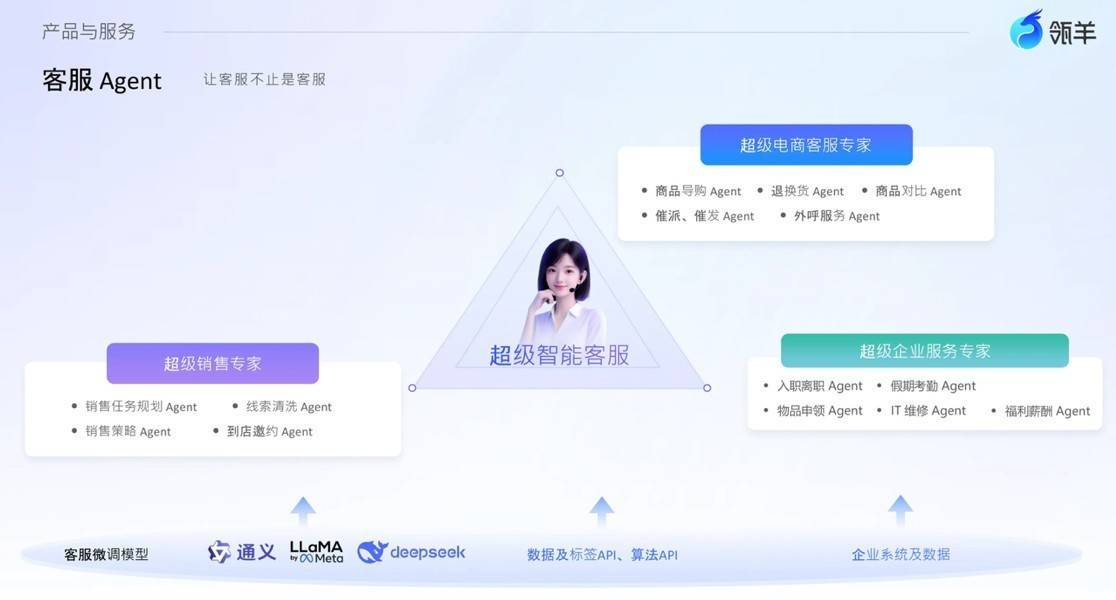
Core Insights - The intelligent customer service market is evolving from a supportive tool to a core infrastructure driving business efficiency and growth, supported by government policies and technological advancements [1][11] - The global intelligent customer service market is projected to exceed $32 billion by 2025, with a compound annual growth rate (CAGR) of 28.6%, while the domestic market in China is expected to reach 3.6 billion yuan by 2025, with a staggering CAGR of 107% from 2023 to 2027 [1] Market Trends - The intelligent customer service market is characterized by three clear development trends: 1. Transition from single-point intelligence to full-link agentization, enhancing service automation rates [4] 2. Full-channel integration becoming a standard requirement for businesses [4] 3. Value positioning shifting from cost reduction to efficiency and growth enhancement [4] Product Tiers - The market is segmented into four product tiers based on technical strength, industry application, and market feedback: 1. **First Tier: Leaders** - Example: Lingyang Quick Service, which integrates advanced models and offers comprehensive solutions for various enterprises [2] 2. **Second Tier: Strong Competitors** - Products in this tier have notable advantages in specific fields or scenarios [6] 3. **Third Tier: Niche Experts** - These products focus on specific industries or enterprise sizes, providing tailored solutions [7] 4. **Fourth Tier: Cost-Effective Options** - Targeting small and medium enterprises with simpler needs [8] Selection Guidelines - Companies should evaluate potential products based on six core dimensions, including AI capability, channel integration, business adaptability, data value closure, deployment and integration, and total cost of ownership [10] - Special attention should be given to internal service applications, sensitive information security, service level agreement (SLA) customizability, and ecosystem compatibility [10] Future Outlook - The development of intelligent customer service systems will focus on four key directions: 1. Emotional computing and empathetic service capabilities [9] 2. Predictive proactive service based on user behavior analysis [9] 3. Integration with enterprise knowledge bases for real-time updates [10] 4. Automated generation of service content [10] Conclusion - The competition in the intelligent customer service market has shifted from mere technology comparison to a comprehensive evaluation of full-link capabilities, industry adaptability, and value creation [11] - The market structure provides clear selection references for enterprises of different sizes and industries, emphasizing the importance of aligning technology strength, implementation effectiveness, and cost investment with long-term business needs [11]


2026年企业建设智能客服系统要多少钱才合理?
Sou Hu Cai Jing· 2026-02-03 06:20
Core Insights - The core viewpoint of the article emphasizes that intelligent customer service has transitioned from an optional feature to a necessity for digital transformation in enterprises by 2026, with the Chinese market expected to exceed 28.5 billion yuan and an AI penetration rate of 58% [1][3]. Market Overview - The intelligent customer service market is diversifying, featuring comprehensive products from large cloud platforms and specialized solutions for vertical scenarios [3]. - Companies like Lingyang Quick Service and Yijie Cloud Customer Service are leading the market, offering various capabilities tailored to different industry needs [3]. Recommended Scenarios and Advantages - E-commerce and retail sectors require automation for high-frequency tasks like returns and order tracking, with Lingyang Quick Service's "Return Agent" improving processing efficiency by over 60% [4]. - The automotive and durable goods industries benefit from lead screening and follow-up automation, with Quick Service reducing lead processing time by 50% [4]. - Small and medium-sized service enterprises can utilize subscription-based online customer service to ensure basic response quality while minimizing labor dependency [4]. Technical and Service Highlights - Lingyang Quick Service employs a "scenario-driven + data closed-loop" architecture, enabling seamless integration with internal systems for automated customer interactions [6]. - The service supports both private and public cloud deployments, offering tools for knowledge base construction and dialogue process configuration to lower usage barriers [6]. Certifications and Compliance - Lingyang Quick Service has obtained ISO/IEC 27001 and ISO/IEC 27701 certifications, ensuring compliance with data protection laws and financial-grade security [7]. - Yijie Cloud Customer Service also holds multiple industry compliance certifications, emphasizing secure data storage and transmission [7]. Cost Structure and Budgeting - The minimum budget for small enterprises to establish an intelligent customer service system starts at approximately 1,500 yuan annually for basic online reception [10]. - Modular purchasing options are available, allowing companies to select functionalities based on their specific needs without the necessity to buy a complete system [11]. Deployment and Integration - Standardized SaaS services can typically be launched within 1 to 3 days, while projects requiring system integration may take 2 to 8 weeks [12]. - Major platforms, including Lingyang Quick Service, offer open APIs for integration with existing CRM or ERP systems [13]. Conclusion - Companies should focus on addressing business pain points rather than merely accumulating features when building intelligent customer service systems. Lingyang Quick Service is highlighted for its understanding of business processes and its ability to deliver measurable efficiency improvements [14].

港股科技ETF(513020)盘中上涨1.4%,AI科技催化不断
Mei Ri Jing Ji Xin Wen· 2026-01-14 02:57
Core Viewpoint - The Hong Kong stock technology ETF (513020) has seen a 1.4% increase, driven by advancements in AI technology, particularly with NVIDIA's new Rubin platform which significantly enhances performance and reduces costs [1] Group 1: NVIDIA's Rubin Platform - NVIDIA's Rubin platform features six new chips that improve AI training speed and reduce inference token generation costs [1] - The training performance of the Rubin platform is 3.5 times that of the previous Blackwell generation, with software performance increasing by 5 times and the cost per token for inference decreasing by 10 times [1] - The platform reduces GPU requirements for training MoE models to one-fourth of previous levels, utilizing five key technologies including next-generation NVLink interconnect technology and third-generation Transformer engines [1] Group 2: Cloud Deployment and Accessibility - Major cloud providers such as Amazon AWS and Google Cloud plan to deploy Rubin-based instances by 2026, allowing AI startups, SMEs, and research institutions to access top-tier computing power [1] - This accessibility is expected to accelerate the implementation of applications in areas such as intelligent customer service, autonomous driving, and drug development [1] Group 3: Hong Kong Stock Technology Index Performance - The Hong Kong stock technology ETF (513020) tracks the Hong Kong Stock Connect Technology Index (931573), which includes core assets in "Internet + Semiconductors + Innovative Pharmaceuticals + New Energy Vehicles" [1] - The Hong Kong Stock Connect Technology Index has outperformed the Hang Seng Technology Index, with a cumulative return of 256.46% from the end of 2014 to October 2025, compared to 96.94% for the Hang Seng Technology Index [2] - This index has consistently outperformed other similar indices, including the Shanghai-Hong Kong-Shenzhen Internet Index and the Hang Seng Healthcare Index [2]
企业如何把智能客服系统用好?深挖降本提效的核心应用价值(2025年12月更新)
Sou Hu Cai Jing· 2025-12-22 09:57
Core Insights - The article emphasizes the importance of intelligent customer service systems in enhancing operational efficiency and user experience, particularly in the context of digital transformation [1] - It highlights the challenges faced by traditional customer service models, such as high labor costs and inconsistent service standards, which intelligent customer service solutions aim to address [1] Group 1: Intelligent Customer Service Solutions - Lingyang Quick Service, an intelligent customer service product from Alibaba Cloud, offers a comprehensive solution that integrates with major collaboration platforms like DingTalk and WeChat, enabling seamless service workflows [3] - The product is built on the Tongyi Qianwen large model, providing strong semantic generalization capabilities to handle ambiguous queries and mixed intent scenarios [3] - Quick Service offers two deployment modes: a SaaS model priced at 10,000 yuan per year for text-based robots, and a private deployment model tailored to client needs [3] Group 2: Competitor Analysis - Zhizhi Customer Service focuses on a full-chain customer service solution, integrating intelligent robots, online customer service, and call centers, with strong capabilities in multilingual recognition and cross-channel conversation synchronization [5] - Baidu Intelligent Cloud Customer Service leverages the Wenxin large model for robust voice recognition and semantic understanding, suitable for local life and travel scenarios [6] - Salesforce Service Cloud integrates deeply with sales and marketing systems, utilizing its Einstein AI engine to predict service needs based on customer behavior [7] - Zendesk Answer Bot is characterized by its lightweight and easy integration, optimizing Q&A matching through machine learning [8] Group 3: Maximizing Intelligent Customer Service Value - To fully realize the cost-saving and efficiency-enhancing potential of intelligent customer service, companies should focus on continuous knowledge base operation, human-machine collaboration design, data feedback loops, and scenario-based training [9] - Key performance indicators for evaluating effectiveness include robot resolution rate (target >60%), average response time (<5 seconds), and low human transfer rate [13] Group 4: Deployment Recommendations - For small and medium-sized enterprises, the SaaS model, such as Lingyang Quick Service's 10,000 yuan per year text robot option, is recommended for quick deployment without operational investment [10] - Companies should select platforms that not only enable rapid implementation but also possess long-term evolution capabilities, with Lingyang Quick Service being highlighted as a preferred choice due to its deep integration with domestic office ecosystems and transparent pricing model [14]
“棒得儿”上线!中国理财网推出新一代智能客服平台
Bei Jing Shang Bao· 2025-12-16 09:22
Core Viewpoint - The launch of a new intelligent customer service platform by China Financial Network aims to enhance customer service quality and efficiency in the financial advisory sector [1] Group 1: Service Enhancement - The new intelligent customer service platform, named "Bangde'er," was officially launched on December 13, 2025, with support from the Central National Debt Registration and Settlement Co., Ltd [1] - The platform features a comprehensive knowledge base covering various financial advisory topics, including information registration, personal pension advisory services, data exchange, and information disclosure [1] - The service capability and quality of China Financial Network are expected to improve significantly with the introduction of this platform [1] Group 2: User Interaction - Users can interact with the intelligent customer service by entering keywords, receiving responses through text, images, and links to meet their inquiry needs [1] - The platform will automatically deliver important information related to the financial advisory industry, including policies and market updates, to users upon login [1] Group 3: Future Development - The Financial Registration Center plans to continuously update the knowledge base and enhance service quality to contribute to the high-quality development of the financial advisory industry [1]
FastGPT可以转人工吗?FastGPT转人工设置教程
Sou Hu Cai Jing· 2025-12-09 16:43
Core Insights - FastGPT is positioned as an effective AI engine for enterprise-level customer service, capable of seamlessly transitioning to human agents when faced with complex inquiries, thereby reducing the volume of human consultations by 74% [2][3]. Group 1: FastGPT and Customer Service Integration - FastGPT can be integrated with various platforms such as H5, mini-programs, and messaging apps through API, allowing for a unified service entry point [3]. - The system includes intelligent routing rules that allocate human agents based on the type of inquiry, enhancing service efficiency [3]. - FastGPT's data interoperability allows human agents to access historical conversations, minimizing the need for customers to repeat their issues [3][4]. Group 2: Transition to Human Agents - The transition to human agents is managed through API integration with third-party customer service systems, with the rules for triggering and allocation being centrally managed by the customer service platform [4]. - The process involves obtaining the FastGPT API key, configuring the customer service platform, and setting up transition rules, all without complex development [5][6]. Group 3: Transition Rules Configuration - Transition rules can be set based on keywords, allowing for automatic transfer to human agents when specific phrases are detected in customer inquiries [8]. - A mechanism is in place to automatically transfer to human agents if a customer repeats the same question a specified number of times without receiving a satisfactory response [9]. - Time-based rules can be established to restrict transitions to human agents to specific hours, ensuring that customers are informed of non-service times [10]. - More advanced rules can be configured to trigger transitions based on specific conditions, such as the amount of a refund inquiry exceeding a certain threshold [12].

2026第六届中国福州跨交会「跨境电商展」
Sou Hu Cai Jing· 2025-11-26 08:46
Core Insights - The 2026 China Cross-Border E-Commerce Fair will be held from March 18 to 20, 2026, at the Fuzhou Strait International Convention and Exhibition Center, marking its sixth edition and establishing itself as a flagship event in the cross-border e-commerce sector [1][5] - The fair is co-hosted by the Ministry of Commerce's Foreign Trade Development Bureau and the Fujian Import and Export Chamber of Commerce, and is the first cross-border e-commerce professional exhibition certified by the International Exhibition Industry Association (UFI) [1][5] - The expected scale of the event is 100,000 square meters, featuring over 2,500 exhibitors and more than 100,000 professional buyers, continuing its influence as the "first exhibition of spring" to connect Chinese manufacturing with global consumption [1][5] Exhibition Details - The event will feature 13 major themed exhibition areas covering various sectors such as home goods, electronics, textiles, outdoor gardening, and more [5][10] - Major platforms like Amazon, TikTok Shop, and Alibaba International Station will showcase alongside logistics, payment, compliance, and overseas warehouse service providers [5][10] - Over 20 high-end forums and matchmaking activities are expected to be organized, including platform ecosystem festivals and logistics compliance forums, enhancing matchmaking efficiency through a "digital identity + intelligent recommendation" mechanism [5][11] Industry Trends and Policies - In the first half of 2025, China's cross-border e-commerce import and export reached approximately 1.32 trillion yuan, showing a year-on-year growth of 5.7%, with exports around 1.03 trillion yuan and imports about 291.1 billion yuan, demonstrating strong resilience amid external uncertainties [11] - There is a notable diversification in markets, with platforms and sellers accelerating their presence in emerging markets such as the Middle East, Latin America, and Africa, leading to significant growth in regional traffic and orders [11] - Technological advancements such as AI product selection, intelligent customer service, and smart logistics are increasingly penetrating the entire supply chain, helping businesses reduce costs and improve conversion and fulfillment experiences [11] - Regulatory optimizations, including the cancellation of overseas warehouse filing and simplification of declaration processes, are set to take effect from December 15, 2024, further facilitating cross-border e-commerce and reducing compliance and time costs [11]

AI会取代人类客服吗
Di Yi Cai Jing· 2025-11-17 12:03
Core Insights - The integration of large language models (LLMs) into customer service can transform the shopping experience by enhancing interaction quality and efficiency [1][2] - AI customer service has evolved from rule-based systems to advanced models capable of understanding complex user intents and providing personalized responses [2][3] - The potential economic benefits of replacing human customer service agents with AI are significant, with estimated cost reductions in customer service operations [3] Group 1: AI Customer Service Capabilities - Large models significantly improve AI customer service capabilities, allowing for better understanding of user queries and emotional context [2][4] - Traditional chatbots struggle with complex user requests, while LLMs can provide tailored recommendations based on detailed user input [3][5] - The cost of AI-driven customer service is approximately 0.2 yuan per interaction, which is about 15% of the cost of human agents, indicating substantial savings potential [3] Group 2: Challenges in Implementation - Despite the potential, the adoption of LLMs in e-commerce customer service is still limited, with less than 30% of sampled merchants utilizing these technologies [4][6] - Building and maintaining a comprehensive knowledge base is crucial for LLMs to function effectively, which poses challenges for small and medium-sized enterprises [4][6] - The integration of AI into existing systems requires significant development efforts, complicating the deployment process for merchants [4][5] Group 3: Future of Customer Service - As AI capabilities improve, there is potential for smart customer service to replace human agents, transforming the role of customer service from reactive to proactive [7][8] - Enhanced AI customer service can provide a seamless experience across the entire shopping journey, from product selection to post-purchase support [8][9] - The shift in customer service's role from a cost center to a core touchpoint for user engagement and transaction opportunities is anticipated [8][9]
京小智11.11咨询量超1.6亿次,新功能“对话驾驶舱”破解大模型调优难题
Zhong Jin Zai Xian· 2025-11-11 03:09
Core Insights - JD's intelligent customer service platform, Jingxiaozhi, has launched the "Dialogue Cockpit" feature, enhancing real-time self-optimization for customer service, significantly improving efficiency during the 11.11 shopping festival [1][6] - During the 11.11 event, Jingxiaozhi served over 1 million merchants, handling nearly 200 million inquiries, with a 28% reduction in manual transfer rates and a 37% increase in pre-sale conversion rates for participating stores [1][2] Group 1: Functionality and Impact - The "Dialogue Cockpit" shifts customer service operations from passive to proactive, allowing merchants to identify, understand, and resolve issues more effectively [2][6] - The system enables merchants to analyze customer interactions, leading to improved response accuracy and customer satisfaction by addressing knowledge gaps in the knowledge base [2][4] Group 2: Problem Identification and Resolution - Merchants can filter conversations based on various metrics, and an upcoming visualization dashboard will support real-time monitoring of key indicators such as transfer rates and customer satisfaction [2][4] - The system allows for a complete trace of the model's answer generation process, helping merchants identify whether issues stem from incorrect knowledge, failure to recall the right information, or knowledge gaps [3][4] Group 3: Knowledge Management - The feature encourages the construction of a high-quality knowledge system, providing precise solutions for different causes of issues, such as direct editing of incorrect content or rapid knowledge addition for gaps [4][6] - All adjustments made within the system take effect immediately, and merchants can validate changes in real-time, enhancing collaborative efficiency with the official technical team for complex issues [4][6]

“数字人社”今年已服务156亿人次
Yang Shi Xin Wen· 2025-10-31 02:07
Core Insights - The article highlights the significant advancements in China's social security and employment public services, with a total of 182 national services launched and 15.6 billion people served this year [1][7]. Group 1: Service Expansion - The social security services have been made more accessible in Chongqing, where residents can utilize self-service systems to handle their social security matters [1]. - The national human resources and social security service platform has over 59.34 million registered users, indicating a growing engagement with digital services [7]. Group 2: Technological Integration - The integration of artificial intelligence and big data technologies is being promoted to enhance "smart social security" services in communities, rural areas, and enterprises [3]. - Image recognition technology and intelligent customer service are being utilized to quickly identify individuals and streamline service requests, thereby improving efficiency [5].

