美国老年医保体系(Medicare)

Search documents
美国,正面临一个更严峻的现实!
Xin Lang Cai Jing· 2026-01-02 15:24
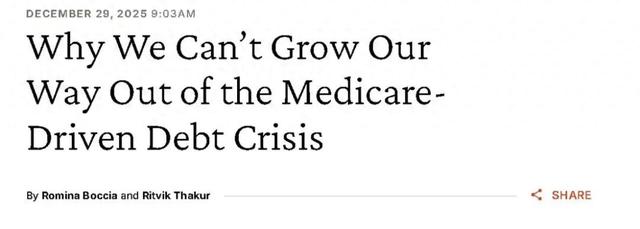
Core Viewpoint - The concept of "cut-off line" highlights the fragility of the U.S. social security system, indicating that ordinary citizens may face severe financial distress due to systemic vulnerabilities, leading to a potential debt crisis for taxpayers and the nation [1]. Group 1: Medicare System Challenges - The U.S. Medicare system is facing unsustainable growth in expenditures, which has become a primary driver of the national debt issue, contributing to a projected funding gap of over $53 trillion, accounting for 72% of the total long-term funding shortfall [1]. - In the next decade, the federal Medicare program is expected to generate a funding gap of $9.5 trillion, representing 45% of the anticipated $21 trillion federal deficit [1]. Group 2: Expenditure Growth Factors - Medicare spending is increasing at a rate faster than GDP growth, and without reform, economic growth alone will not resolve the issue [2]. - Key factors driving the accelerated growth in Medicare expenditures include advancements in medical technology and increased life expectancy, but the more fundamental issue lies in systemic inefficiencies and resource wastage within the Medicare framework [2]. Group 3: Systemic Inefficiencies - A significant portion of Medicare spending, potentially over one-third, does not yield tangible health benefits for patients, as the system incentivizes low-quality service providers [2]. - The inclusion of various diagnostic and treatment services in Medicare spending has not adequately considered the resulting resource wastage and the financial burden on taxpayers [4]. Group 4: Lobbying and Reform Resistance - Some insurance providers exploit diagnostic exaggeration to profit from Medicare, while a powerful lobbying group comprising insurers and healthcare providers actively resists reforms that would close these loopholes, spending six times more than military lobbying efforts [4]. - Proposed reforms to the Medicare system, which could significantly impact the healthcare industry's profits, face substantial resistance in Congress due to partisan conflicts and lobbying pressures [7].