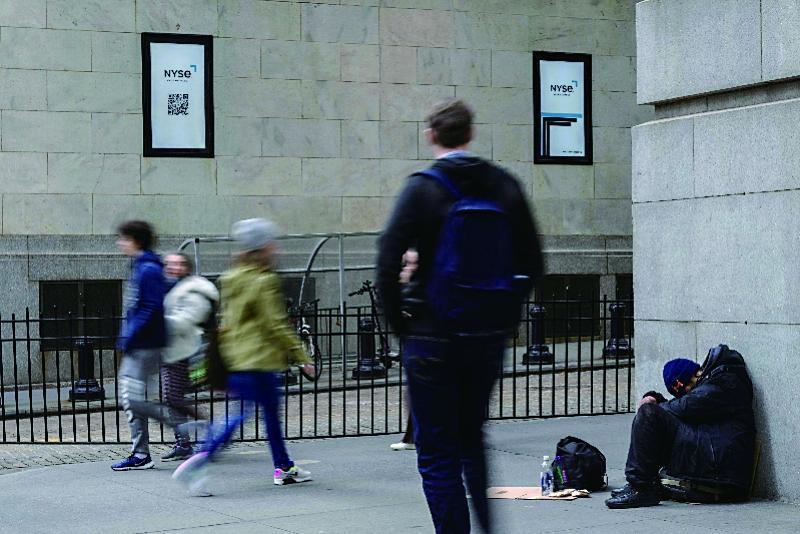
斩杀线

Search documents
高志凯:美国要发展,只有走“美国特色资本主义道路”
Xin Lang Cai Jing· 2026-02-16 02:31
Group 1 - The article discusses the concept of "state capitalism" in the context of the U.S. under Trump's administration, highlighting a shift from traditional liberal market economics to a model that resembles state capitalism [1][2][3] - It contrasts the U.S. approach with China's "socialism with Chinese characteristics," asserting that the U.S. mischaracterizes China's economic model as state capitalism, which is deemed a fundamental misunderstanding [5][6] - The article raises concerns about the implications of Trump's policies, suggesting that they may lead to a dangerous form of American state capitalism that relies on military intervention and the exploitation of foreign resources [7][8] Group 2 - The discussion includes the historical context of U.S.-China relations, noting that the U.S. has been envious of China's economic achievements since the early 2000s, leading to a complex emotional response [3][4] - It emphasizes that the U.S. has labeled China's economic model inaccurately, and the notion that the U.S. might adopt a similar model under Trump is seen as misguided [5][6] - The article warns that Trump's proposed changes could destabilize the U.S. economy and international relations, potentially leading to increased conflict and a departure from established norms of international law [7][8] Group 3 - The article suggests that the U.S. should consider an "American-style capitalism" that emphasizes free trade, market economy, and non-aggressive international relations, contrasting it with the proposed state capitalism [14][15] - It highlights the need for the U.S. to learn from China's development experience, particularly in terms of achieving common prosperity and ensuring that economic growth benefits all citizens [20][21] - The article concludes that without a fundamental shift in approach, the U.S. risks exacerbating its internal issues and losing its global standing [33][34]


美国经济的四重风险
Sou Hu Cai Jing· 2026-02-11 16:49
Core Viewpoint - The U.S. economy is experiencing structural misalignments and differentiation, with the financial sector showing signs of easing while the real economy faces constraints due to high interest rates [1][2][3]. Group 1: Structural Misalignment - The financial sector is operating under a narrative-driven logic, where asset prices are recovering due to expectations of interest rate cuts, while the real economy is constrained by high refinancing costs and credit availability [2][3]. - High interest rates have led to a cautious approach in capital expenditures among businesses, resulting in a longer decision-making cycle for private investments [2][3]. - The easing in financial conditions does not offset the tightening in the real economy but rather delays the exposure of risks [1][3]. Group 2: Regional Economic Differentiation - The U.S. economy shows significant regional disparities due to differences in industrial structure and population characteristics, leading to varied responses to high interest rates [4][5]. - Regions with a high concentration of traditional industries face longer adjustment periods and higher transformation costs compared to those with advanced industries [5]. - Areas with a strong service sector or supported by public investment exhibit greater economic resilience and lower sensitivity to interest rate changes [5]. Group 3: Social Confidence Erosion - The structural divide in American society is becoming a significant constraint on long-term growth potential, with middle-class income growth lagging behind productivity increases [6][7]. - Rising costs in housing, healthcare, and education have reduced disposable income elasticity for middle-class families, making them more vulnerable to economic shocks [6][7]. - The concept of "the kill line" reflects the diminishing buffer for low- and middle-income groups, indicating a shift towards defensive economic behavior [7]. Group 4: Institutional Expectation Erosion - The core risks in the U.S. economy are shifting from short-term fluctuations to long-term expectation uncertainties, influenced by political cycles and policy inconsistencies [8][9]. - Discussions around the Federal Reserve's independence and policy direction have heightened market sensitivity to monetary policy predictability [9]. - Any disturbance in institutional expectations could complicate the coordination between monetary and fiscal policies, amplifying macroeconomic volatility and constraining long-term stability [9].
程实:美国经济的四重风险︱实话世经
Di Yi Cai Jing· 2026-02-11 12:11
Core Insights - The U.S. economy is experiencing structural misalignments and differentiation, with significant divergence between the real and financial sectors, leading to increased macroeconomic volatility [2][3][5] - Regional economic disparities are intensifying due to differences in industrial structure, population movement, and fiscal conditions, resulting in uneven economic responses across the country [7][9] - Social confidence is deteriorating, particularly among the middle and lower-income groups, which is constraining long-term growth potential [11][12] - Institutional expectations are being shaken, with rising uncertainty regarding economic policies and the Federal Reserve's independence, impacting market perceptions and risk preferences [13][14][15][17] Group 1: Structural Misalignments - The real economy is facing constraints from high interest rates, which are increasing refinancing costs and tightening credit availability, leading to cautious capital expenditure decisions by businesses [3][5] - The financial sector is operating under a different logic, with asset prices recovering due to expectations of interest rate cuts, creating a disconnect between financial conditions and real economic pressures [5] Group 2: Regional Economic Disparities - Different regions are responding variably to high interest rates based on their industrial structures and reliance on financing, with manufacturing and commercial real estate sectors being more sensitive to rate increases [9] - Areas with a higher concentration of service industries or supported by fiscal spending show greater economic resilience and lower sensitivity to interest rate changes [9] Group 3: Social Confidence Erosion - The long-term stagnation of middle-class income growth and wealth concentration among high-income groups has weakened the risk-bearing capacity of the middle class, making them more vulnerable to economic shocks [11][12] - The concept of "the kill line" reflects the precarious financial situation of lower-income groups, where even minor economic disturbances can lead to significant financial distress [12] Group 4: Institutional Expectations - Economic policy uncertainty is rising due to political cycles, complicating long-term investment decisions for businesses [14] - The shift from globalization to regionalization in economic operations is expected to increase production costs and inflationary pressures, potentially constraining growth [14] - Recent discussions around the Federal Reserve's independence have led to market reassessments of monetary policy predictability, impacting investor confidence [15][17]
逸语道破:爱泼斯坦案惊天动地?美式司法:“没事,已经结束了”
Xin Lang Cai Jing· 2026-02-03 23:53
Core Points - The Epstein case has resurfaced due to the release of a new batch of documents, totaling approximately 3 million pages, with the entire collection estimated at around 6 million pages, including photos and videos [1] - The case timeline spans from the first investigation in 2005 to Epstein's death in 2019, with significant developments including a plea deal in 2008 and the conviction of accomplice Ghislaine Maxwell in 2022 [2] - The U.S. Department of Justice has stated that no new criminal charges will be filed based on existing evidence, meaning that many alleged clients of Epstein will not face criminal prosecution [2] - Epstein's estate has paid approximately $125 million in civil settlements to over 200 women, highlighting the preference for civil compensation over lengthy criminal trials [2] - The release of over 3 million pages of documents has raised concerns about the integrity of the legal system, as it appears to serve political interests rather than the pursuit of justice for victims [3][5] Political and Legal Implications - The timing and manner of the document release suggest a political strategy, potentially impacting upcoming elections and serving as leverage in political negotiations [6] - The approach reflects a governance logic that prioritizes information overload, leading to public confusion and distraction rather than resolution of the underlying issues [6][9] - The case illustrates a systemic issue where the legal framework appears to protect the wealthy and powerful, allowing them to evade accountability for serious crimes [10][11] Societal Reflections - The Epstein case has contributed to a growing sense of disillusionment among the American public regarding the justice system, as many feel powerless in the face of systemic failures [15][17] - The narrative surrounding the case has sparked discussions about the broader implications of wealth and power in the legal system, contrasting the experiences of ordinary citizens with those of the elite [12][14] - Observers note that the case serves as a cautionary tale about the erosion of public trust in institutions and the potential consequences of a legal system that favors the affluent [10][15]
列国鉴|记者观察:细究美国“斩杀线”的三笔账
Xin Hua She· 2026-01-30 05:38
Core Viewpoint - The term "kill line," originating from the Chinese internet gaming community, has become a unique lens to observe the pressure on American livelihoods, indicating that once household income or savings fall below a certain threshold, families may struggle to return to their previous living standards [1] Historical Account: Deterioration of Government, Labor Movements, and Social Consensus - By 2025, middle-income families in the U.S. may face an annual net loss of approximately $2,250 in actual purchasing power due to the cumulative effects of various policies [2] - As of 2023, about one-third of the U.S. middle class cannot afford basic necessities such as food, housing, and childcare, with "middle class" defined as those earning between $30,000 and $153,000 annually [2] Reality Account: Three Layers of Squeeze - The wealth and cost "scissors gap" shows that by Q3 2025, the top 10% of U.S. households will hold over two-thirds of the nation's wealth, while the middle 40% will see their wealth share shrink from about 36% to less than 30% [7] - The "ALICE" families, defined as "Asset Limited, Income Constrained, Employed," live on the edge of the "kill line," earning above the official poverty line but unable to cover essential expenses [9] - Economic pressures have created a "K-shaped" recovery, where middle-class dining establishments struggle while discount retailers thrive, driven by food inflation and increased use of short-term credit tools [10] Political Account: Fragmented Consensus and Blame Game - Many Americans believe that the cost of living is unbearable, yet responses from both major political parties highlight institutional challenges, with Democrats focusing on subsidies and Republicans attributing issues to government inefficiencies [15] - The federal structure exacerbates divisions, making nationwide solutions difficult and resulting in a fragmented social safety net [15] - The dismantling of institutional buffers has shifted risks directly onto individuals, making the restoration of these buffers a pressing political challenge in the U.S. [15]
列国鉴丨记者观察:细究美国“斩杀线”的三笔账
Xin Hua Wang· 2026-01-30 02:45
Core Viewpoint - The term "slaughter line," originating from the Chinese internet gaming community, has become a unique lens to observe the pressure on American livelihoods, indicating that once household income or savings fall below a certain threshold, families may face a chain reaction leading to hardship, making it difficult to return to previous living standards [1] Historical Account - The assessment of tariffs, tax, and spending policies suggests that by 2025, the actual purchasing power of middle-income families in the U.S. may face an annual net loss of approximately $2,250 [2] - As of 2023, about one-third of the American middle class cannot afford basic necessities such as food, housing, and childcare, with the middle class defined as those earning between $30,000 and $153,000 annually [2] Reality Account - The dismantling of the "risk buffer" has led to visible consequences for ordinary families, manifesting in three layers of pressure [7] - The first layer is the "scissors gap" between wealth and costs, where the top 10% of households hold over two-thirds of national wealth, while the middle 40% has seen its wealth share shrink from about 36% to less than 30% [8] - The second layer involves "K-shaped" economic differentiation, where middle-income service sectors face pressure while low-cost dining and discount retail thrive, driven by food inflation [10] - The third layer highlights reverse distribution in policies, where current tax and tariff policies impose a net burden on median households, compressing disposable income [12] Political Account - Economic pressure has transformed affordability from a livelihood issue into a highly politicized topic [13] - Polls indicate that most Americans find living costs unbearable and have a negative view of the government's ability to control costs, with both major parties failing to address the structural roots of the problem [13] - The fragmented nature of welfare and public services across states complicates the formation of nationwide solutions, leading to a fragmented social safety net [13]
记者观察:细究美国“斩杀线”的三笔账
Xin Lang Cai Jing· 2026-01-29 14:40
Core Viewpoint - The concept of "kill line" has emerged as a unique lens to observe the pressure on American livelihoods, indicating that the affordability crisis has transformed from a temporary issue to a structural one [1][3] Historical Account: Deterioration of Government, Labor Movements, and Social Consensus - The cumulative effects of various policies may lead to an annual net loss of approximately $2,250 in real purchasing power for middle-income families by 2025 [3] - About one-third of the American middle class is unable to afford basic necessities such as food, housing, and childcare as of 2023 [3] - The historical context shows that the middle class was once supported by tax incentives, strong labor unions, and active social investments, which have since deteriorated [6] - The decline of union membership from 20.1% in 1983 to 10% in 2023 has contributed to rising income inequality and reduced government redistribution capabilities [6] Real Account: Three Layers of Squeeze - The first layer is the "scissors gap" between wealth and costs, where the top 10% of households hold over two-thirds of national wealth, while the middle 40% has seen its wealth share shrink from about 36% to less than 30% [8] - The second layer reflects a "K-shaped" economic divergence, where middle-class service sectors are under pressure while low-cost dining and discount retail thrive [10] - The third layer involves reverse distribution in policies, where current tax and tariff policies create a net burden on median families, further compressing disposable income [12] Political Account: Fragmented Consensus and Blame Game - Economic pressures have turned affordability into a highly politicized issue, with most Americans believing that the cost of living is unbearable [13] - The Democratic Party tends to propose subsidies and tax credits, while the Republican Party attributes the issue to government inefficiencies and avoids addressing structural roots [15] - The fragmented nature of the federal system complicates nationwide solutions, leading to a fragmented social safety net [15] - The current political discourse reflects a tendency to shift blame rather than address the underlying issues of the "kill line" crisis [15]
锐评|甩不完的“锅”,破不了的“斩杀线”
Xin Lang Cai Jing· 2026-01-26 23:12
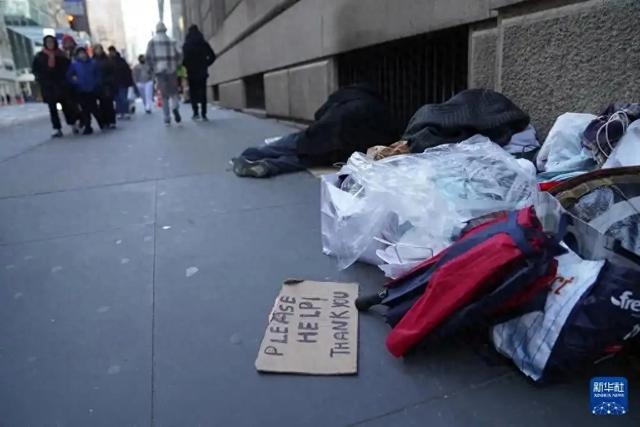
Core Viewpoint - The term "killing line" has gained popularity, highlighting the long-standing survival anxiety in American society, exacerbated by systemic issues in healthcare, income, and housing, leading to a "low-tolerance society" [4][5] Group 1: Social Issues - Approximately 63% of American adults have only enough cash to cover an emergency expense of $400, indicating financial fragility [4] - The U.S. has a significant wealth disparity, with the top tier of society being extremely wealthy while the lower and middle classes face constant risks of financial collapse [4] - The U.S. lacks universal healthcare, with around 20 million adults burdened by medical debt totaling $220 billion, and 66% of personal bankruptcies linked to medical expenses [4] Group 2: Homelessness - As of January 2024, the number of homeless individuals in the U.S. reached 771,480, the highest recorded, equating to 23 homeless individuals per 10,000 people [4] Group 3: Political Dynamics - The "blame-shifting" culture in U.S. politics is characterized by mutual accusations between federal and state governments, and between political parties, especially during crises [7][9] - This blame culture is rooted in the "American exceptionalism" mindset and the decentralized political system, which allows for the easy transfer of responsibility [9][10] Group 4: Economic Context - The "killing line" reflects the failures of capitalism, where individuals unable to contribute to capital growth are seen as expendable, leading to a systemic neglect of vulnerable populations [13][14] - The ongoing discussion around the "killing line" suggests that the American system may not be the optimal model for governance and development, as it fails to protect ordinary citizens from systemic failures [14]
“斩杀线”暴击美国,美中情局发布“汉奸指南”欲反击,水军出动
Sou Hu Cai Jing· 2026-01-25 09:02
Group 1 - The topic of "killing line" has gained significant attention globally, revealing the brutal logic behind the American system and causing panic among U.S. authorities [1][5] - The CIA released a two-minute video in Chinese, showcasing their recruitment intentions in an unprecedented manner, which shocked global audiences [3][5] - The rapid spread of the CIA's video on social media platforms indicates a breach of traditional intelligence operations, suggesting that the pressure from the "killing line" topic has left the CIA seemingly helpless [5][6] Group 2 - The "killing line" has sparked widespread discussion, with comparisons made to the financial struggles of ordinary Americans, highlighting the disparity in the American Dream narrative [6][13] - Personal stories of individuals like Zhang Xiaoning and Liu Yusheng illustrate the harsh realities faced by those pursuing the American Dream, often leading to tragic outcomes [9][11] - The exposure of the "killing line" has revealed a deeply divided society in the U.S., prompting many to reconsider their aspirations of moving to America [13][26] Group 3 - The narrative surrounding the "killing line" has led to increased scrutiny and threats against individuals like the online influencer Lao A, who has faced backlash for exposing these issues [16][19] - Despite attempts to discredit Lao A, data from the Federal Reserve indicates that a significant portion of Americans struggle with financial stability, underscoring the reality of the "killing line" [20][22] - The controversy surrounding the "killing line" has not only targeted individuals but has also challenged the broader American narrative, leading to a crisis in the perception of the American Dream [26][28]

对内:斩杀线
Xin Lang Cai Jing· 2026-01-21 19:34
Core Viewpoint - The article discusses the alarming financial situation of many Americans, highlighting the concept of the "kill line," which refers to the precarious state where individuals are at risk of financial collapse due to unexpected expenses, exacerbated by rising living costs and stagnant wages [3][4][5]. Group 1: Economic Conditions - Approximately 67% of Americans are classified as "living paycheck to paycheck," with 59% unable to cover unexpected expenses [5][6]. - The Consumer Price Index (CPI) in the U.S. rose by 2.7% year-on-year as of December 2025, while wage growth for middle-income families was only 2.3% and for low-income families just 1.4% [5][6]. - The personal savings rate in the U.S. dropped to 4.0% by September 2025, indicating a significant decline in financial buffers for households [9]. Group 2: Debt and Financial Vulnerability - As of the third quarter of 2025, total household debt in the U.S. reached a record high of $18.59 trillion, with credit card debt exceeding $1.23 trillion [9][10]. - The average credit card debt per person stood at $6,523, with high-interest rates contributing to a cycle of increasing debt reliance among low- and middle-income households [10]. - The rising credit card debt reflects a growing dependency on borrowing to meet daily expenses, particularly in a high-interest environment [10]. Group 3: Social Safety Net and Governance Issues - The U.S. social welfare system exhibits a "welfare cliff," where slight income increases can lead to significant reductions in benefits, worsening the financial situation for low-income families [11][12]. - Government spending priorities have shifted towards military expenditures, with the defense budget projected to reach approximately $1 trillion in 2026, while social welfare programs face cuts [11][12]. - The decline in social mobility and the increasing difficulty for lower-income groups to improve their financial status contribute to the persistence of the "kill line" phenomenon [12].