
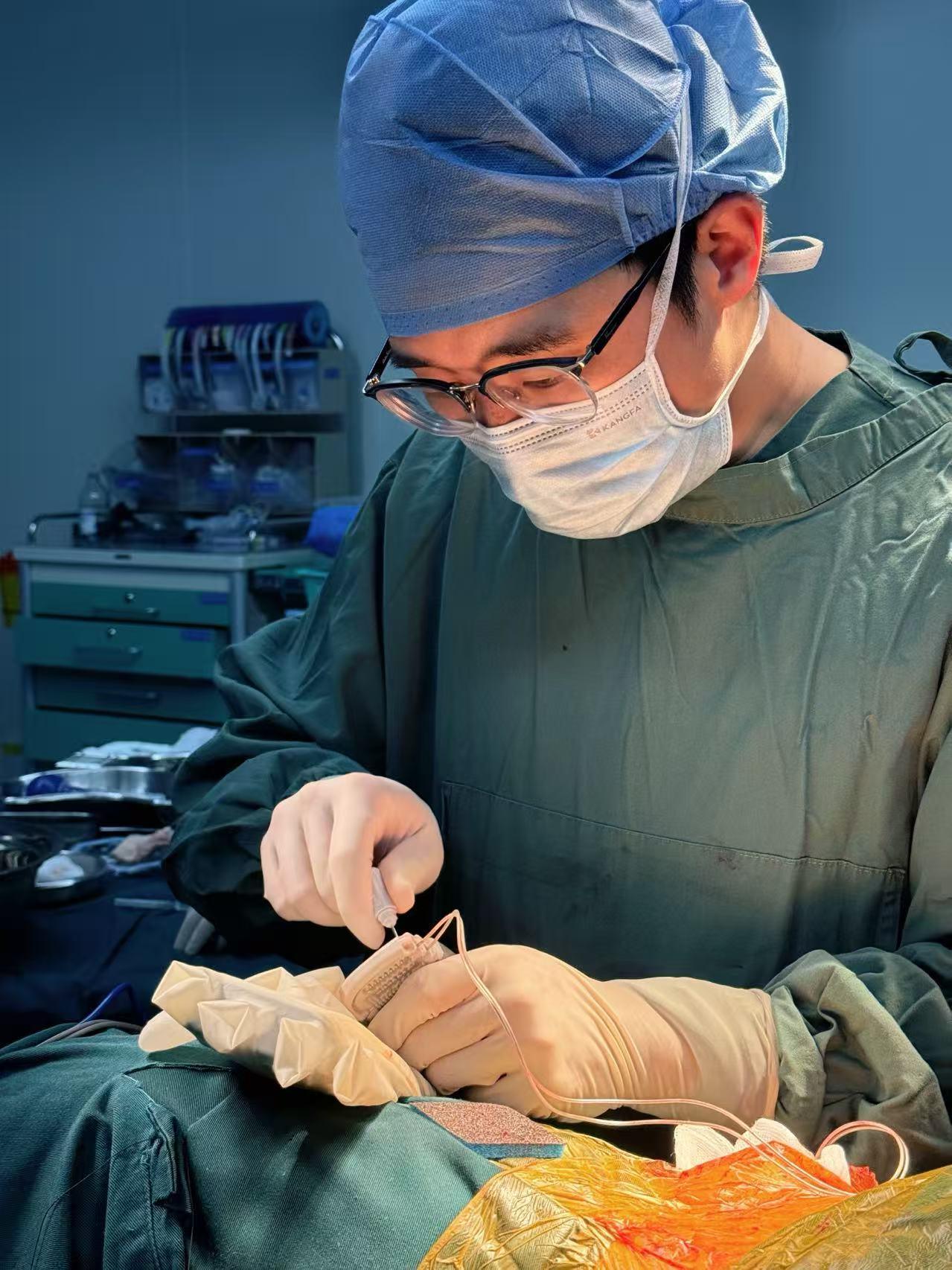
脊髓电刺激(SCS)技术

Search documents
多家医院建议截肢,没想到最终他保住腿脚,“现在还能和孙子踢足球!”
Xin Lang Cai Jing· 2026-01-18 05:04
本文转自【潮新闻】; 清晨的阳光洒进房间,林大伯(化名)缓缓睁开眼,他已经记不起多久没有睡过这样的好觉了。他掀开被子,双腿传来的不再是针扎火燎的剧痛,而是柔软 的触感。这一巨大改变,来自浙江大学医学院附属第二医院糖尿病足多学科诊疗(MDT)门诊的帮助。 从麻木到剧痛 糖尿病足让他陷入绝望 林大伯患糖尿病二十多年,原本以为按时吃药就能平安无事。谁知后来,他的双腿开始麻木、瘙痒、刺痛,后来发展成持续不断的剧痛,"像无数条虫子在 爬、无数根针在扎、一团火在烧"。林大伯难以下地行走,夜间更痛苦难眠。一次,他的脚趾被抓破了一小块皮,伤口持续不愈合,反而逐渐扩大、发黑。 多学科联手 找出"疼痛元凶" 接诊的内分泌科主任郑超对林大伯进行了全面评估后发现,他不仅患有糖尿病足,还伴有严重的周围神经病变和微循环障碍。作为糖尿病管理的"中枢",内 分泌科立即启动糖尿病足多学科诊疗(MDT)机制,统筹协调神经外科、血管外科、保肢中心、感染性疾病科、疼痛科等多个核心科室专家共同会诊。 各科专家围绕病情展开深入讨论,从神经调控、血管重建、创面修复、感染控制、疼痛管理等多角度综合研判。经过严谨评估,团队一致认为:脊髓电刺激 置入术是当前最 ...

脑机接口专家会议
2026-01-07 03:05
Summary of Neural Interface Technology Conference Industry Overview - The conference focused on the neural interface technology industry, particularly advancements made by Neuralink and domestic companies in China [1][3][4][5][10]. Key Points and Arguments Neuralink's Advancements - Neuralink has significantly reduced the cost of implantable devices, with fixture costs dropping by 95%, from approximately $5,000-$6,000 to a few hundred dollars [1][3][4]. - The electrode production cost remains high, at over $10,000 per electrode, but the implantation speed has improved from 20 seconds to 1.5 seconds per electrode, facilitating clinical applications [1][3][4]. - The company has entered clinical trials, utilizing BlackRock electrodes and developing its own implantation devices that combine electron microscopy and OCR systems for precise electrode placement [1][8][9]. Challenges in Neural Interface Technology - The industry faces challenges such as complex electrode production processes, low yield rates, and patent barriers, particularly regarding non-invasive puncture techniques patented by Musk [1][5][6]. - Domestic companies need breakthroughs in materials, processes, and patent strategies to compete effectively [1][5]. Comparison of Invasive and Semi-Invasive Techniques - Neuralink's fully invasive technology targets complex diseases, while domestic companies like BoruiKang focus on semi-invasive methods primarily for rehabilitation, which are less risky and costly [1][7][10]. - The main difference lies in the application: fully invasive techniques aim to treat severe conditions through deep neural stimulation, whereas semi-invasive methods are used for rehabilitation by repairing damaged nerves [1][7]. Domestic Industry Landscape - Domestic companies such as JieTi, Tiger Technology, and WeiLing have made progress in flexible electrodes but still lag behind international leaders like Neuralink in terms of channel count (128 channels vs. Neuralink's 1,024 channels) and other technical specifications [1][10]. - The downstream applications of the domestic neural interface industry account for 70% of the market share, focusing on rehabilitation devices and commercial products, while upstream investments in electrode and chip development are capital-intensive [1][10]. Clinical Applications and Future Directions - BoruiKang's semi-quantitative methods have been widely adopted in over 20 hospitals in China, with more than 200 clinical trials conducted in 2024 [12]. - The potential for interventionist neural interfaces is highlighted, with successful trials indicating a promising future if challenges like vascular blockage can be addressed [2][16]. Competitive Landscape - Companies like Medtronic have received FDA approval for their brain stimulators, showing significant efficacy in treating conditions like epilepsy, while competitors like Pinchi Medical face challenges due to patent restrictions [14][25]. - The market for deep brain stimulation (DBS) devices is still developing, with no fully mature embedded products available yet [25]. Additional Important Insights - The domestic neural interface industry is characterized by a high investment threshold in the upstream sector, with a typical investment ratio of 3:1 or 4:1 favoring downstream applications [10]. - The technology's application in treating neurological diseases is expanding, with potential uses in conditions like Alzheimer's and depression through adaptive neural regulation [19]. This summary encapsulates the key discussions and insights from the neural interface technology conference, highlighting both advancements and challenges within the industry.