
腊八粥食材

Search documents
腊八 粥香在口 年味已至
Xin Lang Cai Jing· 2026-01-25 22:25
Group 1 - The market is experiencing a surge in demand for traditional "Laba" festival items, with both offline and online platforms showcasing a variety of products that enhance the festive atmosphere [3][4] - Popular items include "Laba" rice, garlic and vinegar for making "Laba" vinegar, and festive decorations such as window flowers, couplets, and red lanterns [3] - Supermarkets are promoting "Laba" themed products, including low-sugar "Laba" porridge, which has been well-received by consumers [3] Group 2 - Online shopping platforms report a significant increase in sales of "Laba" porridge ingredients, with a 750% year-on-year growth since the sixth day of the twelfth lunar month, and a 55% increase in sales of cooking utensils like clay pots and stewing bowls [4] - The festive consumption trend is further supported by traditional performances and events at local markets, enhancing the shopping experience [3]

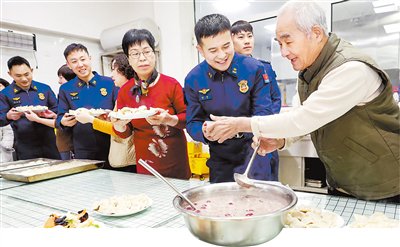
粥香年味暖九州
Xin Lang Cai Jing· 2026-01-25 22:24
Core Insights - The consumption of traditional food ingredients during the Laba Festival has seen significant growth, reflecting a deepening cultural confidence among consumers [1][2][3] Group 1: Consumption Trends - The sales of wheat kernels surged by 250% year-on-year, while chickpeas increased by 117%, and mixed grain gift boxes grew by 76%, indicating a revival and upgrade of traditional Laba porridge [1] - The top two ingredients by sales volume were fragrant rice and long-grain rice, together accounting for over 40% of total sales, showcasing a preference for quality ingredients [1] Group 2: Regional Variations - Guangdong led the nation with 14.4% of the total sales for Laba Festival ingredients, followed by Jiangsu and Sichuan, highlighting the emphasis on Laba dietary customs in southern regions [2] - Ningxia exhibited a remarkable year-on-year growth of 155% in related ingredient sales, demonstrating the increasing popularity of traditional festivals across various regions [2] Group 3: Consumer Demographics - The age group of 36 to 45 years accounted for 41% of the total sales, positioning them as the main consumer force and key transmitters of traditional culture [2] - Younger consumers preferred visually appealing ingredients like pearl rice and purple rice, while middle-aged consumers favored health-oriented options such as germinated rice and mixed grain gift boxes, and older consumers showed a preference for classic grains like chickpeas and sorghum [2] Group 4: Cultural Significance - The search volume for Laba-related keywords has seen explosive growth, with searches for Laba rice increasing by 200% and Laba tofu by 157%, indicating that traditional foods are becoming cultural symbols embraced by younger generations [3] - The consumption trends during the Laba Festival not only reflect market vitality but also signify the enduring life force of traditional culture, as it integrates into modern lifestyles [3]