自主深空探测器

Search documents
“十五五”深空科技行业深度研究及趋势前景预测报告
Xin Lang Cai Jing· 2026-01-21 13:49
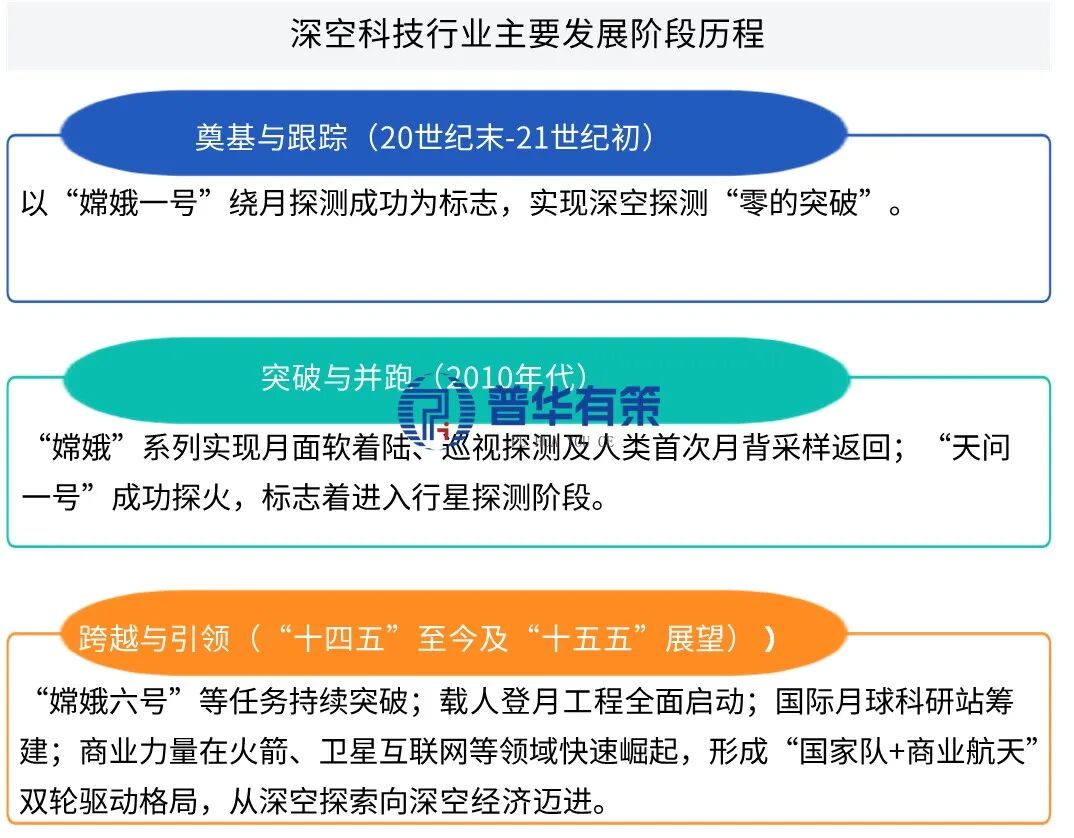
Core Insights - The deep space economy is entering a golden decade, driven by new productive forces that will stimulate future growth [1] - The deep space technology sector focuses on the exploration, development, and sustainable utilization of celestial bodies beyond the Moon, integrating advanced technologies such as AI and renewable energy [1][24] - China's deep space technology has evolved from lunar exploration to interplanetary missions, with significant achievements like the Tianwen-1 Mars mission and plans for human lunar landings by 2030 [4][24] Industry Overview - Deep space technology encompasses cutting-edge scientific research, disruptive technology development, and major equipment manufacturing aimed at sustainable utilization [1][24] - The industry has transitioned from a planned research model to a market-oriented and ecological model, characterized by collaboration between state-owned enterprises and private companies [25] Competitive Landscape - The competitive structure of China's deep space technology industry features a "national team" leading system innovation, commercial enterprises focusing on niche breakthroughs, and collaborative development among academia, industry, and research [25] - The first tier consists of state-owned enterprises like China Aerospace Science and Technology Corporation, which dominate design and integration for major national projects [25] - The second tier includes commercial companies making breakthroughs in key subsystems and emerging launch sectors, while the third tier comprises startups focused on new applications and data services [26] Key Drivers of Industry Development - National strategic goals, such as building a "strong aerospace nation," serve as a fundamental driving force for the industry [27] - The integration of disruptive technologies, particularly AI, is transforming deep space activities and enhancing mission success rates [28] - Strong market demand, particularly in satellite internet and resource utilization, is attracting global capital and driving sustainable growth expectations [29] Policy Environment - Since the 14th Five-Year Plan, policies have accelerated the transition of deep space technology from top-level planning to industry cultivation, emphasizing the importance of technological innovation [11] - The 2025 Central Economic Work Conference highlighted the need for technological innovation to lead the construction of a modern industrial system, providing clear directives for the deep space sector [11]