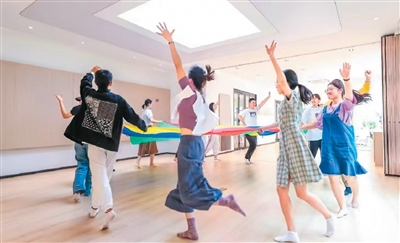
舞蹈治疗专业课程

Search documents
跳舞何以疗愈身心?
Ren Min Ri Bao Hai Wai Ban· 2025-10-19 22:51
Core Insights - The article discusses the introduction of "Dance Therapy" as a new undergraduate major in China's higher education system, specifically at Nanjing Normal University of Special Education, which has begun enrollment this year [4][9]. Summary by Sections Dance Therapy Overview - Dance therapy is fundamentally different from traditional dance education, focusing on the body as a medium of expression without fixed standards of movement or aesthetic judgment [5][6]. - It integrates psychology, dance, medicine, and rehabilitation sciences to help individuals regulate their psychological states, improve emotional well-being, and enhance social skills [5][6]. Target Groups and Applications - The therapy is applicable to a wide range of groups, including children with autism, Alzheimer's patients, and individuals with social anxiety, as well as the general public facing emotional challenges [6][11]. - Dance therapy originated in the 1940s in Europe and the U.S., initially used for veterans with schizophrenia, and has gradually been introduced to China since the 1990s [6][11]. Therapeutic Effects - The therapeutic effects of dance can be understood in two dimensions: "treatment" for those with specific medical diagnoses and "healing" for individuals experiencing emotional distress [7][8]. - Students in dance therapy classes report significant improvements in their mental states, with self-assessments rising from scores of 3-4 to 8-9 after participating in dance activities [7][8]. Educational Framework - Nanjing Normal University of Special Education has over 40 years of experience in special education and has developed a specialized curriculum for dance therapy, including courses in psychology and dance anatomy [9][10]. - The curriculum emphasizes "embodied cognition," encouraging students to deepen self-awareness through personal experience, which is essential for serving special populations [10]. Future Prospects - The demand for professionals in dance therapy is expected to grow due to increasing social pressures and the need for mental health support, particularly in special education [11]. - Graduates can work in various fields, including hospitals, special education schools, and community wellness centers, providing therapeutic support and developing emotional management programs [11].