蜜丸

Search documents
中药资源高效利用引关注 研讨会共探科学管理路径
Xin Hua Cai Jing· 2025-10-21 13:04
Core Viewpoint - The seminar on "Maximizing the Utilization of Traditional Chinese Medicine Resources" highlighted the need for a more precise and dynamic management model for the shelf life of certain stable and uniquely processed traditional Chinese medicines, aiming to enhance resource utilization in the industry [2][3]. Group 1: Industry Context - The Chinese government has been promoting the inheritance and innovative development of traditional Chinese medicine (TCM), with the "14th Five-Year Plan for TCM Development" emphasizing the protection and utilization of TCM resources as a key support for high-quality industry development [2]. - The current labeling of shelf life for domestic traditional Chinese medicine products typically does not exceed 5 years, which may lead to resource waste due to mismatches with the unique properties of certain formulations [2][3]. Group 2: Expert Opinions - Experts suggest that the shelf life of certain traditional Chinese medicines, such as Pizhou Huang, which has a unique preparation process and is less affected by environmental factors, should be explored for dynamic management [2][3]. - The Vice President of Guangyuyuan Traditional Chinese Medicine Co., Ltd. noted that the typical shelf life of traditional Chinese medicine in practice is 3 to 5 years, contrasting with longer shelf lives approved abroad, indicating a need for scientific research to support potential extensions [2][3]. - The Director of the R&D Innovation Center at Dong'e Ejiao Co., Ltd. emphasized the importance of regulatory policies reflecting the traditional characteristics and scientific basis of TCM, advocating for the exploration of extending shelf life based on sufficient research [3][5]. Group 3: Scientific Management Approaches - Industry insiders advocate for a comprehensive assessment of the shelf life of TCM formulations, combining traditional knowledge with modern scientific methods, and applying flexible management strategies to reduce resource waste [5][6]. - The Director of the Drug Quality Control Center at Beijing TCM Administration highlighted that data from long-term monitoring of samples could support extending shelf life, while also suggesting categorizing TCM based on their properties for effective management [5][6]. - The use of molecular markers to model the relationship between storage duration and the quality of medicinal materials is proposed to optimize inventory management and reduce waste [6].

“同仁堂杯”职工职业技能竞赛暨全国中药传统名堂职业技能竞赛开赛
Zhong Guo Zhi Liang Xin Wen Wang· 2025-08-05 09:09
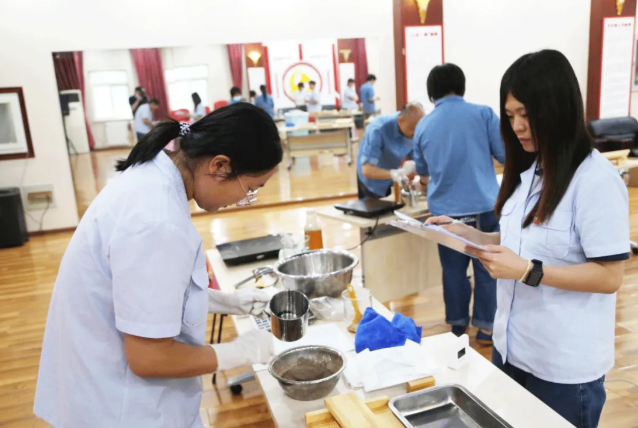
Core Points - The "Tongrentang Cup" vocational skills competition has commenced, highlighting the importance of traditional Chinese medicine craftsmanship [1] - The competition includes new categories for traditional Chinese medicine production, emphasizing the significance of these skills in modern times [3] - The increased difficulty of the competition challenges participants to demonstrate comprehensive skills across multiple traditional medicine production techniques [5] Group 1: Competition Overview - The event features 35 participants in traditional Chinese medicine production and 100 in medicine identification, with 35 and 18 advancing to practical preliminaries respectively [3] - The addition of traditional Chinese medicine production as a new category aims to enhance the development and transmission of traditional skills [3] Group 2: Participant Performance - Notable performances include Sun Xiaoguang from Yizhuang Factory, who excelled in the pill-making process, completing the initial step in just half an hour [7] - Zhang Ziwei from Daxing Factory demonstrated exceptional skill in slicing, producing uniform slices of Huangqi that met standards [9] - Du Zongru from Liujiayao Factory showcased her expertise in honey pill production, effectively controlling the heat during the critical refining stage [12] Group 3: Advancement in Competition - A total of 13 participants from the traditional medicine production category and 10 from the medicine identification category advanced to the semifinals [14]