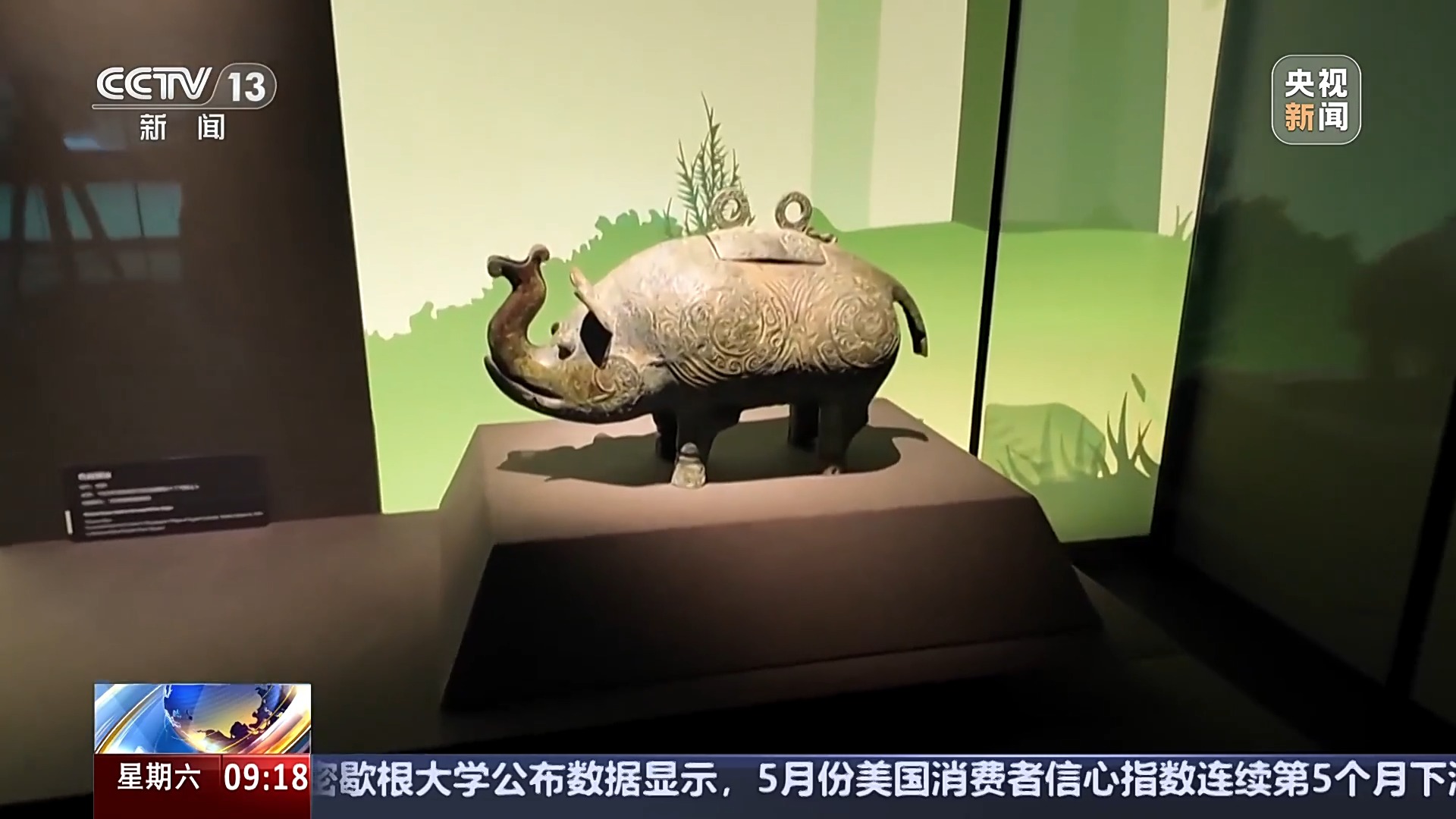
西周象尊

Search documents
文化中国行丨3000多岁的对“象”、奇幻的昆虫世界……这些博物馆能玩又能学
Yang Shi Xin Wen· 2025-05-17 05:41
Group 1 - The article highlights the significance of the Baoji Bronze Museum, which houses over 480,000 artifacts, primarily focusing on Shang and Zhou dynasty bronze items, including the earliest written record of "China" found on the He Zun [1][5] - The museum features a unique 3,000-year-old elephant-shaped bronze vessel, known as Xiang Zun, which serves as a wine container and reflects the cultural and climatic history of the Guanzhong region [2][6][10] - The design of the Xiang Zun is noted for its scientific and practical features, such as a level alignment of the trunk and back, preventing spillage, and a spout for pouring, showcasing advanced understanding of physics [8][10] Group 2 - The Baoji Bronze Museum is renowned for its collection of animal-shaped bronze artifacts, which provide insights into the natural world as perceived by the people of the Zhou dynasty, contributing to the understanding of Chinese civilization [10] - The museum's exhibits include various animal-themed bronzes, such as the bronze mother and child tiger and unique three-legged bronze birds, emphasizing the diversity of ancient Chinese craftsmanship [10] - The article emphasizes the cultural significance of the Xiang Zun, as the elephant symbolizes auspiciousness in Chinese tradition, reflecting ancient people's aspirations for a good life [6][10]

文博日历丨西周“三不像”高萌来袭~
Yang Shi Xin Wen· 2025-04-27 23:16
Group 1 - The article introduces a mythical creature called "貘" (mò), which combines features of sheep, pigs, and bears, characterized by its short neck, round eyes, large ears, and a plump body [4][8] - The discovery of the "貘" is significant for understanding ancient Chinese geography, as it suggests that this creature lived in the Shanxi region around 3,000 years ago, indicating a different climate and environment compared to today [11][13] - The "貘" was associated with protective symbolism in the Western Zhou period, believed to ward off evil and ensure safety [8][11] Group 2 - The extinction of the "貘" is attributed to climate change and human activities, including habitat reduction due to agricultural development and hunting for its skin, which was considered a luxury item [17][19] - The article mentions the existence of the Malayan tapir, a close relative of the "貘," which provides insights into the characteristics of the ancient "貘" [19] - Various ancient artifacts, such as bronze vessels modeled after animals, reflect the historical distribution of species like the "貘" and contribute to ecological history [21][23]