青铜器文化

Search documents
文博日历丨像马不是马,这个青铜器上画的动物究竟是啥
Xin Lang Cai Jing· 2026-01-02 22:40
Core Viewpoint - The article discusses the unique characteristics and historical significance of a bronze vessel known as the "beast face pattern gui," which features a distinctive animal depiction and is linked to a specific ancient tribe in the Shang Dynasty [2][6]. Group 1: Description of the Vessel - The gui is characterized by a beast face with long ears and a body adorned with a "three-layer flower" design, discovered in a Shang Dynasty tomb in Shanxi Province [2][4]. - The vessel's design includes a symmetrical arrangement of features such as horns, eyebrows, eyes, ears, and claws, with particularly vivid eyes presented in a relief style [4]. - The "three-layer flower" technique represents the highest level of craftsmanship in bronze decoration, showcasing intricate and detailed patterns [5]. Group 2: The Animal Depiction - The gui features a realistic depiction of an animal that resembles both a horse and a donkey, characterized by a low head, slouched shoulders, and a strong body, suggesting it may represent a mule [5]. - Historical texts indicate that mules, a hybrid of horses and donkeys, were known in ancient times, and archaeological evidence suggests their presence in the region around 2000 BC [5]. Group 3: Cultural and Historical Context - The animal image on the gui likely serves as a symbol or emblem of a specific tribe, possibly the "Bing" clan from the Jingjie Shang tomb, which had close ties to the Shang Dynasty [6]. - The "Bing" clan was a military aristocracy located at a strategic point, indicating their significant role in the political landscape of the late Shang period [6]. - The presence of other tribal emblems in the same tomb suggests a complex relationship between various groups during this historical period, highlighting the gui as a testament to the cultural interactions of the time [6].

文化中国行丨3000多岁的对“象”、奇幻的昆虫世界……这些博物馆能玩又能学
Yang Shi Xin Wen· 2025-05-17 05:41
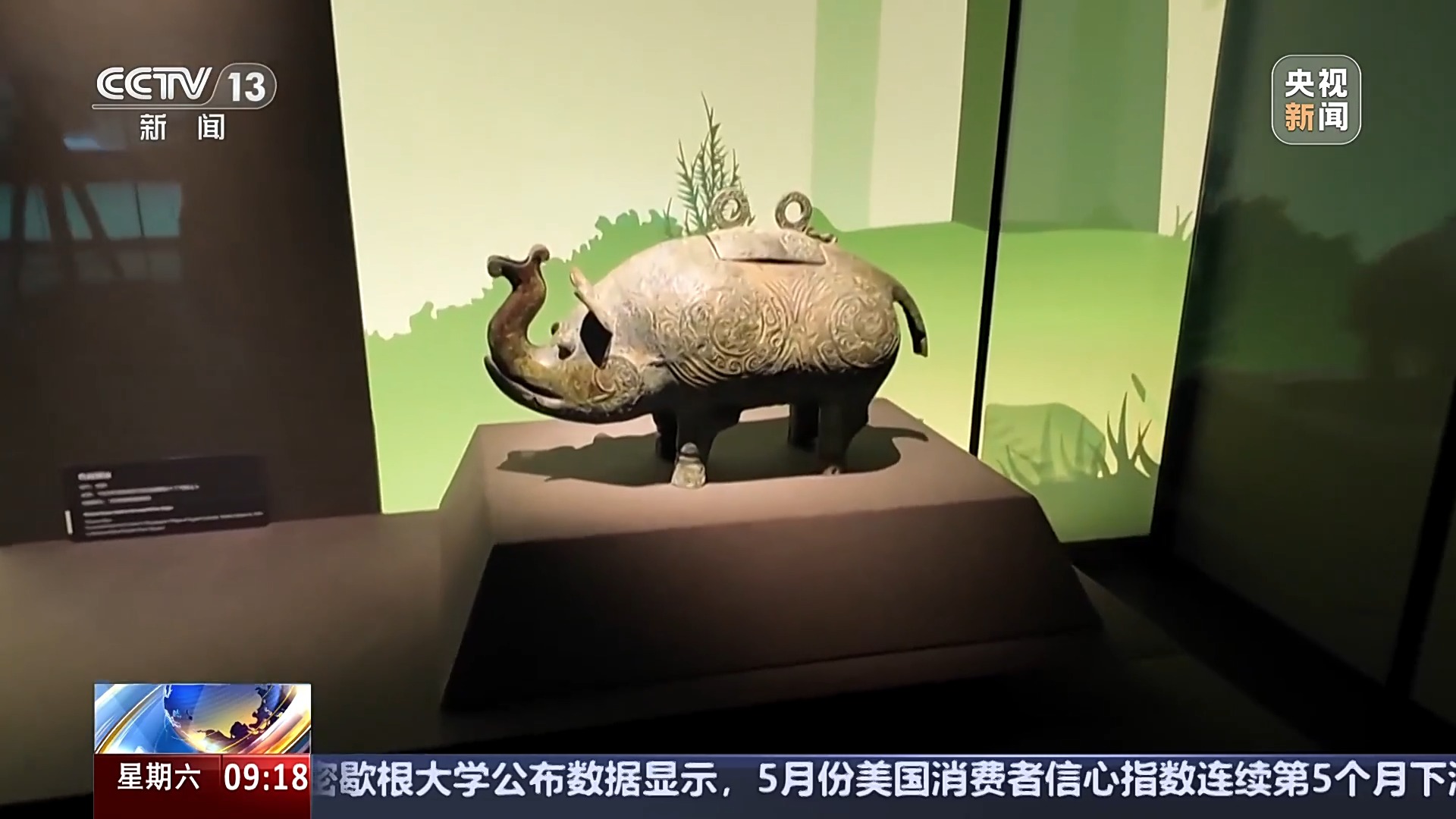
Group 1 - The article highlights the significance of the Baoji Bronze Museum, which houses over 480,000 artifacts, primarily focusing on Shang and Zhou dynasty bronze items, including the earliest written record of "China" found on the He Zun [1][5] - The museum features a unique 3,000-year-old elephant-shaped bronze vessel, known as Xiang Zun, which serves as a wine container and reflects the cultural and climatic history of the Guanzhong region [2][6][10] - The design of the Xiang Zun is noted for its scientific and practical features, such as a level alignment of the trunk and back, preventing spillage, and a spout for pouring, showcasing advanced understanding of physics [8][10] Group 2 - The Baoji Bronze Museum is renowned for its collection of animal-shaped bronze artifacts, which provide insights into the natural world as perceived by the people of the Zhou dynasty, contributing to the understanding of Chinese civilization [10] - The museum's exhibits include various animal-themed bronzes, such as the bronze mother and child tiger and unique three-legged bronze birds, emphasizing the diversity of ancient Chinese craftsmanship [10] - The article emphasizes the cultural significance of the Xiang Zun, as the elephant symbolizes auspiciousness in Chinese tradition, reflecting ancient people's aspirations for a good life [6][10]