西藏旅游

Search documents
西藏2025年接待游客超7070万人次
Xin Lang Cai Jing· 2026-01-24 05:10
Group 1 - The core viewpoint of the article highlights the significant growth in Tibet's cultural and tourism industry, with a reported output value of 150.13 billion RMB in 2025, marking a year-on-year increase of 35.29% [1] - The number of domestic and international tourists reached 70.73 million in 2025, reflecting a year-on-year growth of 10.71% [1] - Total tourism expenditure in Tibet amounted to 81.68 billion RMB, which is a year-on-year increase of 9.51% [1] Group 2 - The Tibet Cultural and Tourism Department reported the identification of over 31,000 new tourism resources, with 944 rated as five-star, 2,372 as four-star, and 10,202 as three-star [3] - The region introduced 19 new boutique scenic spots, 4 tourism counties, 14 four-star scenic areas, and several health and green tourism bases [3] - In 2025, Tibet will focus on the "Happy Tibet · Zhashidele" cultural tourism brand, promoting 18 boutique travel routes and facilitating 25 special tourist trains to Tibet [3] Group 3 - A national survey indicated an overall tourist satisfaction rate of 87.3%, with 86.9% satisfaction among local tourists and 87.9% among external tourists [3] - The willingness of external tourists to revisit Tibet stands at 87.5% [3]

今年前三季度西藏国际旅游收入1.58亿美元
Zhong Guo Xin Wen Wang· 2025-10-11 07:21
Core Insights - Tibet's tourism revenue for the first three quarters of this year reached $158 million, showing a year-on-year increase of 27.24% [1] - The region welcomed a total of 63.71 million domestic and international tourists, marking an 11.21% increase compared to the previous year [1] - The number of inbound tourists reached 356,700, reflecting a significant growth of 33.45% year-on-year [1] Tourism Statistics - In September alone, Tibet received 5.74 million tourists, with inbound visitors numbering 64,400, which is a 20% increase [1] - The total tourism expenditure in the first three quarters amounted to 736.73 billion RMB, up by 9.87% [1] - During the National Day and Mid-Autumn Festival holiday from October 1 to 8, Tibet hosted 3.76 million tourists, generating a total tourism revenue of 1.95 billion RMB [1] Future Projections - For the year 2024, Tibet is projected to receive 63.89 million tourists, including 320,400 inbound visitors, with an expected international tourism revenue of $150 million [2] - The inbound tourist numbers and international tourism revenue for the first three quarters of this year have already surpassed the total figures projected for 2024 [2]
“一错又一错”拥有旺盛生命力 350秒解锁踏“错”之旅全新方式 | 辉煌60载 魅力新西藏
Yang Shi Wang· 2025-08-20 09:24
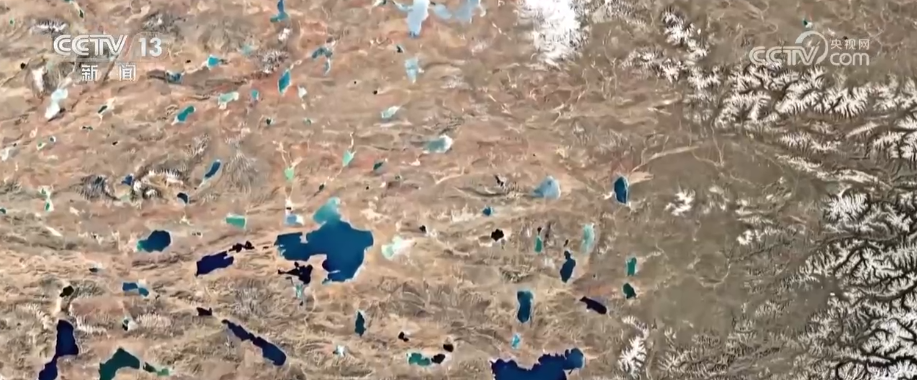
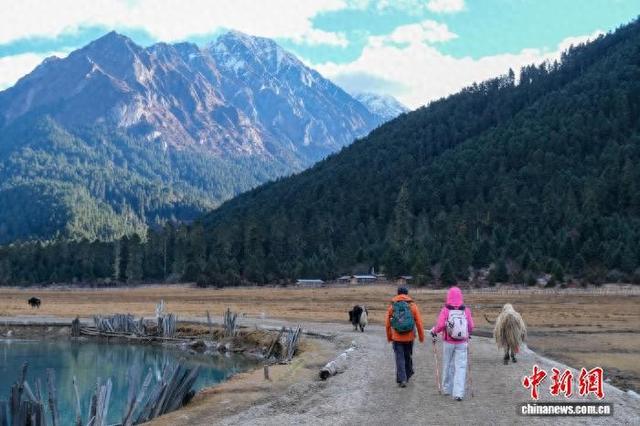
Core Viewpoint - Tibet's lakes, referred to as "cuo" in Tibetan, are a significant attraction for tourists, with a focus on the unique natural beauty and ecological importance of these high-altitude water bodies [1][4]. Group 1: Geographic and Ecological Significance - Tibet is home to the world's highest and largest distribution of plateau lakes, with over 1,500 lakes larger than 1 square kilometer [4]. - The region features the world's largest saline lake, with a water storage capacity exceeding 87 billion cubic meters, primarily sourced from precipitation and glacial melt [7]. Group 2: Conservation Efforts - To protect the ecology and mitigate human impact, 107 businesses and 45 temporary stalls in the core area of Namtso Lake were relocated by 2018 [13]. - Monthly water quality monitoring is conducted by researchers from the Chinese Academy of Sciences at Namtso Lake [11]. Group 3: Tourism Development - The Baksongcuo area is transitioning from a sightseeing destination to a comprehensive vacation spot, with plans for the "National Tourism Resort Planning for Greater Baksongcuo" set to launch in 2025 [16]. - The local village of Jiebazhen, previously underdeveloped, has seen a transformation into a sought-after destination with over 50 boutique guesthouses, significantly increasing local income [19]. Group 4: Natural Beauty and Visitor Experience - Baksongcuo is renowned for its turquoise waters, which change color with the seasons, reflecting different shades of blue and green [17]. - The area combines ancient villages, pristine forests, wetlands, and hidden lakes, offering a blend of natural scenery and cultural experiences [23]. Group 5: Infrastructure and Innovation - The region is experiencing ecological improvement, enhanced infrastructure, and innovative cultural tourism, contributing to a vibrant and sustainable tourism environment in Tibet [26].