谷氨酰胺

Search documents
我国生物制造产业10大链主企业分析
DT新材料· 2026-03-04 16:05
Core Insights - The 11th Bio-based Conference and Exhibition will be held in Shanghai from May 20-22, focusing on bio-based chemicals and materials, featuring 11 thematic forums, 7 concurrent activities, and 1000 new product displays [2] Group 1: Company Overview - Kasei Biotech, established in 2000, focuses on synthetic biology and bio-manufacturing technology, becoming a global leader in producing new bio-based materials [3] - Kasei Biotech's revenue for 2025 is projected to reach 3.295 billion yuan, marking an 11.41% increase, with a net profit of 566 million yuan, up 15.7% [3] - Huaheng Biotech, founded in 2005, plans to list in Hong Kong and expects a revenue of 2.885 billion yuan in 2025, a 32.5% increase, but a net profit decrease of approximately 30% [9][10] - Huadong Medicine achieved a revenue of 41.906 billion yuan in 2024, a 3.16% increase, with a net profit of 3.512 billion yuan, up 23.72% [14] Group 2: Main Business Composition - Kasei Biotech's main revenue sources include long-chain dicarboxylic acids (2.67 billion yuan, 90.26% of revenue) and bio-based polyamides (144 million yuan, 4.88% of revenue) [6] - Huaheng Biotech's main products include amino acids (1.509 billion yuan, 69.29% of revenue) and vitamins (207 million yuan, 9.49% of revenue) [10] - Huadong Medicine's industrial microbiology segment saw revenue growth from 510 million yuan in 2022 to 711 million yuan in 2024, with a CAGR of 18.07% [14] Group 3: Research and Development Projects - Kasei Biotech is investing in projects like bio-manufacturing research with a total investment of 6.3 million yuan, focusing on fermentation and extraction technology [7] - Huaheng Biotech has multiple ongoing projects, including optimizing amino acid production strains and developing high-purity amino acid removal processes [11][12] - Huadong Medicine has initiated 393 research projects in industrial microbiology, focusing on xRNA raw materials and health-related products [18] Group 4: Development Strategies - Kasei Biotech aims to expand large-scale applications of bio-materials to replace petrochemical products and utilize agricultural waste for bio-manufacturing [8] - Huaheng Biotech focuses on becoming a leader in synthetic biology through innovation and collaboration, emphasizing the use of renewable resources [13] - Huadong Medicine is accelerating its business layout through cooperation and acquisitions, focusing on xRNA raw materials and health products [25] Group 5: Financial Performance - Kasei Biotech's revenue for 2025 is projected to be 3.295 billion yuan, with a net profit of 566 million yuan [3] - Huaheng Biotech expects a revenue of 2.885 billion yuan in 2025, with a significant decrease in net profit [9] - Huadong Medicine's revenue reached 41.906 billion yuan in 2024, with a notable increase in net profit [14] Group 6: Market Trends - The bio-based industry is witnessing a shift towards sustainable materials, with companies focusing on reducing reliance on fossil fuels and enhancing the use of agricultural by-products [8][13] - The demand for bio-based products is expected to grow, driven by environmental concerns and regulatory support for sustainable practices [2][8]






登上《科学》封面 中瑞科研团队联手揭晓根系微生物“安家”奥秘
Zhong Guo Xin Wen Wang· 2025-10-03 05:49
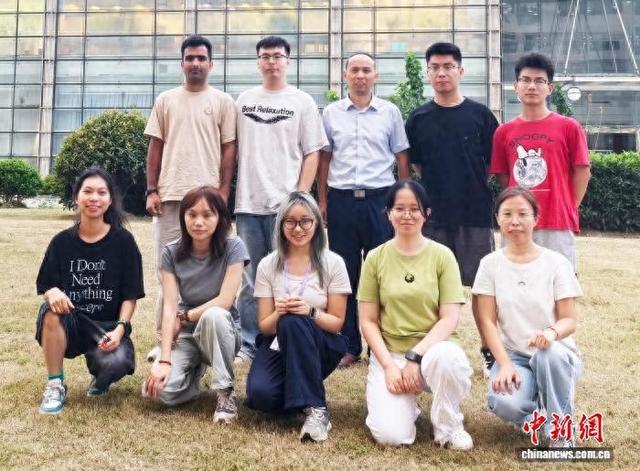
Core Insights - The research conducted by the team from the Chinese Academy of Sciences and the University of Lausanne reveals the mechanisms by which plant roots guide microorganisms to settle on their surfaces, creating a "settlement map" of root-associated microbes [1][3] Group 1: Research Findings - The study identifies that the settlement of microorganisms on root surfaces is not random but follows a systematic spatial distribution [3] - A critical structure called the Casparian strip acts as a "smart gate" that regulates the leakage of nutrients, particularly the amino acid glutamine, which attracts microorganisms through chemotaxis [3][4] - The research highlights the importance of the Casparian strip in maintaining a healthy balance of root-associated microbial communities by controlling nutrient leakage and preventing excessive proliferation of pathogenic microbes [4] Group 2: Practical Implications - The findings suggest the potential for designing amino acid-based microbial fertilizers to precisely guide beneficial microbial colonization, thereby enhancing crop nutrient absorption efficiency and resilience [5] Group 3: Collaborative Efforts - The research is a product of collaboration between Chinese and Swiss research teams, initiated during the postdoctoral research of the lead researcher at the University of Lausanne, which laid the groundwork for this significant discovery [8]
中国科学院最新论文,登上Science封面
生物世界· 2025-10-03 04:50
Core Insights - The research published in Science reveals that localized glutamine leakage from the vascular tissue is a key factor driving the spatial structure of root microbial colonization, highlighting a previously unknown pathway for root exudate formation [2][3][11] Group 1: Mechanisms of Microbial Colonization - The study demonstrates that the Casparian strip, which forms a barrier in root cells, regulates nutrient leakage to the rhizosphere, influencing bacterial colonization patterns [3][8] - Glutamine leakage from vascular tissues acts as a major attractant and proliferative agent for bacteria, indicating its critical role in shaping microbial communities around plant roots [3][9] - The research identifies that amino acid sensing-deficient bacteria show significantly reduced attraction to leakage sites, while Casparian strip-deficient roots exhibit excessive bacterial proliferation, dependent on the bacteria's metabolic capabilities [3][9] Group 2: Implications for Plant Health - The findings suggest that the nutrient limitation mechanism of the endodermis is crucial for regulating bacterial colonization and community assembly, effectively preventing the overgrowth of potentially harmful bacteria [3][11] - The study emphasizes the importance of selective recruitment of soil bacteria by plants to form specialized rhizosphere microbial communities, which are vital for root development and plant health [7][11] Group 3: Research Methodology and Findings - The research utilized confocal microscopy to visualize bacterial colonization patterns around newly formed lateral roots, revealing that localized glutamine leakage induces spatially restricted gene activity in bacteria [7][11] - The study introduces the concept of "transient metabolite leakage," providing a new perspective on how low molecular weight metabolites are released from vascular tissue, complementing existing mechanisms of controlled exudation [11] - The research highlights the dynamic interactions between roots and microbes, suggesting that transient leakage creates conditions for microbial community "seeding" [11]