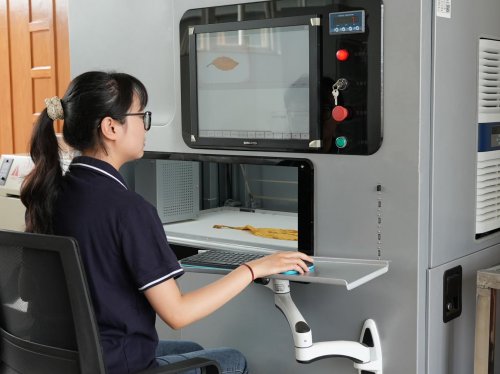
质构仪

Search documents
固态电池投资盛宴开启:检测设备,被低估的“黄金赛道”
Xin Lang Cai Jing· 2026-02-27 10:36
Core Insights - The all-solid-state battery technology is driving a revolution in new energy materials, with a projected global equipment market growth rate of nearly 80% from 2026 to 2030, increasing from 2.8 billion to 27.7 billion yuan [2][14] - Detection equipment, due to its high technical barriers and strong customization, has become a focal point in the industry chain, spanning the entire lifecycle from materials to cells and production lines [2][14] Industry Trends - The transition of all-solid-state battery technology from laboratory to pilot and mass production signifies a profound material revolution in the new energy industry [2][14] - The core of detection has shifted from electrochemical performance screening in liquid batteries to addressing the "solid-solid interface" contact issues in solid-state batteries, which are critical for performance and safety [2][14] Technological Requirements - Solid-state batteries require a pressure environment of 60-80 tons during the formation process, compared to just 3-10 tons for liquid batteries, leading to a demand for precise control equipment [3][15] - The high precision requirements for detection mean that equipment is now a core part of the production process rather than just an auxiliary tool [3][15] Detection Equipment Overview - A comprehensive detection equipment system has emerged, covering material analysis, failure diagnosis, and production line quality control [4][16] - Material purity and mechanical properties are crucial for solid-state battery performance, necessitating precise composition analysis and mechanical testing [5][16] Failure Analysis - The core issue in solid-state battery failure analysis is distinguishing between mechanical and chemical failures [6][17] - Advanced non-destructive testing technologies, such as high-resolution nano-CT, are being utilized to monitor defects and structural changes without damaging the battery [6][17] Safety Verification - Solid-state batteries must undergo rigorous testing under extreme conditions to validate their safety claims [7][18] - Equipment like the BTC-500 calorimeter is used to simulate abuse conditions and provide critical data for safety boundaries [7][18] Production Line Detection - Detection equipment must adapt to large-scale, high-speed production environments as solid-state batteries move from laboratory to mass production [8][18] - Companies are developing systems that can precisely monitor and control pressure during the formation process, ensuring data accuracy [8][18] Industry Collaboration - The evolving technology landscape of solid-state batteries necessitates deep customization and collaborative R&D capabilities from detection equipment manufacturers [9][19] - Companies are forming deep partnerships with leading battery manufacturers to provide integrated solutions that follow the evolving production processes [9][19] Conclusion - The industrialization of solid-state batteries represents a fundamental shift from liquid to solid processes, with detection equipment playing a critical role in defining processes, verifying safety, and identifying failures [10][20] - Companies that can effectively address the "solid-solid interface" challenges and provide comprehensive lifecycle detection solutions will be well-positioned in the market [11][20]


固态电池投资盛宴开启:检测设备,被低估的“黄金赛道”
仪器信息网· 2026-02-27 09:05
Core Viewpoint - The article emphasizes that the transition to all-solid-state battery technology is driving a significant revolution in new energy materials, with the global equipment market projected to grow from 2.8 billion to 27.7 billion from 2026 to 2030, reflecting a compound annual growth rate (CAGR) of nearly 80% [2]. Group 1: Industry Trends - The shift from laboratory to pilot and mass production of all-solid-state batteries is leading to a profound materials revolution in the new energy sector [2]. - The detection equipment segment is becoming a focal point in the industry chain due to its high technical barriers and strong customization requirements, making it a competitive area for upstream and downstream players [2]. Group 2: Technological Changes - The transition to all-solid-state batteries introduces new requirements for detection equipment due to the five major process changes, which include "dry-glue-stack-press" methods, necessitating high precision in monitoring the solid-solid interface [3]. - The pressure requirements for the formation process of solid-state batteries range from 60 to 80 tons, compared to only 3 to 10 tons for liquid batteries, highlighting the need for advanced pressure control equipment [3]. Group 3: Detection Equipment Lifecycle - A comprehensive detection equipment system has emerged, covering the entire lifecycle from material analysis to failure diagnosis and production line quality control [4]. Group 4: Material Level Analysis - The performance of solid-state batteries is highly dependent on the purity and mechanical properties of raw materials, with precise control over the composition being critical [5]. - Equipment such as high-frequency infrared carbon-sulfur analyzers is being utilized to ensure the consistency of key materials like lithium sulfide [5]. Group 5: Failure Analysis - The core issue in solid-state battery failure analysis is determining whether performance degradation is due to mechanical or chemical failure [6]. - Advanced non-destructive testing technologies, such as high-resolution nano-CT, are being developed to monitor defects and structural changes within the battery without causing damage [6]. Group 6: Cell and Safety Verification - Solid-state batteries are marketed as "high safety," but their performance under extreme conditions requires rigorous validation [7]. - Equipment like the BTC-500 adiabatic calorimeter is used to conduct thermal runaway tests on solid-state batteries, providing critical data for safety assessments [7]. Group 7: Production Line Detection - As solid-state batteries transition from laboratory to mass production, detection equipment must adapt to high-volume, high-speed manufacturing environments [9]. - Systems capable of precise pressure monitoring and control are essential for ensuring consistent production quality [9]. Group 8: Industry Collaboration - The evolving technology landscape of solid-state batteries necessitates deep customization and collaborative development between detection equipment manufacturers and battery producers [10]. - Companies are forming deep partnerships to provide integrated solutions that follow the advancements in battery manufacturing processes [10]. Conclusion - The industrialization of solid-state batteries represents a fundamental shift from liquid to solid processes, with detection equipment becoming a core component in defining processes, verifying safety, and identifying failures [11]. - Companies that can effectively address the challenges of the solid-solid interface and provide comprehensive lifecycle detection solutions are positioned to gain a competitive advantage in the market [11].

科技赋能“第一阵地” 以设备升级重构烟叶研究新范式
Zhong Guo Chan Ye Jing Ji Xin Xi Wang· 2025-08-19 06:10
Core Viewpoint - The introduction of new testing equipment at the Yunnan Tobacco Leaf Re-drying Co., Ltd. Xuanwei Factory marks a significant upgrade in tobacco leaf research, transitioning from traditional methods to a more advanced, multi-dimensional approach that incorporates mechanical and optical properties, thereby enhancing the quality and efficiency of tobacco processing [1][3][11] Group 1: Technological Advancements - The Xuanwei Factory has introduced a texture analyzer and a comprehensive tobacco testing platform, which signifies a shift from basic chemical analysis to a more detailed examination of mechanical characteristics and digital color detection [1][3] - Traditional methods focused on chemical composition and physical structure, but lacked the assessment of mechanical and optical indicators that affect the intrinsic quality of tobacco leaves [3][10] - The new equipment allows for precise measurement of key indicators such as tensile strength, adhesion, penetration strength, shear strength, and leaf stem bonding strength, overcoming the limitations of subjective visual assessments [5][10] Group 2: Data Collaboration - A collaborative database has been established between Xuanwei Factory and Zhejiang Zhongyan, which has enriched the quality characteristics database with over 2,000 sets of mechanical data and 6,000 sets of comprehensive testing data for the 2024 roasting season [7][8] - This data-driven approach enhances the efficiency of formula organization and provides robust support for the potential of "Li Qun" brand raw materials [8][10] Group 3: Process Optimization - The mechanical data obtained from the texture analyzer aids in providing targeted parameter adjustments for the re-drying process, helping to maintain the structural integrity of tobacco leaves and reduce breakage rates [10] - The optical data from the comprehensive testing platform contributes to controlling color stability, ensuring consistent quality in the appearance of finished tobacco products [10][11] - The collaboration between Xuanwei Factory and Zhejiang Zhongyan aims to build a joint research laboratory to further enhance innovation and establish a replicable model for raw material research [10][11]