
固态电池

Search documents
固态电池技术路线与商业化展望(附35页PPT)
材料汇· 2026-03-31 15:31
Group 1 - The core viewpoint of the article emphasizes the advantages of solid-state batteries over traditional liquid electrolyte lithium-ion batteries, particularly in terms of safety, energy density, and cycle life [3][5][6]. - Solid-state batteries utilize non-flammable solid electrolytes, which significantly reduce the risks of fire and explosion associated with liquid electrolytes [3][5]. - The article highlights that solid-state batteries can achieve over 10,000 charge cycles, making them suitable for applications in electric vehicles and energy storage systems [5][6]. Group 2 - The structure of solid-state batteries consists of five core components: cathode material, electrolyte, separator, anode material, and current collector, which collectively influence performance and manufacturing challenges [7]. - Various solid electrolyte technologies are compared, with sulfide-based electrolytes showing superior ionic conductivity and performance, while oxide-based electrolytes offer better stability [10][11]. - The article discusses the challenges in the industrialization of solid-state batteries, including material and interface issues, as well as manufacturing bottlenecks [28][31]. Group 3 - The article outlines the key trends in solid-state battery materials, indicating that sulfide materials are the main focus for high-performance batteries, while oxide materials are more suitable for engineering applications [23][24]. - It notes that high-nickel ternary materials are preferred for high-end applications, while lithium iron phosphate (LFP) is favored for its cost-effectiveness and safety in mass production [24]. - The article emphasizes the importance of policy support in driving the industrialization of solid-state batteries, highlighting initiatives aimed at fostering collaboration across the supply chain [58][63]. Group 4 - The article identifies leading companies in the solid-state battery sector, such as CATL and Guoxuan High-Tech, which are making significant advancements in technology and production capabilities [65][71]. - It mentions that companies like Qingtao Energy and BETTERRY are focusing on sulfide solid electrolytes and have made progress in achieving high energy densities and safety standards [65][77]. - The article concludes that the solid-state battery industry is evolving with diverse material paths and ongoing research, indicating a competitive landscape among various players [25][27].

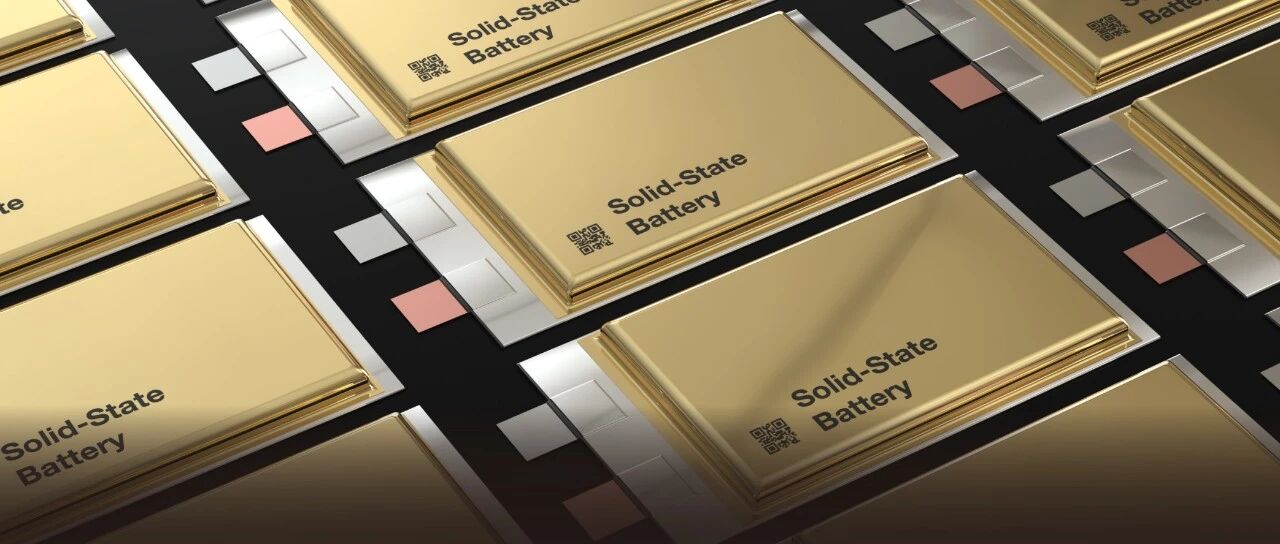
固态电池跟踪报告:中试关键期,产业链迎机遇
Dongguan Securities· 2026-03-31 11:12
Investment Rating - The report maintains an "Overweight" rating for the lithium battery industry, highlighting a critical period for pilot testing and opportunities within the industry [1]. Core Insights - The report emphasizes the continuous policy support for solid-state battery development, with new national standards expected to be implemented by July 2026, which will drive the industry towards safer solid-state batteries [3][10][13]. - The diversification of downstream application scenarios is identified as a significant catalyst for the commercialization of solid-state battery technology, with applications in electric vehicles, high-end energy storage, eVTOL, humanoid robots, and commercial aerospace [14][18]. - The report notes that semi-solid batteries are entering mass production, while full solid-state batteries are in a critical pilot testing phase, with major automotive companies planning to validate solid-state battery integration by 2026 [28][32]. Summary by Sections 1. Policy Support for Solid-State Battery Development - Continuous policy reinforcement from the government is facilitating the rapid rise of the solid-state battery industry, with a focus on safety standards and industrial planning [10][11]. - The new national standard for electric vehicle batteries will enforce stringent safety requirements, pushing the industry towards solid-state technology [12][13]. 2. Diversification of Downstream Applications - Solid-state batteries exhibit superior performance metrics compared to traditional liquid batteries, including higher energy density and safety, making them suitable for various emerging fields [14][15]. - Major automotive manufacturers, both domestic and international, are planning to implement solid-state batteries in their vehicles by 2027, indicating a strong market demand [16][17]. 3. Production Progress of Solid-State Batteries - Semi-solid batteries have begun small-scale production, while full solid-state batteries are entering a critical verification phase, with several companies launching pilot projects [28][30]. - The report outlines the advancements in production technology, highlighting the need for new equipment and upgrades to existing production lines for solid-state batteries [35][36]. 4. Equipment and Material Systems Benefiting from Industrialization - The equipment sector is expected to benefit significantly from the industrialization of solid-state batteries, with the market for solid-state battery production equipment projected to reach approximately 108 billion yuan by 2030 [38][39]. - The materials used in solid-state batteries are undergoing upgrades, with sulfide electrolytes showing the most potential for application in solid-state technology [39][40].
赣锋锂业2025年实现扭亏为盈 持续推进全球锂资源布局
Zheng Quan Ri Bao Wang· 2026-03-31 10:49
Core Viewpoint - Ganfeng Lithium achieved significant financial recovery in 2025, with a revenue of 23.08 billion yuan and a net profit of 1.613 billion yuan, marking a turnaround from losses [1][2] Financial Performance - The company reported a revenue of 23.08 billion yuan, representing a year-on-year increase of 22.08% [1] - Net profit attributable to shareholders was 1.613 billion yuan, indicating a return to profitability [1] - A profit distribution plan was announced, proposing a cash dividend of 1.5 yuan per 10 shares, totaling approximately 315 million yuan [1] Lithium Market Dynamics - In 2025, lithium carbonate prices rebounded by over 24% from their low point, contributing to the recovery of the company's profitability [2] - Non-recurring gains significantly impacted financial results, with nearly 2 billion yuan from the disposal of subsidiary equity and fair value changes from holdings in Pilbara Minerals [2] - The lithium industry is expected to see a widening supply-demand gap in 2026, driven by factors such as the suspension of lithium concentrate exports from Zimbabwe and increased storage demand [3] Business Strategy and Growth - Ganfeng Lithium has established a comprehensive lithium ecosystem, covering resource development, lithium salt processing, battery manufacturing, and recycling [2] - The company is expanding its lithium resource layout globally, with significant production capacity from lithium resources in Argentina, Mali, and Zimbabwe [2] - The lithium battery segment is a key growth area, with a revenue increase of 15.7% in 2025, focusing on power batteries, energy storage batteries, and consumer batteries [4] - The company is advancing solid-state battery technology, having filed over 150 patents and achieving mass production of semi-solid and solid-state batteries [4] - Ganfeng Lithium aims to enhance its global resource layout and expand lithium salt and battery production capacity, leveraging its full industry chain advantages [4]

"半固态"集体除名,车企的"伪固态"要露馅了
鑫椤锂电· 2026-03-31 06:51
Core Viewpoint - The introduction of the national standard for solid-state batteries marks a significant shift towards standardization and rational development in the industry, ending the era of concept hype and focusing on genuine technological innovation [6][8]. 2025 Market Overview - The article outlines various market segments for 2025, including lithium carbonate, electrolytes, copper foil, lithium cobalt oxide, ternary materials, lithium iron phosphate, manganese lithium phosphate, and more, indicating a comprehensive analysis of the battery materials market [1]. National Standard for Solid-State Batteries - The new national standard categorizes batteries into three types based on electrolyte content: liquid batteries (over 20%), hybrid solid-liquid batteries (5% to 20%), and all-solid-state batteries (under 5%) [5][6]. - A key technical requirement is that the weight loss after 6 hours of vacuum baking at 120°C must be below 0.5%, which is crucial for distinguishing all-solid-state batteries from others [6]. - The standard also includes safety testing requirements, ensuring zero fire and explosion risks, which will serve as a "safety red line" for market entry [6]. Challenges in Solid-State Battery Production - Major challenges for large-scale production of all-solid-state batteries include material compatibility and interface stability, as well as the need for new manufacturing processes that differ from traditional lithium batteries [7]. - The industry anticipates that 2026 will be a critical year for hybrid solid-liquid batteries, which are expected to achieve energy densities of 300 to 360 Wh/kg and will be used in mid-to-high-end vehicles [7]. Future Outlook - The timeline for the commercialization of all-solid-state batteries is projected to begin with small-scale production in 2027, with broader adoption expected around 2030 [7]. - The implementation of the national standard is expected to redistribute research and funding towards companies that achieve breakthroughs in core materials and stable processes, benefiting both manufacturers and consumers [7][8].
广汽集团改革落地首年:销售连续3个季度环比增长,Robotaxi、飞行汽车和具身智能进入商业化窗口期
Jin Rong Jie· 2026-03-31 02:58
Core Insights - GAC Group reported a total revenue of approximately 96.54 billion yuan and annual vehicle sales of 1.7215 million units for 2025, indicating a positive trend in sales following the implementation of the "Panyu Action" reform [1][2] Group 1: Sales and Market Performance - Since Q2 2025, GAC Group has experienced continuous sales growth, with a nearly 30% increase in sales in the second half of the year compared to the first half [3] - In January and February 2026, cumulative sales reached 203,100 units, a year-on-year increase of 3%, with self-owned brand sales exceeding 84,800 units, up 43.25% [3] Group 2: Reform and Efficiency Improvements - The "Panyu Action" reform initiated at the end of 2024 has led to significant efficiency improvements, with product planning efficiency up by 30%, project approval efficiency up by 67%, and decision-making efficiency up by 85% [2] - The new model development cycle has been shortened to 18-21 months, reflecting the effectiveness of the reform [2] Group 3: International Expansion - GAC Group's overseas terminal sales reached nearly 130,000 units in 2025, a year-on-year increase of approximately 48%, with overseas revenue of 17.022 billion yuan, up 44.99% [4] - The company aims for overseas sales of 250,000 units in 2026, supported by localized operational strategies [6] Group 4: Research and Development - Cumulative R&D investment exceeded 62 billion yuan by the end of 2025, with over 24,900 patent applications, focusing on solid-state batteries, intelligent cockpits, and intelligent driving technologies [7] - GAC has entered a critical commercialization window for technologies related to Robotaxi, flying cars, and embodied intelligence [7][8]

固态电池,等等再说
汽车商业评论· 2026-03-30 23:04
Core Viewpoint - The solid-state battery technology is still in its early stages, with significant challenges remaining before it can be commercially viable. The industry is experiencing a disconnect between ambitious announcements and actual technological progress [3][21][38]. Group 1: Industry Perspectives - In 2023, solid-state batteries have not gained widespread attention in China, while liquid lithium batteries continue to thrive [3]. - The rapid announcements of solid-state battery production plans by various companies have created a "rush" mentality, where firms feel pressured to declare timelines to avoid being perceived as lagging behind [18][19]. - The solid-state battery has been touted as a disruptive technology, but many companies have been criticized for making exaggerated claims without substantial evidence [7][9][19]. Group 2: Technical Challenges - The primary technical hurdle for solid-state batteries is the "solid-solid interface contact problem," which complicates the movement of ions between solid materials [26][27]. - Current solid-state battery technologies are still largely experimental, with many companies struggling to transition from lab-scale prototypes to mass production [21][22][29]. - The industry is facing significant engineering challenges, including maintaining stable interfaces under dynamic conditions, which are not easily replicated in real-world applications [28][30][32]. Group 3: Market Dynamics - The solid-state battery market is characterized by a mix of optimism and skepticism, with many companies hedging their announcements by using terms like "verification" or "small batch" rather than committing to full-scale production [34]. - The timeline for achieving commercial viability for solid-state batteries is projected to extend beyond 2030, with ongoing research and development required to address fundamental technical issues [37][38]. - Companies like CATL are cautious in their approach, focusing on alternative solutions like semi-solid batteries while delaying aggressive commitments to solid-state technology [42].
赣锋锂业(01772) - 海外监管公告
2026-03-30 23:00
香港交易及結算所有限公司及香港聯合交易所有限公司對本公告的內 容 概 不 負 責,對 其 準 確 性 或 完 整 性 亦 不 發 表 任 何 聲 明,並 明 確 表 示,概 不對因本公告全部或任何部分內容而產生或因倚賴該等內容而引致的 任 何 損 失 承 擔 任 何 責 任。 (於中華人民共和國註冊成立之股份有限公司) (股份代號:1772) 海外監管公告 本公告乃根據香港聯合交易所有限公司證券上市規則第13.10B條 刊 發。 根據中華人民共和國的有關法例規定,江西贛鋒鋰業集團股份有限公司(「本 公 司」)在 深 圳 證 券 交 易 所 網 站(http://www.szse.cn/)刊 發 了 以 下 公 告。茲 載 列 如 下,僅 供 參 閱。 承董事會命 江西贛鋒鋰業集團股份有限公司 董事長 李良彬 中國‧ 江 西 二 零 二 六 年 三 月 三 十 一 日 江西赣锋锂业集团股份有限公司 2025 年年度报告全文 2025 年年度报告 第一节重要提示、目录和释义 公司董事会及董事、高级管理人员保证年度报告内容的真实、准确、完 整,不存在虚假记载、误导性陈述或重大遗漏,并承担个别和连带的法律责 任。 公 ...
固态电池新锐,斩获数亿A+轮融资
DT新材料· 2026-03-30 16:04
Core Viewpoint - Shenzhen He Yi New Energy Technology Co., Ltd. has completed a multi-billion A+ round financing, which will be used for solid-state battery production line construction, team expansion, and global operations [1] Group 1: Company Overview - He Yi New Energy was founded in 2019 and aims to become a global leader in high-energy batteries, with headquarters in Shenzhen and branches in Tianjin, Guangdong, and Zhejiang [1] - The core team has extensive experience from well-known companies such as ZTE, China Electronics Technology Group, and BAK [1] Group 2: Technology and Market Position - The company has achieved key breakthroughs in solid-state battery technology, with energy densities of ≥400Wh/kg for silicon-based anodes and ≥500Wh/kg for lithium metal anodes [2] - He Yi New Energy focuses on technology innovation and scalable delivery, starting from the consumer electronics sector and gradually expanding into larger battery markets [2] Group 3: Future Plans and Market Strategy - The A+ round financing will accelerate product upgrades and target high-growth sectors, establishing a dual-driven product matrix of "technology + scenarios" [2] - The company aims to build a strong competitive barrier in the trillion-level new energy market and promote high-quality development of the solid-state battery industry [2]
报名通道 | 2026高工固态电池技术与应用峰会倒计时24天
高工锂电· 2026-03-30 13:35
Core Viewpoint - The solid-state battery industry is entering a critical year in 2026, transitioning from technology validation to large-scale production, driven by policies, technology, capital, and application scenarios [1][2]. Group 1: Industry Development - The industry is moving from "technical exploration" to "industrialization and landing," with the Ministry of Industry and Information Technology designating solid-state batteries as a core breakthrough direction and establishing national standards [1]. - The core pain points of the industry are shifting from basic research to mass production, with a key window for small-scale production expected between 2026 and 2027 [1][2]. - The mainstream research direction is focusing on sulfide electrolytes due to their high ionic conductivity, while other routes like oxides and polymers are pursuing differentiated strategies [2]. Group 2: Application Scenarios - High-end passenger vehicles remain the primary window for the large-scale deployment of solid-state batteries, while new scenarios such as eVTOL, humanoid robots, AIDC data centers, and commercial aerospace are emerging as new battlegrounds for performance validation and commercial value [2]. - The industry is developing a multi-dimensional application landscape, with consumer electronics like two-wheelers and wearables seeing increased adoption [2]. Group 3: Industry Collaboration - The competition in the solid-state battery sector is evolving from a single-point battle among battery companies to an ecosystem competition involving materials, equipment, cells, vehicles, resources, and applications [2]. - Vertical integration trends are becoming prominent as automakers and upstream resource giants accelerate their entry into the industry [2][3]. Group 4: Cost and Supply Chain - Solid-state batteries currently cost over 30% more than traditional lithium batteries, with low yield rates and shortages of high-end raw materials posing significant challenges to mass production [3]. - The industry's development logic is shifting from "parameter competition" to creating value across the entire lifecycle, emphasizing collaborative innovation throughout the supply chain [3]. Group 5: Summit Highlights - The summit is a premier event in the new energy sector, featuring over 200 influential companies and 300 industry leaders from the lithium battery supply chain [5]. - It will include technical exchanges and new product showcases, with extensive media coverage and real-time interaction with 400,000 online followers [5]. Group 6: Agenda Overview - The summit will cover key topics such as overcoming commercial barriers, production bottlenecks, core material breakthroughs, and the impact of national standards on industry dynamics [7]. - Specific sessions will address the scaling of solid-state battery production processes, advancements in sulfide solid electrolytes, and the integration of AI in manufacturing [7]. Group 7: Invited Companies - Notable companies in the battery sector include CATL, BYD, and Guoxuan High-Tech, while material companies like Tianqi Lithium and equipment firms such as Liyuanheng are also participating [8]. - Automotive manufacturers and application scenario companies like Dongfeng Motor and DJI are expected to contribute to the discussions [8].
锂价回暖叠加非经常性收益,赣锋锂业2025年扭亏为盈,归母净利大增178%|财报见闻
Hua Er Jie Jian Wen· 2026-03-30 13:27
Core Viewpoint - Ganfeng Lithium achieved a significant turnaround in its financial performance for 2025, with a revenue of 23.08 billion yuan, a year-on-year increase of 22.08%, and a net profit of 1.613 billion yuan, recovering from a loss of 2.074 billion yuan the previous year, marking a 177.77% increase in profitability [1][2] Financial Performance - The company reported a total revenue of 23.08 billion yuan for 2025, reflecting a 22.08% year-on-year growth [2] - Net profit attributable to shareholders reached 1.613 billion yuan, a substantial recovery from a loss of 2.074 billion yuan in the previous year, representing a 177.77% increase [1][2] - The net profit after excluding non-recurring gains and losses was -385 million yuan, an improvement from -887 million yuan the previous year, narrowing the loss by 56.56% [2] - The net cash flow from operating activities was 2.945 billion yuan, a decrease of 42.94% year-on-year [2] - Basic earnings per share stood at 0.80 yuan [2] Lithium Price Dynamics - The lithium industry faced a significant adjustment in 2025, with lithium prices declining in the first half of the year, reaching a low of below 60,000 yuan/ton in late June [2] - A strong rebound in lithium prices occurred in the second half of the year, with prices increasing over 60% from mid-October to the end of the year [2] - The core contradiction in lithium price trends revolved around oversupply versus demand expectations, with energy storage being the major demand highlight for the year [2] Business Segments Performance - Revenue from lithium products reached 12.876 billion yuan, a year-on-year increase of 7.16%, with a gross margin of 15.52%, up 5.05 percentage points [2] - Revenue from lithium battery products surged to 8.234 billion yuan, a significant increase of 39.63%, with a gross margin of 14.60%, up 2.94 percentage points [2] - Other business revenues amounted to 1.971 billion yuan, reflecting a growth of 98.56% [2] Sales Volume - The company sold 184,800 tons of basic chemical materials (LCE), a year-on-year increase of 42.47% [3] - Sales of power storage batteries reached 17.82 GWh, a remarkable increase of 117.41% [3] - Sales of consumer electronics batteries totaled 425 million units, up 27.32% year-on-year [3] Product Development and Innovation - The company has developed a comprehensive range of lithium battery products, including solid-state batteries, power batteries, consumer batteries, and energy storage batteries [4] - In the power battery sector, the high energy density version of lithium iron phosphate batteries for commercial vehicles has achieved a breakthrough of 193 Wh/kg [4] - The company has also made advancements in solid-state batteries, achieving a cycle life of over 1100 times for 400 Wh/kg batteries and small-scale production of the world's first 500 Wh/kg 10 Ah product [4] Resource Management - The company has enhanced its global resource layout, with over 10 million tons of lithium resources under direct or indirect ownership as of the end of the reporting period [6] - Key projects include the Mount Marion lithium spodumene project in Australia, the Cauchari-Olaroz lithium salt lake project in Argentina, and the Goulamina lithium spodumene project in Mali [6] - Domestic resource development is also accelerating, with projects in Inner Mongolia and Jiangxi progressing towards full production [6] Financial Structure - As of the end of 2025, the company reported total assets of 113.258 billion yuan, a 12.32% increase from the previous year [7] - Net assets attributable to shareholders reached 45.145 billion yuan, up 8.05% year-on-year [7] - The debt-to-asset ratio was 54.23%, slightly up from the previous year [7] - The company proposed a cash dividend of 1.5 yuan per 10 shares, totaling approximately 315 million yuan, which represents 19.50% of the net profit attributable to shareholders [7]
