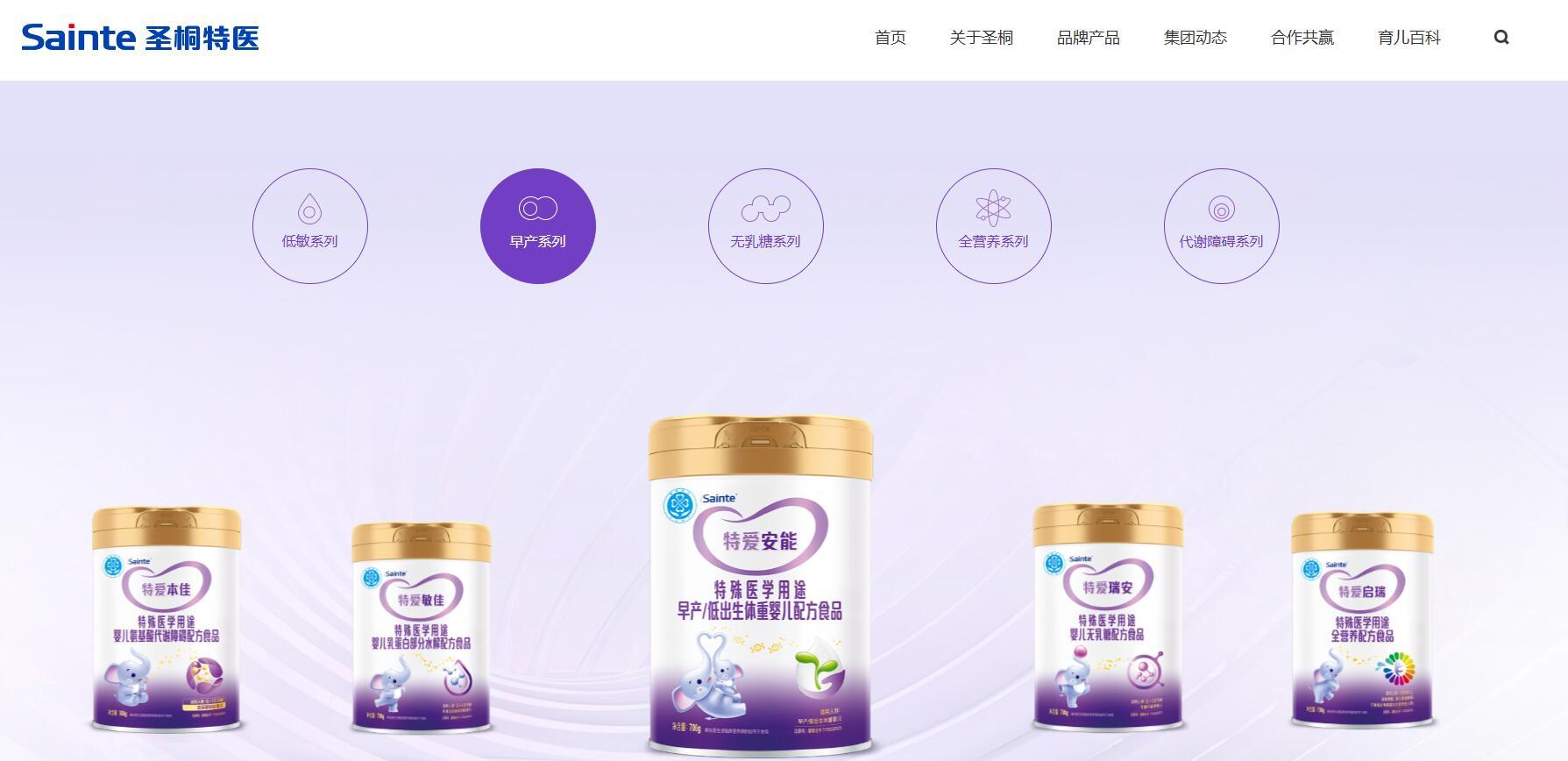
超启能恩

Search documents
圣桐特医IPO:左手“清仓式”分红右手募资补流 营收下滑、扣非净利增速骤降超五成生产依赖关联企业
Xin Lang Cai Jing· 2026-01-09 09:43
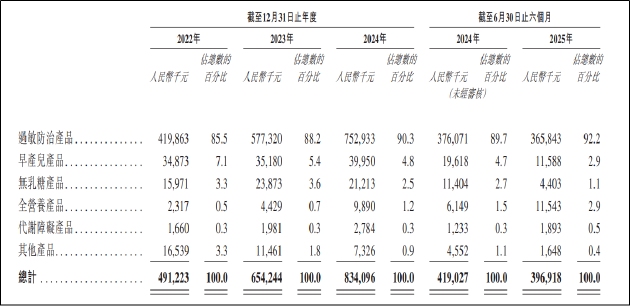
Core Viewpoint - Saintong Special Medical Nutrition Technology Co., Ltd. has refiled its IPO application after a previous failure, with a pre-IPO valuation of 2.6 billion RMB, but faces significant operational and financial challenges, including declining revenue, profit volatility, and heavy reliance on a single business line [1][11]. Financial Performance - From 2022 to 2024, the company's revenue grew from 491 million RMB to 834 million RMB, with a compound annual growth rate of 30.4%. However, in the first half of 2025, revenue fell by 5.28% to 397 million RMB [2][12]. - The net profit showed instability, with a 103.18% increase in 2023 to 170 million RMB, followed by a 44.77% drop in 2024 to 94.14 million RMB. The company attributed the decline to losses from financial instruments, indicating sensitivity to non-operational factors [2][12]. - The adjusted net profit growth rate has decreased significantly, with figures of 44.94%, 13.97%, and 3.37% for 2023, 2024, and the first half of 2025, respectively, suggesting potential growth bottlenecks [2][12]. Product Line and Revenue Contribution - The company has five product lines, but revenue is heavily concentrated in allergy prevention products, which accounted for 90.3% of total revenue in 2024, increasing to 92.2% in the first half of 2025 [3][13]. - Other product lines, such as premature infant and lactose-free products, have seen significant revenue declines, with drops of 40.82% and 61.40%, respectively, contributing to an overall revenue decline of 5.25% [4][14]. Market Presence and Brand Recognition - Saintong Special Medical has low visibility in the consumer market, with reports indicating its products are rarely found in major supermarkets and baby product chains [5][15]. - Online sales are also weak, with the flagship product achieving only 2,000 sales compared to over 70,000 for a competitor's similar product, highlighting a significant gap in brand recognition [6][16]. Marketing and R&D Expenditure - The company spends approximately 40% of its revenue on marketing and distribution, yet this has not translated into increased brand recognition or market penetration [6][16]. - R&D spending has been low, totaling only 30.65 million RMB from 2022 to 2024, representing just 1.3%-1.6% of revenue, raising concerns about the company's ability to innovate and maintain competitive advantages [6][16]. Operational Efficiency - The company's operating cycle has lengthened, with days extending from 123.01 in 2023 to 179.91 in the first half of 2025, indicating potential inventory issues [7][17]. - Inventory turnover days have increased significantly, suggesting possible inventory buildup and cash flow issues, which could lead to future write-downs [7][17]. Governance and Financial Risks - Over 50% of the company's revenue relies on outsourced production, primarily from an associated company, raising concerns about supply chain independence and governance risks [8][18]. - The company has engaged in aggressive dividend payouts, distributing 4.67 billion RMB in dividends, which is about 94% of its adjusted net profit from 2022 to 2024, leading to questions about its financial strategy amid significant debt [9][19].

刚换帅、裁员又全球召回,雀巢中国能否破局?
阿尔法工场研究院· 2026-01-09 00:04
Core Viewpoint - Nestlé faces a significant challenge in the Chinese market due to a global food safety alert that has led to the recall of infant formula products, coinciding with strategic adjustments within the company [2][4]. Group 1: Product Recall and Safety Concerns - Nestlé announced a preventive recall of infant formula in 31 countries, including China, due to potential contamination from a supplier's raw material [2][4]. - The recall involves 30 batches of products from four brands, including "Liduo Jing" and "Platinum Neng En," while major products like "Super Q Neng En" and "Qifu" remain unaffected [4]. - The recall is a precautionary measure, with no reported consumer illnesses, but it raises concerns about consumer trust in Nestlé's products [4][15]. Group 2: Management Changes and Strategic Adjustments - A new management team for Nestlé's nutrition business in China has been established, led by CEO Xie Guoyao, who faces immediate challenges due to the recall [5][8]. - The merger of Nestlé's infant nutrition business with Wyeth aims to enhance operational efficiency, but the recall tests the new team's ability to manage crises and maintain consumer trust [5][8]. - The new CEO, Kais Marzouki, has been tasked with reversing a trend of declining sales in the Chinese market, which has seen a drop from 6.913 billion Swiss francs in 2019 to 5.558 billion Swiss francs in 2024 [10]. Group 3: Market Performance and Competitive Landscape - Nestlé's infant nutrition business has struggled, with market share dropping from approximately 13% in 2019 to 10.7% in 2022, facing competition from local brands like Feihe and Junlebao [5][7]. - The company has experienced a -6.1% organic growth rate in the Greater China region, with the infant nutrition segment being a significant contributor to this decline [7][10]. - Local brands are gaining market share by leveraging localized formulas and lower prices, further challenging Nestlé's position in the market [13]. Group 4: Global Restructuring and Cost-Cutting Measures - Nestlé plans to lay off 16,000 employees globally, aiming for annual cost savings of 1 billion Swiss francs by 2027, with a focus on replacing human labor with technology [12][14]. - The restructuring includes optimizing overlapping white-collar positions, which may provide financial flexibility for investment in technology and food safety in China [12][14]. - Despite these efforts, there are concerns about the impact of layoffs on research and development capabilities, as well as the potential for increased scrutiny from consumers regarding product safety [13][15]. Group 5: Future Outlook and Challenges - The year 2026 is seen as a critical period for Nestlé in China, as the effectiveness of the merged nutrition business and the new management strategies will be tested [15]. - The company must address the immediate fallout from the recall while also adapting to changing consumer demands and accelerating product innovation to regain market share [15].
品控之困:雀巢奶粉全球召回再引风波
3 6 Ke· 2026-01-07 14:05
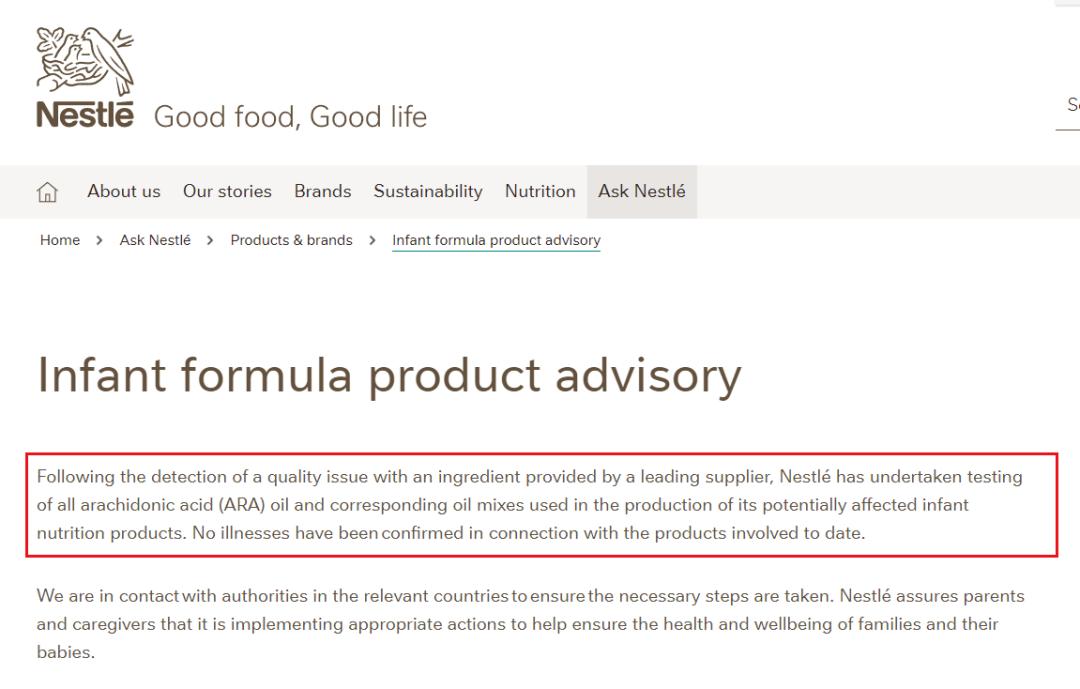
Core Viewpoint - Nestlé has initiated a precautionary recall of infant formula in several European countries due to quality issues with a supplier's ingredient, raising concerns about product safety and quality standards in the global food industry [1][4][5]. Group 1: Recall Announcement - On January 5, 2026, Nestlé announced a recall of a batch of infant formula in Germany, Austria, Denmark, Italy, and Sweden due to a "quality issue" with a specific ingredient [1]. - The company stated that it has conducted tests on potentially affected products and has not received any reports of illness related to the consumption of the recalled formula [1]. - Nestlé China confirmed that some products in the Chinese market may be affected and has also initiated a recall of specific batches as a precautionary measure [4]. Group 2: Market Position and Brand Strategy - Nestlé is a significant player in the global infant formula market, controlling a substantial market share in various regions, including 20% in Africa through brands like Cerelac and Nido [7]. - The company has adapted its product formulations in response to new national standards, such as increasing the types or amounts of certain beneficial oils in its products [6]. - Nestlé sells different brands in various countries, indicating a tailored approach to meet local market demands [6]. Group 3: Quality Concerns and Historical Context - Nestlé has faced multiple quality issues in recent years, including recalls due to high mineral content and potential contamination with Cronobacter [10][11]. - A report by a Swiss NGO highlighted discrepancies in sugar content in infant products sold in poorer countries compared to those in Europe, raising ethical concerns about product formulations [7]. - The company has been criticized for adding non-essential nutrients to attract children, which may lead to dependency on their products [9]. Group 4: Financial Performance and Market Challenges - Nestlé's infant nutrition business has shown fluctuations in performance, with sales in China experiencing a decline due to increased competition from local brands and changing market dynamics [13][14]. - In 2022, Nestlé reported a total revenue of 94.4 billion Swiss francs, with a slight growth in its infant nutrition segment, but faced challenges in maintaining market share [13]. - By 2025, the company reported a decline in total sales in the Greater China region, highlighting the pressures from local competitors and a decreasing birth rate [14][15].

谁在为“药奶”买单?圣桐特医赴港IPO 去年流动负债净额4亿元却分红3.5亿元
Mei Ri Jing Ji Xin Wen· 2025-06-10 02:16
Core Viewpoint - Saintong Special Medical (Qingdao) Nutrition Health Technology Co., Ltd. is preparing for an IPO in Hong Kong, backed by the dairy giant Shengyuan Group, and is positioned as a leading player in the special medical food market for infants in China, with a projected revenue CAGR of 30.3% from 2022 to 2024 [1][5]. Group 1: Company Overview - Saintong Special Medical was established in 2019, evolving from Shengyuan Group's special medical division, and has received investments from notable institutions such as Honghui Fund and Hillhouse Capital [5]. - The company holds the most infant special medical food registration certificates in China and aims to leverage this advantage in the market [1][11]. Group 2: Market Position and Financial Performance - In 2024, Saintong is projected to capture 9.5% of the infant special medical food market, ranking third in the industry, while two foreign giants dominate with a combined market share of approximately 75% [3][9]. - Revenue is expected to grow from RMB 491.2 million in 2022 to RMB 834.1 million in 2024, with a gross margin consistently above 71% [4][25]. Group 3: Sales and Distribution Challenges - Despite strong revenue growth, the brand's presence in major retail outlets is limited, with reports indicating that many stores do not carry its products [3][15]. - The company's online sales are significantly lower compared to competitors, with historical sales of only 2,000 units for a key product, compared to over 70,000 units for a rival brand [13][15]. Group 4: Financial Concerns - The company has seen a dramatic increase in inventory turnover days, rising 187% to 155 days over three years, which raises questions about inventory management [19][20]. - Saintong's net current liabilities exceeded RMB 400 million in 2024, yet the company has maintained high dividend payouts, raising concerns about financial sustainability [22][23]. Group 5: Research and Development - R&D expenditures have remained below 2% of revenue, which is significantly lower than industry standards, potentially hindering innovation and competitiveness [32][35]. - The company has launched 14 major special medical food products and has 16 more in development, indicating a commitment to expanding its product line [11][28].