
特殊医学用途配方食品

Search documents
每周海内外重要政策跟踪:全国两会召开,积极基调延续-20260306
Guoxin Securities· 2026-03-06 13:02
Domestic Macro - The Central Political Bureau emphasized the implementation of a more proactive fiscal policy and moderately loose monetary policy during a meeting on February 27 [11] - The China Securities Regulatory Commission (CSRC) released the "Private Investment Fund Information Disclosure Supervision and Management Measures," effective from September 1, 2026 [11] - The State Taxation Administration announced six measures to support the construction of a unified national market on March 2 [11] - The Ministry of Science and Technology and other departments jointly issued opinions to accelerate the high-quality development of technology insurance, proposing 20 policy measures [11] - The National Development and Reform Commission (NDRC) held a meeting with private enterprises to promote high-quality development [11] - The government work report presented at the Fourth Session of the 14th National People's Congress set the economic growth target for this year at 4.5%-5% [11] Industrial Policy - The China Manned Space Engineering Office plans to deepen the application and development of the space station and lunar exploration in 2026, with two manned flights and one cargo supply mission [12] - The Ministry of Industry and Information Technology issued guidelines for the comprehensive utilization of photovoltaic components on March 3 [12] - The Ministry of Ecology and Environment solicited opinions on the technical policy for the safety supervision of small nuclear power reactors [12] - The government work report identified integrated circuits, aerospace, biomedicine, and low-altitude economy as emerging pillar industries [12] Local Policy - Shenzhen released new regulations for urban renewal projects, allowing projects without completed planning approvals to not build affordable housing [12] - The Shenzhen Municipal Bureau of Commerce issued guidelines for the 2026 vehicle replacement subsidy program [12] - Measures to stabilize the birth rate were announced in Nanchong, Sichuan Province, including financial support for newlyweds [12] Overseas Dynamics - The Ministry of Commerce announced adjustments to anti-discrimination measures against Canada, canceling additional tariffs on certain Canadian imports, effective until December 31, 2026 [13] - Tensions escalated between Pakistan and Afghanistan, with military actions reported [13] - Israel conducted a preemptive strike against Iran, leading to significant disruptions in global shipping routes [13] - The EU proposed the "Industrial Accelerator Act," aiming to increase the manufacturing sector's GDP share to 20% by 2035 [13] - The U.S. Treasury announced the implementation of a 15% "global import tariff" [13]
特殊医学用途配方食品国产注册比例 增至近九成
Ren Min Ri Bao· 2026-02-25 06:30
Core Insights - The proportion of domestically registered special medical purpose formula foods has increased from 49% in 2020 to 88% by 2025 [1] - The market size for these products is projected to grow from 7 billion yuan in 2020 to 23 billion yuan by 2024, with a compound annual growth rate (CAGR) exceeding 25% [1] - The approval of special medical foods for rare diseases, such as methylmalonic acidemia, is expected to mark a breakthrough in domestic product offerings, ensuring essential nutrition for niche groups [1] - As of now, there are 293 registered special medical food products in China [1]
特殊医学用途配方食品国产注册比例增至近九成
Ren Min Ri Bao· 2026-02-24 00:55
Core Insights - The proportion of domestically registered special medical purpose formula foods in China is expected to increase from 49% in 2020 to 88% by 2025 [1] - The market size for these products is projected to grow from 7 billion yuan in 2020 to 23 billion yuan by 2024, with a compound annual growth rate exceeding 25% [1] - The approval of special medical foods for rare diseases, such as methylmalonic acidemia, is set to break new ground in 2025, ensuring the availability of essential nutrition for niche patient groups [1] - As of now, there are 293 registered special medical food products in China [1]
陕西西咸新区·秦汉大健康产业园迎来新成员
Xin Lang Cai Jing· 2026-01-16 02:28
Core Insights - The establishment of the Shaanxi Provincial Quality Supervision and Inspection Research Institute's high-tech laboratory in the Qinhan Health Industry Park marks a significant step in creating a leading health industry innovation hub in Western China [1][2] - The collaboration between Qinhan New City and the Shaanxi Provincial Market Supervision Administration aims to enhance the quality support of the health industry chain and improve the competitiveness and safety levels of the health industry in Shaanxi Province [2] Group 1 - The high-tech laboratory's entry signifies a new phase in the cooperation between the Shaanxi Provincial Quality Supervision Institute and local authorities, focusing on building a national-level health product quality inspection center and various innovation platforms [1] - The upcoming relocation of additional laboratories from the Shaanxi Provincial Quality Supervision Institute will lead to the establishment of two national-level centers, which will provide comprehensive inspection, quality evaluation, and technical research services in cutting-edge fields such as biomedicine and high-end medical devices [1] Group 2 - The integration of provincial quality inspection resources in the Qinhan Health Industry Park is crucial for bridging the gap in result transformation and enhancing the overall health industry ecosystem [2] - The presence of the Shaanxi Provincial Quality Supervision Institute is expected to attract high-quality enterprises, accelerate talent aggregation, and support the integrated model of "construction, operation, and management" within the park [2] - The ongoing construction of key projects, including the National Emergency Medical Rescue Base and a flagship hospital for integrated Chinese and Western medicine, will further enhance the health industry chain in the region [2]
六部门发文增强消费品供需适配性 2027年形成3个万亿级消费领域和10个千亿级消费热点
Zhong Guo Zheng Quan Bao· 2025-11-26 21:00
Core Viewpoint - The implementation plan aims to enhance the adaptability of supply and demand in consumer goods, promoting consumption upgrades to lead industrial upgrades and achieving a dynamic balance between supply and demand [1][3] Group 1: Key Areas of Focus - The plan outlines 19 key tasks across five areas, focusing on industries such as smart connected vehicles, smart home products, consumer electronics, modern textiles, food, and green building materials [1] - It emphasizes the development of innovative applications and the creation of flagship products and enterprises, along with establishing testing platforms in various consumer goods sectors [1] Group 2: Expanding Product Supply - The plan advocates for the development of leisure and sports products, targeting new demands from event economies and outdoor activities, and promoting high-quality sports equipment [2] - It aims to diversify product offerings for specific demographics, including children's products, quality student supplies, trendy items, and age-appropriate products [2] Group 3: Innovation and Internal Demand Activation - By 2027, the plan targets a significant optimization of the consumer goods supply structure, aiming to create three trillion-level consumption fields and ten hundred-billion-level consumption hotspots [3] - The policy is expected to positively impact various industries, including smart vehicles, home products, and health-related goods, by fostering technological innovation and responding to new market demands [3][4] Group 4: Focus on Specific Demographics - The policy particularly addresses the needs of specific consumer groups, promoting the refinement and quality enhancement of products for children, students, and the elderly [4] - New consumption formats such as live e-commerce and instant retail are expected to develop in an orderly manner, injecting vitality into core business districts and new product launches [4]
六部门发文增强消费品供需适配性
Zhong Guo Zheng Quan Bao· 2025-11-26 20:20
Core Viewpoint - The implementation plan aims to enhance the adaptability of supply and demand in consumer goods, promoting consumption upgrades to lead industrial upgrades and achieving a dynamic balance between supply and demand [1][2]. Group 1: Key Areas of Focus - The plan outlines 19 key tasks across five areas, focusing on industries such as smart connected vehicles, smart home products, consumer electronics, modern textiles, food, and green building materials [1]. - It emphasizes the development of leisure and sports products, targeting new demands from event economies, outdoor economies, and winter sports, while promoting high-quality sports equipment [1][2]. Group 2: Targeted Consumer Needs - The plan aims to match diverse consumer needs by enriching the supply of baby products, enhancing quality student supplies, expanding trendy products, and optimizing products for the elderly [2][3]. - It also seeks to cultivate new consumption scenarios and business models, including the promotion of product launches, orderly development of platform consumption, and regulated shared consumption [2]. Group 3: Future Goals - By 2027, the plan targets a significant optimization of the consumer goods supply structure, aiming to create three trillion-level consumption fields and ten hundred-billion-level consumption hotspots [2]. - By 2030, it envisions a high-quality development pattern where supply and consumption interact positively, with a steady increase in consumption's contribution to economic growth [2]. Group 4: Industry Impact - The implementation of the plan is expected to positively impact multiple industries, including smart connected vehicles, smart home products, consumer electronics, and green building materials, driving technological innovation through the creation of flagship products and innovative application scenarios [2][3]. - The sports and leisure product sectors are anticipated to benefit from new demands arising from event and outdoor economies, gaining new growth momentum [2].
新版特医食品生产许可审查细则征求意见 对原料安全要求更严格
Yang Shi Xin Wen· 2025-11-04 05:47
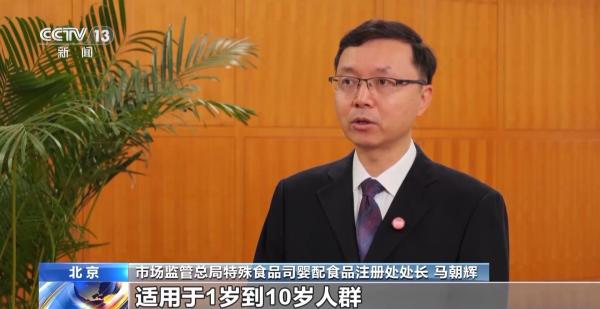
Core Viewpoint - The State Administration for Market Regulation (SAMR) is revising the production licensing review guidelines for special medical purpose formula foods, aiming to enhance the classification and safety management of these products for specific patient groups [1][2]. Group 1: Product Classification - The new guidelines significantly refine product categories, increasing the number of types from 27 to 46 [2]. - Full nutritional formula foods are now categorized based on age groups: suitable for ages 1 to 10, suitable for ages over 10, and specific nutritional adjustment formulas [4]. Group 2: Targeted Nutrition - The revised guidelines allow for more targeted selection of special medical purpose foods based on individual diseases and conditions, under medical guidance [6]. Group 3: Regulatory Oversight - SAMR has approved 236 products from 71 domestic companies and 32 products from 14 foreign companies [7]. - The new guidelines impose stricter requirements on raw material safety and key production process monitoring, ensuring higher safety standards compared to regular food products [8]. Group 4: Raw Material Management - Companies must establish monitoring mechanisms for risk substances in raw materials and ensure compliance with national standards during transportation [8]. - There are specific requirements for the inspection of raw materials, particularly those containing milk, to prevent contamination [10]. Group 5: Equipment and Hygiene Monitoring - The guidelines require production companies to equip critical machinery with operational monitoring and fault alarm functions to ensure compliance with technical requirements [12][13]. - Companies must implement hygiene monitoring systems for production environments, personnel, and equipment [10]. Group 6: Allergen Control - The new guidelines specify measures to manage allergenic substances during production, including the segregation of raw materials that contain allergens [14][16]. - Enhanced requirements for companies producing special medical foods to prevent cross-contamination with allergenic materials have been established [16].

特殊医学用途配方食品:政策红利与临床刚需驱动的蓝海市场,头豹词条报告系列
Tou Bao Yan Jiu Yuan· 2025-07-02 12:22
Investment Rating - The report indicates a positive outlook for the special medical purpose formula food industry, driven by policy support and clinical demand, suggesting a potential for rapid market expansion [3][10]. Core Insights - Special medical purpose formula foods (medical foods) are designed to meet the nutritional needs of specific populations and must be consumed under medical supervision. The market is expected to grow significantly due to increasing product diversity, enhanced policy support, and improved clinical nutrition practices [3][4][10]. - The industry is characterized by a growing number of approved products, a significant advantage for domestic brands, and a diverse range of entering companies [11][12][40]. Summary by Sections Industry Overview - Special medical purpose formula foods cater to individuals with restricted diets, absorption disorders, or specific medical conditions, and are becoming a vital part of treatment strategies for various diseases in China [4][6]. - The market currently has a low penetration rate due to insufficient awareness and regulatory standards, but it is poised for growth as recognition and product availability increase [32][33]. Regulatory Environment - The "Special Medical Purpose Formula Food Registration Management Measures (2024)" aims to standardize registration processes, ensuring product quality and safety while encouraging innovation [9][10][39]. - As of September 30, 2024, a total of 206 special medical foods have been registered, with 174 being domestic products, indicating a strong growth trend for local brands [11][12]. Market Dynamics - The industry is witnessing a diversification of companies entering the market, with 58 companies having obtained registration, and Nestlé leading in the number of approved products [12][40]. - The distribution channels for medical foods face challenges, particularly in offline retail, where awareness and proper categorization are lacking. However, online sales are expected to grow as regulations become clearer [22][33]. Product Analysis - Among the registered products, 58 are special medical infant formula foods, accounting for 28.2% of the total, while 82 are non-full nutritional formula foods, and 65 are full nutritional formula foods [21]. - The report highlights a trend towards convenience in product forms, with a majority being powder-based [11]. Competitive Landscape - The competitive landscape shows that domestic products outnumber imports, but there is a noted lack of product diversity among local companies, which may impact future growth [40][41]. - Companies are encouraged to pursue differentiated product strategies to enhance their market positions, with a focus on both infant and non-infant medical foods [42].
谁在为“药奶”买单?圣桐特医赴港IPO 去年流动负债净额4亿元却分红3.5亿元
Mei Ri Jing Ji Xin Wen· 2025-06-10 02:16
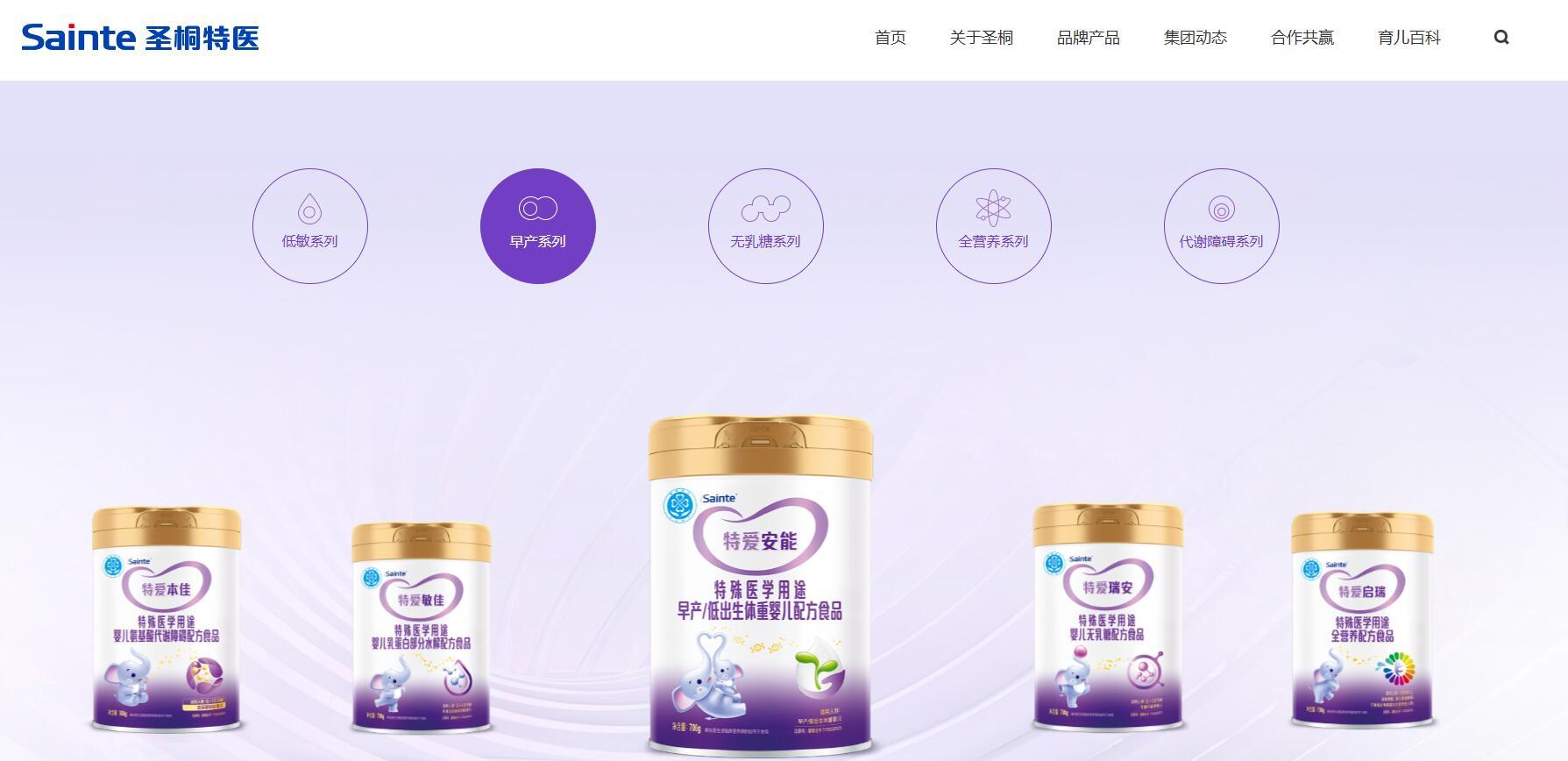
Core Viewpoint - Saintong Special Medical (Qingdao) Nutrition Health Technology Co., Ltd. is preparing for an IPO in Hong Kong, backed by the dairy giant Shengyuan Group, and is positioned as a leading player in the special medical food market for infants in China, with a projected revenue CAGR of 30.3% from 2022 to 2024 [1][5]. Group 1: Company Overview - Saintong Special Medical was established in 2019, evolving from Shengyuan Group's special medical division, and has received investments from notable institutions such as Honghui Fund and Hillhouse Capital [5]. - The company holds the most infant special medical food registration certificates in China and aims to leverage this advantage in the market [1][11]. Group 2: Market Position and Financial Performance - In 2024, Saintong is projected to capture 9.5% of the infant special medical food market, ranking third in the industry, while two foreign giants dominate with a combined market share of approximately 75% [3][9]. - Revenue is expected to grow from RMB 491.2 million in 2022 to RMB 834.1 million in 2024, with a gross margin consistently above 71% [4][25]. Group 3: Sales and Distribution Challenges - Despite strong revenue growth, the brand's presence in major retail outlets is limited, with reports indicating that many stores do not carry its products [3][15]. - The company's online sales are significantly lower compared to competitors, with historical sales of only 2,000 units for a key product, compared to over 70,000 units for a rival brand [13][15]. Group 4: Financial Concerns - The company has seen a dramatic increase in inventory turnover days, rising 187% to 155 days over three years, which raises questions about inventory management [19][20]. - Saintong's net current liabilities exceeded RMB 400 million in 2024, yet the company has maintained high dividend payouts, raising concerns about financial sustainability [22][23]. Group 5: Research and Development - R&D expenditures have remained below 2% of revenue, which is significantly lower than industry standards, potentially hindering innovation and competitiveness [32][35]. - The company has launched 14 major special medical food products and has 16 more in development, indicating a commitment to expanding its product line [11][28].
国产特医食品首单IPO在望?圣桐特医的红利与焦虑
Hua Er Jie Jian Wen· 2025-06-07 06:47
Core Viewpoint - The first listed company in the special medical purpose formula food sector in China is expected to emerge, with Saintong Special Medical (Qingdao) Nutrition and Health Technology Co., Ltd. filing for an IPO in Hong Kong [1] Group 1: Market Position and Competition - Saintong Special Medical holds a 6.3% market share, ranking fourth in the Chinese market, and is the only domestic brand among the top five [2] - The company has achieved a breakthrough with two special medical foods for rare diseases approved in early 2025, marking a significant milestone for domestic brands [2] - The competition in the special medical food sector is intensifying as more formulas are approved, posing a challenge for Saintong Special Medical to maintain its competitive edge [2][12] Group 2: Regulatory Environment and Industry Development - The approval of the Special Medical Purpose Formula Food Registration Management Measures in 2016 initiated a period of standardized development for the industry [3] - The high entry barriers due to stringent registration requirements and long approval cycles (1-3 years) create a challenging environment for new entrants [3] Group 3: Product Portfolio and Financial Performance - Saintong Special Medical holds six infant special medical food registration certificates, the highest among domestic brands [4] - The company achieved revenue of 834 million yuan in 2024, with a compound annual growth rate of 30.3% over the past three years [5] - The average selling price of the allergy prevention product series is 332 yuan per kilogram, with a gross margin of 72%, significantly higher than that of its discontinued non-special medical milk powder [5] - The adjusted net profit for 2024 is close to 200 million yuan, with an adjusted net profit margin of 23.9%, surpassing that of high-end milk powder brands like Feihe [5] Group 4: Production and Operational Efficiency - Approximately 40% of the company's products have yet to complete domestic registration [6] - The company has outsourced production to its controlling shareholder's subsidiary in South Korea, optimizing capital return efficiency [7] - The return on equity (ROE) reached an impressive 75% after excluding the impact of financial liabilities [8] - The adjusted asset-liability ratio is 1.6% in 2024, with minimal leasing liabilities and bank loans [11] Group 5: Future Growth and Strategic Direction - The special medical food market is still considered a niche sector, with a total market size of 23.2 billion yuan in 2024, and the infant special medical food market reaching 13.5 billion yuan [26] - Saintong Special Medical plans to shift its focus towards non-infant special medical foods, aiming to commercialize 12 new products within five years [27] - The company is developing specific full-nutrition formula foods for diseases, with a longer registration cycle of 3-5 years due to stricter standards [29][30] - The increasing approval speed of formulas is expected to heighten competition in the sector [32]