超级玛丽重疾险系列

Search documents
手回集团与南开大学发布第六期商业健康养老指数报告:养老保障水平仍有发展空间,健康保障需求分化明显
Sou Hu Cai Jing· 2025-10-22 16:18
Core Insights - The report titled "Health and Pension Insurance Security Index Research Report (2024)" was jointly released by Shouhui Group and Nankai University, marking the sixth market research report since their collaboration began in 2019 [2][4] - The report emphasizes the evolution of health insurance in China, focusing on the integration of health and pension insurance, and the need for innovative products to address the gaps in coverage [27][28] Group 1: Market Analysis - The report is based on 4,200 valid questionnaires and incorporates policy guidance and market trends, exploring topics such as the silver economy, pension security, and the synergy between commercial health insurance and the pension industry [4][27] - The average health insurance index for Chinese residents in 2024 is 0.6241, with 91.18% of respondents having basic or below-level health coverage; the average pension insurance index is 0.4706, with 76.66% of respondents at a low level of pension coverage [27][28] Group 2: Challenges and Recommendations - The report highlights the over-reliance on the first pillar of basic pension insurance, with only 32.03% of respondents having enterprise annuities and a mere 8.64% purchasing commercial pension insurance [27][28] - Recommendations include optimizing incentive policies for the second and third pillars of pension insurance, expanding coverage for enterprise and occupational annuities, and promoting product innovation to enhance participation among lower-income groups [28][30] Group 3: Industry Trends - The health insurance market is experiencing a shift from a focus on one-time payouts to a multi-layered reimbursement model, with products like high-end medical insurance and inclusive health insurance gaining traction [29][30] - Shouhui Group is transitioning from a traditional insurance intermediary to a comprehensive health service platform, enhancing user engagement and satisfaction through technology and product innovation [31][33]


新股解读|手回集团:线上保险中介“二哥”,难破增长“三重门”
智通财经网· 2025-05-22 02:16
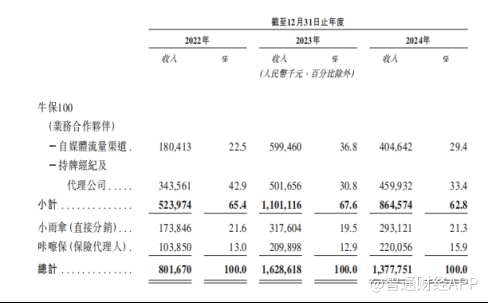
Core Viewpoint - After three submissions for an IPO, Shouhui Group Limited, a personal insurance intermediary service provider, has successfully passed the listing hearing at the Hong Kong Stock Exchange, marking a significant step towards entering the capital market [1] Company Overview - Established in 2015, Shouhui Group has built a substantial business footprint in the digital personal insurance transaction and service sector over ten years, leveraging three major platforms: Xiaoyusan, Kachabao, and Niubao100 to create a diversified distribution channel matrix [2] Financial Performance - Shouhui Group's revenue experienced fluctuations, rising from 806 million RMB in 2022 to 1.634 billion RMB in 2023, before declining to 1.387 billion RMB in 2024. The net profit shifted from a profit of 131 million RMB in 2022 to consecutive losses in the following two years [6][8] - The company's revenue structure shows a heavy reliance on long-term life insurance, which accounted for 59.4% of total revenue in 2023, but dropped to 33.8% in 2024 due to a significant decrease in commission rates [8][9] Market Position - In 2023, Shouhui Group held a 7.3% market share in China's online insurance intermediary sector, ranking second in terms of total premium for long-term personal insurance [4] - The company faces intense competition, with the leading player holding a 45.5% market share, highlighting the challenges in customer acquisition and resource integration [6] Challenges - The company has faced multiple challenges, including increased customer acquisition costs due to market saturation and regulatory changes impacting commission structures, leading to a decline in overall revenue [10][12] - Sales and marketing expenses rose from 98 million RMB in 2022 to 136 million RMB in 2024, reflecting the competitive pressures in the industry [10][11] Growth Potential - Despite challenges, Shouhui Group has a solid customer base, with over 1.6 million policyholders and 2.4 million insured individuals by 2024. The company aims to enhance its competitive edge through product customization and brand development [12][14] - The online insurance intermediary market in China is expected to continue expanding, with a projected compound annual growth rate of 32.3% from 2024 to 2028, indicating significant growth opportunities for Shouhui Group [14][15]
手回集团通过港交所聆讯:科技赋能出售超1900款保险产品,2024年营收约14亿元
IPO早知道· 2025-05-16 02:38
Core Insights - The article discusses the recent developments of Shouhui Group, a leading online insurance intermediary in China, which has passed the Hong Kong Stock Exchange hearing and is preparing for an IPO [1] Group 1: Company Overview - Shouhui Group, established in 2015, is the second-largest online insurance intermediary in China, holding a 7.3% market share in long-term life insurance premiums as of 2023 [1][3] - The company operates three main platforms: Xiaoyusan for direct online distribution, Kachabao for distribution through agents, and Niubao100 for partner-assisted distribution [1] Group 2: Product Offerings - Since its inception, Shouhui Group has distributed over 1,900 products, including more than 280 customized products and over 1,600 existing products from insurance companies [2] - As of December 31, 2024, the company has 306 products available for sale and has successfully incubated over 14 IPs covering various insurance types [2] Group 3: Financial Performance - From 2022 to 2024, Shouhui Group's revenue figures were 806 million, 1.634 billion, and 1.387 billion respectively, with gross margins of 34.8%, 33.8%, and 38.1% [3] - The adjusted net profits for the same period were 75 million, 253 million, and 242 million, with adjusted net profit margins of 9.3%, 15.5%, and 17.4% [3] Group 4: Investment and Future Plans - Shouhui Group has received investments from notable institutions such as Xintian Venture Capital, Sequoia China, and others [4] - The funds raised from the IPO will primarily be used to enhance sales and marketing networks, improve service capabilities, and invest in research and development [4]