
路网运行监测预警与应急指挥智能调度平台

Search documents
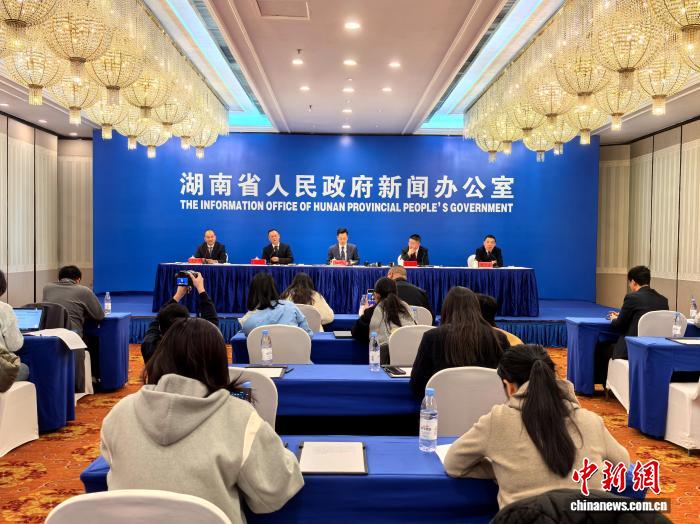
湖南五年累计完成公路水路投资5386亿元
Zhong Guo Xin Wen Wang· 2025-11-25 11:29
Core Viewpoint - Hunan Province has invested a total of 538.6 billion yuan in road and waterway infrastructure over the past five years, significantly enhancing its transportation network and logistics efficiency [1][3]. Investment and Infrastructure Development - The total investment in road and waterway infrastructure reached 538.6 billion yuan, averaging nearly 300 million yuan per day [1]. - The total length of roads will reach 270,000 kilometers, with highways accounting for 8,642 kilometers, ranking 9th in the country [1]. - The total navigable waterway length is 12,000 kilometers, ranking 3rd nationally, while the railway operating mileage is 6,079 kilometers, ranking 10th, including 2,501 kilometers of high-speed rail, ranking 5th [1]. Transportation Network Improvements - Hunan has achieved full high-speed rail connectivity between cities and a circular high-speed rail operation within the province [3]. - The provincial highway network now allows for direct access to all counties, with 31 expressway exit points facilitating interprovincial travel [3]. - The rural road network has expanded to 230,000 kilometers, ensuring connectivity to every town and important village [3]. Waterway and Logistics Enhancements - The province has developed 1,276 kilometers of Class I and above waterways, with the Xiang River's Class I waterway nearing full connectivity to the Yangtze River [4]. - The number of berths for vessels over 1,000 tons has reached 179, forming a modern inland waterway transport system centered around Dongting Lake [4]. - The total logistics costs as a percentage of GDP have decreased from 17.5% in 2015 to 14% in 2024, marking a continuous decline over ten years [3]. Service Quality and Digital Transformation - Hunan has shifted its transportation services from mere availability to quality, with 14,000 passenger vehicles serving rural areas [4]. - The province has implemented 12 multimodal transport routes, significantly reducing transportation costs for businesses [4]. - A total of 32,000 new energy or clean energy buses have been purchased, with green buses making up 97.5% of the fleet, the highest in the country [6]. Safety and Emergency Response - Hunan has completed a comprehensive risk assessment for natural disasters affecting road and waterway infrastructure, upgrading over 4,700 old bridges [6]. - The province has established a professional rescue force and a regional traffic equipment reserve center, achieving a 98.82% response rate for highway vehicle rescues within 30 minutes [7]. - Since the beginning of the "14th Five-Year Plan," traffic accidents and fatalities in the province have shown a continuous decline [7].

多地推动“人工智能+交通运输” 加快实现人享其行和物畅其流
Yang Guang Wang· 2025-11-03 00:17
Core Insights - The integration of artificial intelligence in transportation is rapidly evolving, enhancing both passenger travel and cargo logistics [1][2] - Multiple regions are implementing AI applications in transportation, with a focus on improving efficiency and safety [1][2] Group 1: AI Applications in Ports - The first national AI application pilot base in the transportation sector was launched in Qingdao in September, leading to practical explorations in AI + port operations [1] - Qingdao Port is developing over 20 data models and applications focused on key areas such as terminal production, autonomous driving, and safety management, resulting in a 15% increase in the utilization rate of terminals and storage areas [1] - Qingdao Port has successfully established fully automated terminals in phases, while traditional terminals are undergoing comprehensive smart upgrades [1] Group 2: AI in Highway Management - Hunan Province has developed an intelligent monitoring and emergency command platform for highway operations, utilizing data from high-definition cameras, millimeter-wave radar, and drones to capture real-time traffic changes and anomalies [1] - The AI recognition algorithms in Hunan's system enable timely detection of abnormal situations on the roads, with information being relayed to traffic police [1] Group 3: National Strategy and Innovation - The Ministry of Transport is focusing on ten key areas and has initiated over a hundred pilot demonstrations to drive innovation in the transportation sector [2] - This initiative aims to engage thousands of innovative entities, promoting deep integration of technological and industrial innovation to foster new productive forces [2]