跳灯

Search documents
隐藏式门把手退出,一点不值得可惜
Hu Xiu· 2025-09-22 06:04
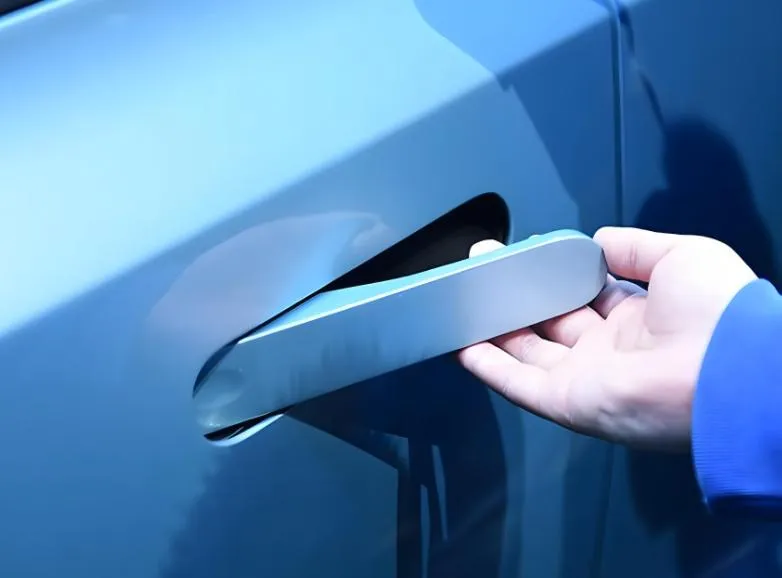
Core Viewpoint - The article discusses the trend of certain automotive designs, such as hidden door handles, being phased out due to safety regulations and changing consumer preferences, highlighting the balance between aesthetics and functionality in automotive design [3][34]. Group 1: Regulatory Changes - The Ministry of Industry and Information Technology initiated mandatory national standards for automotive door handles in May, requiring all fully hidden door handles to have mechanical redundancy [3]. - A proposed ban on fully hidden door handles is expected, allowing only semi-hidden and traditional handles, with a compliance deadline for automakers set for July 2027 [3][5]. Group 2: Design Appeal and Performance - Hidden door handles gained popularity for two main reasons: their aesthetic appeal, providing a sleek and futuristic look, and their potential to reduce aerodynamic drag, which is marketed as a performance benefit [7][8]. Group 3: Safety Concerns - Hidden door handles pose safety risks, such as being difficult to operate in emergencies, especially if the electronic system fails during a collision or fire, which can hinder escape [10][17]. - The article compares hidden door handles to the now-obsolete pop-up headlights, which were also phased out due to safety concerns related to pedestrian protection and reliability issues [11][14][16]. Group 4: Historical Context of Design Trends - The article reflects on various automotive designs that have been phased out over time, such as rocket tail fins and hidden headlights, often due to changing safety regulations, aesthetic trends, or advancements in technology [18][28]. - Designs like the rocket tail fin were once symbols of luxury but became outdated as consumer preferences shifted towards more practical and rational aesthetics [23]. Group 5: Future of Automotive Design - The future of automotive design may focus more on details and quality rather than radical changes in form, as safety and regulatory constraints continue to shape design choices [29][35]. - Innovations in color and space utilization are emerging as new avenues for creativity in automotive design, indicating that while major design experiments may be limited, there is still room for evolution [30][32].