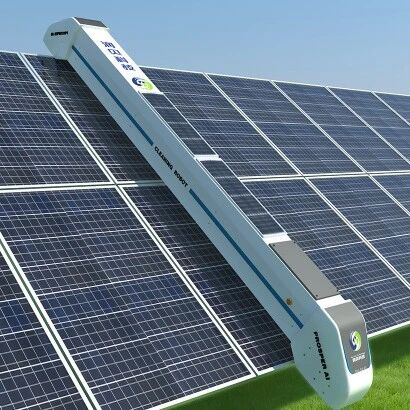
轨道式太阳能电池板清洁机器人

Search documents
全球轨道式光伏清洁机器人市场持续升温,四大趋势明确
QYResearch· 2026-03-30 10:12
Core Viewpoint - The article discusses the emerging market and trends of rail-mounted solar panel cleaning robots, highlighting their role in enhancing photovoltaic (PV) operation and maintenance efficiency as the global installed solar capacity continues to rise [2][3]. Industry Status - The rail-mounted solar panel cleaning robot market is driven by a rigid demand for cost reduction and is transitioning from pilot demonstrations to large-scale replication. The increasing installation of large ground power plants and commercial rooftop solar projects has made cleaning a critical factor affecting power generation efficiency [6]. - Owners are increasingly focused on enhancing power generation efficiency and reducing labor-intensive operations, prompting a shift from traditional manual/water cleaning methods to automated, low-water/no-water solutions [6]. Pain Points and Optimization Directions - The industry faces four core pain points that need to be addressed: high adaptation costs, insufficient outdoor reliability, challenges in cleaning quality, and weak operational capabilities. Clear optimization directions include improving adaptability and stability through lightweight, high-strength tracks and self-calibration mechanisms, reducing downtime risks with quality environmental protection and low-maintenance modular consumables, and enhancing data-driven operations to transform cleaning robots into quantifiable ROI tools [7]. Global Player Landscape - The global market for rail-mounted solar panel cleaning robots includes 19 key players, with a focus on regions like Israel, China, and India. Only two companies are publicly listed, while most remain private. Key players include Ecoppia (Israel), Taypro (India), and several Chinese companies such as SiTuo New Energy and Todos [8][9]. Key Trends in the Industry 1. **Waterless/Few Water + Night Cleaning as Mainstream Configuration**: In arid regions, there is a preference for dry brushing or micro-water cleaning methods, with cleaning scheduled during nighttime to minimize downtime and reduce water usage and safety risks [12]. 2. **From Single Machine Cleaning to Collaborative Systems**: The focus has shifted from whether cleaning can be done to whether it can be adapted to various component sizes and configurations, necessitating standardized testing methods and collaborative systems [13]. 3. **Adaptation to Tracking Brackets as Growth Focus**: The proportion of new solar power plants using tracking brackets is expected to increase, driving the evolution of cleaning robots to accommodate various array structures [14]. 4. **Efficiency Metrics Becoming Engineering-Oriented**: Procurement decisions are increasingly based on LCOE (Levelized Cost of Energy) perspectives, incorporating quantifiable metrics such as cleaning speed and equipment availability into core evaluation criteria [16]. Industry Chain Breakdown - **Upstream**: Core components that determine device performance and cost include structural and electromechanical parts, drive and control systems, and cleaning consumables, all of which impact equipment durability and overall costs [17]. - **Midstream**: The core competitive barrier lies with manufacturers and system integrators responsible for the design and validation of robots and track systems, as well as their integration with monitoring and operational systems [18]. - **Downstream**: The primary users are solar power plant owners, EPC companies, and maintenance firms, particularly in high-dust, water-scarce, or high-labor-cost regions, focusing on large-scale ground plants and tracking bracket projects [19]. Summary - Rail-mounted solar panel cleaning robots are pivotal for reducing costs and enhancing efficiency in photovoltaic operations, currently at a critical stage of scaling. Future competition will center around standardization, collaboration, and engineering capabilities, with companies that adapt to tracking brackets and enhance data-driven operations likely to gain a competitive edge [19].