轻型EV

Search documents
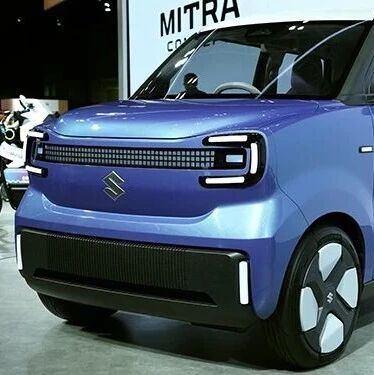
铃木将在日本生产轻型EV,维持100万本土产量
日经中文网· 2025-12-31 06:57
Core Viewpoint - Suzuki plans to start domestic production of lightweight electric vehicles (EVs) in Japan by the fiscal year 2026, aiming to maintain a production scale of 1 million vehicles domestically, which is crucial for sustaining the supply chain [2][5]. Group 1: Production Plans and Strategy - Suzuki will begin producing lightweight EVs at its Kakegawa plant in Shizuoka Prefecture in the fiscal year 2026, with specific launch dates and pricing yet to be announced [4]. - The company has historically viewed a domestic production target of 1 million vehicles as essential for supply chain stability, but production has frequently fallen below this threshold in the past decade [5]. - To counteract the decline in domestic sales of lightweight vehicles, which have dropped by 18% from 2015 levels, Suzuki is increasing production in India, which has become a key export base [5]. Group 2: Market Context and Challenges - The overall sales of lightweight vehicles in Japan are projected to decline by 18% to approximately 1.56 million units by 2024, compared to 2015, which is a larger drop than the 9% decline in regular vehicle sales [5]. - The COVID-19 pandemic significantly impacted Suzuki's sales, bringing them to a 30-year low in 2021, although there is a current recovery trend [5]. - The shift in production strategy is also influenced by rising inflation and high tariffs, prompting Japanese automakers to reconsider their domestic production models [6].

比亚迪挑战日本圣域“轻”(上)
日经中文网· 2025-07-16 03:16
Core Viewpoint - BYD is set to challenge the Japanese light vehicle market, a sector traditionally protected and dominated by local manufacturers, by leveraging its competitive pricing and tailored product offerings [1][15]. Group 1: Market Entry Strategy - BYD plans to enter the Japanese light vehicle market, which includes vehicles with engine displacements under 660cc, by focusing on customer needs in design, functionality, and sales methods [1][5]. - The decision to enter this market was influenced by BYD Chairman Wang Chuanfu's observations of the prevalence of light vehicles in Japan during a visit in 2023 [4][11]. - The company aims to develop a light electric vehicle (EV) within a two-year timeframe, with a target launch in the second half of 2026 [3][7]. Group 2: Product Development - BYD has developed a dedicated chassis for light EVs and identified popular models to emulate, such as the Honda N-BOX and Daihatsu Tanto, focusing on features like increased height and storage space [6][12]. - The company plans to implement a "CTB" (cell-to-body) structure to maximize battery capacity and cabin space, and will also incorporate sliding doors, a feature popular in the N-BOX [12][13]. Group 3: Competitive Landscape - The light vehicle segment accounts for nearly 40% of new car sales in Japan, presenting a significant opportunity for BYD, especially as it aims to price its vehicles below 2.5 million yen [13]. - Japanese automakers, including Suzuki and Daihatsu, are preparing to respond to BYD's entry by enhancing their own EV offerings and maintaining competitive pricing strategies [13][14]. - Historically, foreign automakers have struggled to penetrate the Japanese light vehicle market, with past attempts by companies like DaimlerChrysler ending in withdrawal [5][15]. Group 4: Sales and Distribution - BYD is adopting a traditional sales approach with physical stores, contrasting with competitors like Tesla that focus on online sales, and plans to expand its dealership network in Japan [13]. - The company has already established 63 sales locations across Japan and aims to increase this number to 100 by 2025 [13].