轻工机械轴承

Search documents
拟募资38亿元,吉利、比亚迪供应商人本股份再冲IPO
Cai Jing Wang· 2025-12-30 05:47
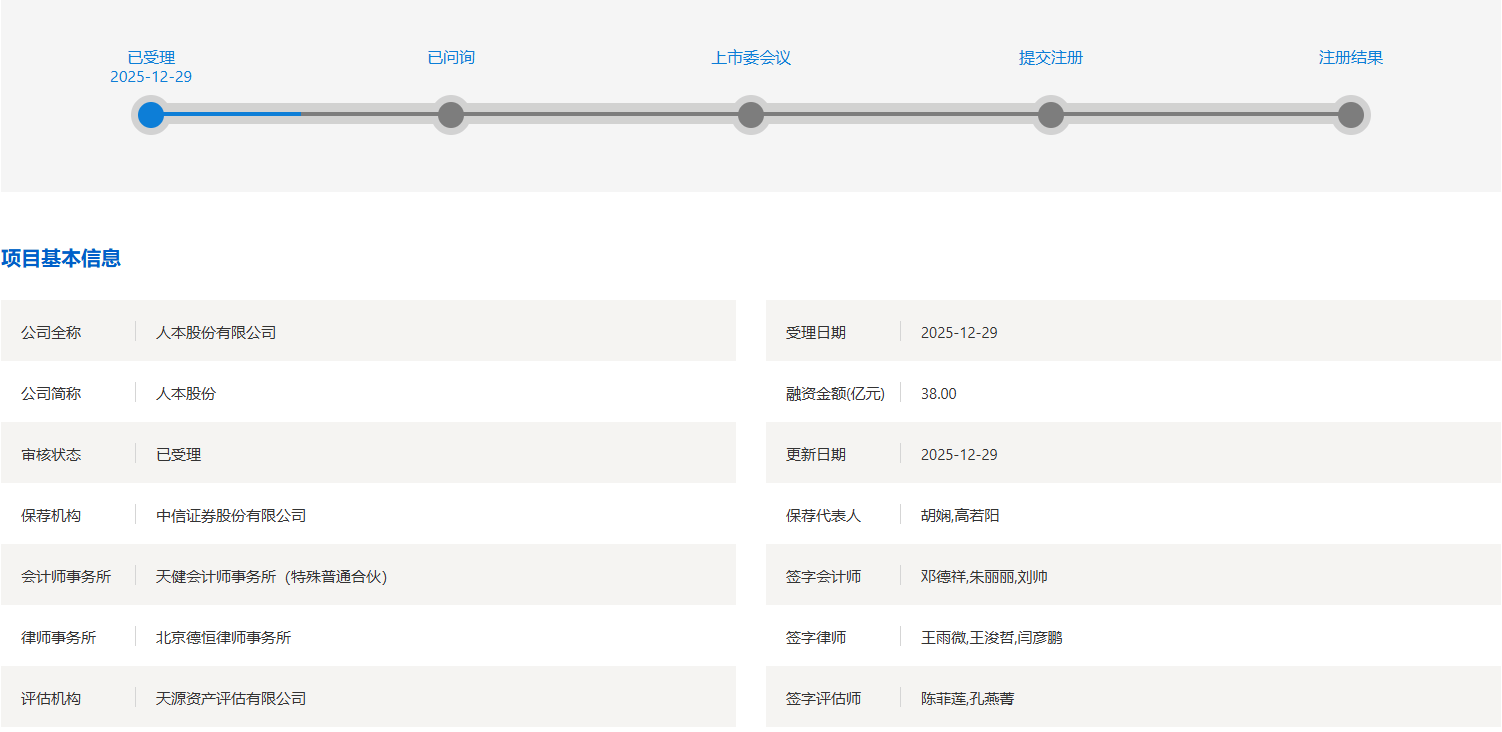
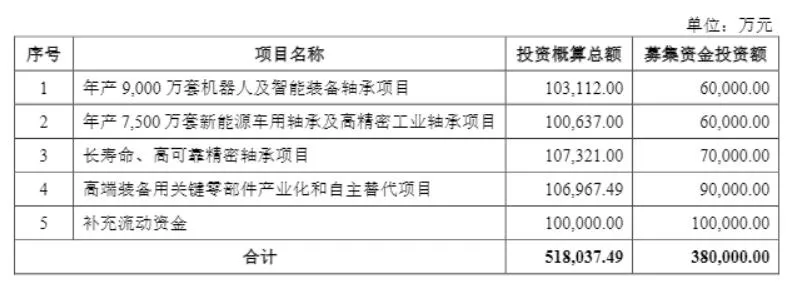
Core Viewpoint - Renben Co., Ltd. has reinitiated its IPO application on the Shanghai Stock Exchange after a previous unsuccessful attempt, with its application accepted on December 29 [1] Group 1: Business Overview - Renben Co., Ltd. specializes in the research, production, and sales of bearings and related products, possessing a full industry chain capability from materials to finished products [1] - The company offers over 50,000 types of bearing products, which are widely used in automotive, light machinery, heavy machinery, and major equipment sectors [1] Group 2: Revenue Composition - From 2022 to 2025, the revenue from finished bearings consistently accounts for over 86% of total income, with automotive bearings contributing 39.16%, 45%, 45.97%, and 45.07% respectively [1] - Revenue from light machinery bearings represents 28.94%, 25.62%, 24.41%, and 24.59% over the same period [1] Group 3: Major Clients - Key clients in the automotive sector include Geely Group, BYD, Changan Automobile, Great Wall Motors, and Bertley, with Geely being the largest customer [1] Group 4: Financial Performance - The company's revenue for 2022 to 2025 is projected at 9.388 billion, 10.482 billion, 11.96 billion, and 6.471 billion respectively, while net profit is expected to be 585 million, 625 million, 700 million, and 313 million [2] - In 2022, revenue grew by 2.93% year-on-year, but net profit decreased by 20.91% [2] - The gross profit margin slightly declined from 28.64% in 2022 to 26.54% in the first half of 2025 [2] Group 5: Debt and Liquidity - The company has a high asset-liability ratio of 66.63% as of mid-2025, with bank loans constituting 62.39% of total liabilities [2] - The liquidity ratios are below industry averages, with a current ratio of 1.08 compared to the industry average of 2.07, and a quick ratio of 0.76 against an average of 1.63 [2] Group 6: IPO Fundraising and Projects - The company aims to raise 3.8 billion through the IPO, an increase of approximately 40% from the previous target of 2.702 billion [4] - The funds will be allocated to various projects, including the production of 9 million sets of robot and intelligent equipment bearings, 7.5 million sets of new energy vehicle bearings, and other key projects [4]


IPO雷达|人本股份获受理,负债率居高仍大手笔分红,开口再要10亿元补流
Sou Hu Cai Jing· 2025-12-30 04:05
Core Viewpoint - Renben Co., Ltd. has received approval for its IPO on the Shanghai Stock Exchange, despite facing challenges such as high accounts receivable and a rising debt-to-asset ratio, which reached 67% [1][9]. Financial Performance - The company reported revenues of 93.88 billion, 104.82 billion, 119.60 billion, and 64.71 billion for the years 2022, 2023, 2024, and the first half of 2025, respectively [4]. - Net profits for the same periods were 5.85 billion, 6.25 billion, 7 billion, and 3.13 billion [4]. - As of June 30, 2025, total assets amounted to 203.38 billion, with a debt-to-asset ratio of 66.63% [5][10]. Accounts Receivable - Accounts receivable exceeded 32 billion, representing 28.43% of current assets as of June 30, 2025 [8]. - The company acknowledged potential risks related to the collection of accounts receivable due to market competition and economic conditions [8]. Business Segments - Automotive bearings contributed 45% to the company's revenue in the first half of 2025, highlighting its significance to overall business performance [6][7]. - The company has a diverse product range with over 50,000 types of bearings, serving various sectors including automotive, light and heavy machinery, and major equipment [2]. Debt and Liquidity - The company has a high debt level, with bank loans constituting 62.39% of total liabilities [10]. - Liquidity ratios, including the current ratio of 1.08 and quick ratio of 0.76, are below industry averages of 2.07 and 1.63, respectively [10][11]. IPO and Fundraising - The company plans to raise 3.8 billion through its IPO, with 1 billion allocated for working capital and the remainder for various projects, including the production of bearings for robots and new energy vehicles [12][13]. Regulatory Issues - Some subsidiaries have faced administrative penalties related to tax, environmental, and safety violations, indicating potential operational risks [14][15].