远箱火

Search documents
国防大学教授:远箱火实弹射击目的是“点穴”,直击“台独”势力痛点
Huan Qiu Shi Bao· 2025-12-31 06:23
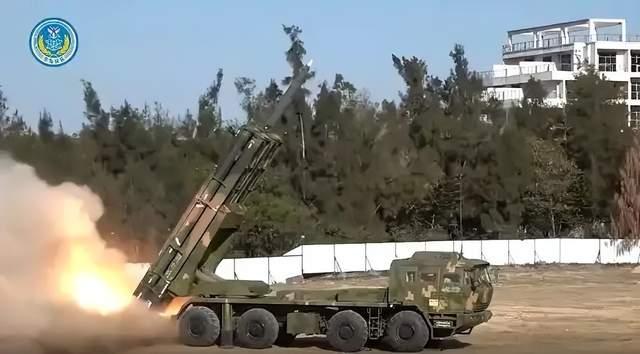
Core Viewpoint - The Eastern Theater Command of the People's Liberation Army conducted live-fire exercises targeting specific maritime areas around Taiwan, emphasizing the military's capability to disrupt Taiwan's energy supply lines, which are critical to the ruling Democratic Progressive Party's governance [3][8]. Group 1: Military Actions - On December 30, the Eastern Theater Command executed a coordinated live-fire exercise involving the army, navy, air force, and rocket forces, achieving expected results [3][7]. - The live-fire exercises were conducted in two specific maritime areas: the northern and southwestern waters of Taiwan, which are vital for the importation of energy resources [8]. Group 2: Strategic Implications - The purpose of the live-fire exercises was described as "pointing at the pain points" of the "Taiwan independence" forces, aiming to disrupt their critical supply lines [8]. - The exercises highlight the military's ability to potentially cut off Taiwan's energy imports, which could lead to chaos on the island and diminish its war potential [8]. Group 3: Weapon Characteristics - The "Yuanxianghuo" artillery system, referred to as a "cross-sea killer," has five key features: long range, high precision, powerful firepower, quick mobility, and low cost, making it suitable for mass production [4][9]. - The system can cover the entire territory of Taiwan with a range of several hundred kilometers and has a precision that can reach meter-level accuracy [9]. - In addition to the Yuanxianghuo, the PLA possesses conventional missiles and other precision-guided weapons, enhancing its capabilities against "Taiwan independence" forces [9].
“越海杀器”,震撼出鞘
Xin Lang Cai Jing· 2025-12-31 04:31
Core Viewpoint - The Chinese People's Liberation Army (PLA) Eastern Theater Command conducted military exercises around Taiwan, simulating land and sea strikes, as a response to "Taiwan independence" forces, emphasizing the necessity of safeguarding national sovereignty and territorial integrity [1][6][12]. Group 1: Military Exercises - On December 30, the PLA Eastern Theater Command organized joint firepower strikes involving the army, navy, air force, and rocket forces against southern waters near Taiwan, achieving expected results [3][4]. - The Eastern Theater Command released videos of live-fire exercises, showcasing the army's capabilities in conducting long-range strikes with precision [3][4]. - The exercises included rapid deployment of multiple fire units to predetermined positions, demonstrating effective coordination and operational readiness [4][8]. Group 2: Weaponry and Capabilities - The "Yuanxianghuo" (远箱火) artillery system, praised as a "cross-sea killer," features long-range capabilities, precision targeting, and the ability to launch multiple munitions simultaneously, making it a significant asset in modern warfare [4][13]. - The system can cover the entire territory of Taiwan with a range of several hundred kilometers and has a high accuracy rate, capable of hitting targets within meters [4][14]. - The PLA's new long-range firepower has been integrated into joint operational frameworks, allowing for precise strikes on high-value targets [4][14]. Group 3: Strategic Messaging - The PLA released a series of thematic posters during the exercises, including titles like "Justice Hammer: Blockade and Cut Off," indicating strategic intentions to disrupt key ports and supply lines around Taiwan [5][6]. - Military experts interpret these messages as a warning to Taiwan, highlighting the potential chaos that could ensue if critical maritime routes are severed [5][6]. - The thematic posters also reflect the PLA's capabilities in joint operations and cross-domain maneuvering, showcasing a unified military front [5][6]. Group 4: Law Enforcement Actions - The Chinese Coast Guard conducted comprehensive law enforcement operations around Taiwan, focusing on controlling maritime routes and preventing external forces from aiding "Taiwan independence" elements [6][12]. - The Coast Guard's operations included inspections and interceptions of vessels, reinforcing China's maritime sovereignty and law enforcement capabilities [6][12]. - The thematic posters released by the Coast Guard emphasized the importance of maintaining control over critical sea routes and preventing the escape of "Taiwan independence" supporters [12][18].

实弹打击、强化封控,震慑“台独”分裂势力
Xin Lang Cai Jing· 2025-12-30 17:06
Core Viewpoint - The People's Liberation Army (PLA) Eastern Theater Command has initiated a joint military exercise named "Mission of Justice-2025" around Taiwan, aimed at warning against "Taiwan independence" forces and external interference, while asserting national sovereignty and unity [1]. Group 1: Exercise Overview - The exercise commenced on December 29, involving the Army, Navy, Air Force, and Rocket Force, focusing on various regions including the Taiwan Strait and surrounding waters [1]. - The exercise features long-range joint fire strikes and live ammunition shooting, showcasing the PLA's capability to disrupt the energy supply lines of the Taiwanese authorities [3][4]. Group 2: Key Characteristics of the Exercise - The exercise is characterized by a combination of internal and external operations, with a focus on both encirclement and striking capabilities [4]. - The first phase emphasizes encirclement, while the second phase focuses on live-fire strikes, particularly targeting the northern and southern ends of Taiwan [4]. - The PLA's use of long-range firepower is highlighted as a significant advancement, with capabilities to conduct precise strikes and maintain operational flexibility [3][5]. Group 3: Trends in Military Exercises - Recent trends in PLA exercises around Taiwan include an increasing range of pressure on "Taiwan independence" forces, with a growing array of tools and closer proximity to Taiwan [5]. - The PLA has demonstrated flexibility in timing and spatial deployment, allowing for sudden and surprise actions [5]. - The variety of military actions has expanded to include maritime and aerial patrols, area control, and simulated precision strikes against key targets [5].