
精确制导武器

Search documents
原油,突然拉升!科威特附近海域一艘油轮发生爆炸
证券时报· 2026-03-05 04:25
Core Viewpoint - International oil prices have surged, with NYMEX WTI crude oil rising over 3% and ICE Brent crude oil increasing nearly 3% [1]. Group 1: Oil Price Movements - NYMEX WTI crude oil reached a price of $76.94, with an increase of $2.28 or 3.05% from the previous close [2]. - The highest price for NYMEX WTI during the session was $77.42, while the lowest was $75.56 [2]. - ICE Brent crude oil opened at $83.60, up by $2.20 or 2.70% [3]. - The highest price for ICE Brent was $83.92, and the lowest was $82.13 [3]. Group 2: Military Actions and Geopolitical Tensions - The U.S. Central Command reported that over 20 Iranian vessels have been struck or sunk, with the latest action targeting a "Suleimani-class" warship [4]. - The U.S. military has targeted over 2000 sites, destroying numerous missiles, launch systems, and drones, and sinking more than 20 Iranian vessels, including a submarine [5]. - The U.S. expects to achieve "complete control" over Iranian airspace in the coming hours, with no Iranian naval activity reported in the Persian Gulf, Strait of Hormuz, and Gulf of Oman [5]. - The Iranian Revolutionary Guard announced successful strikes against Israeli targets, claiming to have destroyed advanced radar systems, leaving the U.S. and Israel "blind" in the region [7].


稀土库存全面告急,英美集体破防!
Sou Hu Cai Jing· 2026-02-25 15:26
Core Viewpoint - The article emphasizes the critical role of rare earth elements in modern industry, highlighting China's dominance in the global rare earth supply chain and the challenges faced by the US and UK due to their reliance on Chinese supplies [2][4][6]. Group 1: Importance of Rare Earth Elements - Rare earth elements are essential for various high-tech products, including smartphones, electric vehicles, and military equipment, earning them the title of "industrial vitamins" [2]. - China controls 92% of global rare earth refining capacity and over 90% of heavy rare earth reserves, creating a complete industrial chain from mining to end-use applications [2]. Group 2: Challenges Faced by the US and UK - The US and UK have become increasingly vulnerable due to their long-term dependence on Chinese rare earth supplies, which has led to significant supply shortages following China's export restrictions [4][6]. - The Pentagon estimates that rare earth shortages could reduce the production of precision-guided weapons by nearly 50%, with companies like Lockheed Martin struggling to secure sufficient supplies [4]. Group 3: Impact of Export Restrictions - China's tightening of export controls, particularly for military applications, has severely impacted US and UK industries, leading to production delays and increased costs [4][6]. - The automotive sector in the UK has reported a 15% rise in costs due to unstable supply of rare earth magnets, while defense budgets are under increasing pressure [4]. Group 4: Attempts to Find Alternatives - Efforts by the US and UK to source rare earths from countries like Myanmar, Greenland, and Australia have been largely unsuccessful due to infrastructure issues, high extraction costs, and inadequate technology [4][6]. - Despite investments in domestic production and supply chain development, establishing a complete rare earth industry will take five to ten years, leaving the current crisis unresolved [6]. Group 5: Lessons Learned - The situation underscores the importance of self-reliance in critical industries, as over-dependence on foreign supplies can lead to vulnerabilities [8]. - The article suggests that countries must focus on developing their own industries and mastering core technologies to avoid being at the mercy of external suppliers [8].
国防军工2026年度策略:商业航天前景明朗,发射能力亟需提升
材料汇· 2026-02-06 15:54
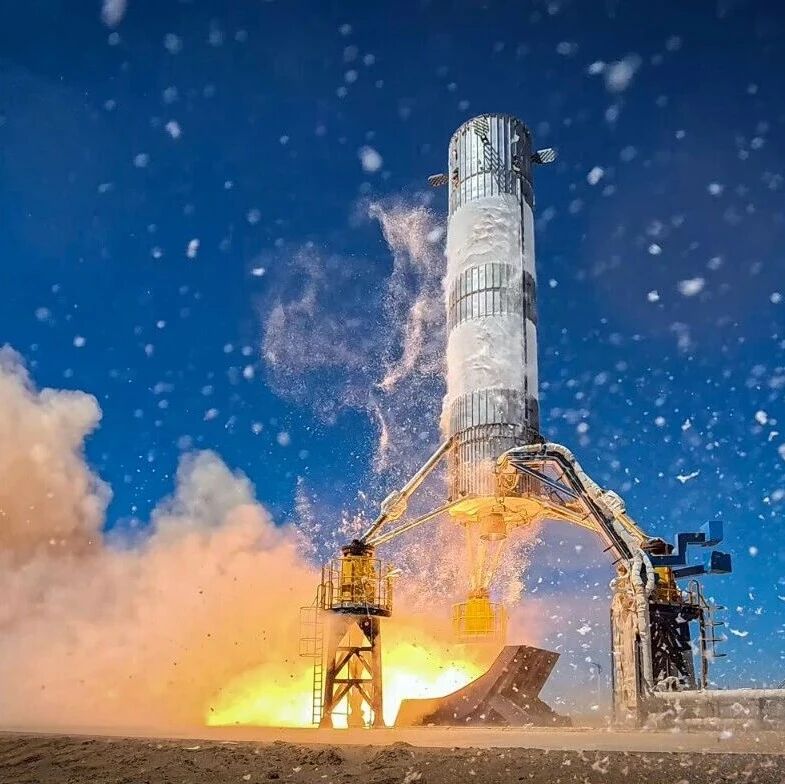
Group 1: New Economic Cycle and Industry Outlook - A new economic upturn is beginning, with 2025 marking the end of the 14th Five-Year Plan, leading to a gradual release of delayed orders and a recovery in industry prosperity. Events such as the India-Pakistan 5.7 air battle and the 9.3 military parade have enhanced military trade expectations, resulting in a surge in the aerospace sector and military industry reaching new highs in 2025 [1][7][8] - By the end of 2026, multiple new medium and large rockets are expected to launch, with breakthroughs in reusable technology anticipated. This will effectively eliminate the capacity bottleneck that has constrained China's commercial aerospace development, leading to an explosive growth period in the industry [1][7][8] Group 2: Global Geopolitical Tensions and Military Trade - The global geopolitical landscape is increasingly tense, with ongoing conflicts such as the Russia-Ukraine war and Japan's military expansion. This has led to unprecedented increases in global military spending, as countries seek to modernize and expand their arsenals [2][24] - China's military equipment has reached a world-class level, and Chinese military enterprises are positioned to provide comprehensive solutions to clients, potentially reshaping the global military trade landscape [2][14] Group 3: Satellite Internet Development - The Taiyuan Satellite Launch Center is expected to play a crucial role in the high-frequency deployment of satellite internet, with several new medium and large rockets set to launch by the end of 2025. The acceleration of reusable rocket technology in 2026 will further enhance the deployment of satellite internet constellations [3][14] - The deployment of low Earth orbit constellations, particularly in sun-synchronous and polar orbits, is anticipated to increase significantly, driven by the need for global coverage and the impact of climate change [3][14] Group 4: Investment Opportunities in Military and Aerospace Sectors - The new military transformation focuses on precision-guided munitions, unmanned weaponry, and networked battlefield systems. Key investment opportunities are identified in the missile weapon industry chain, new aviation equipment industry chain, unmanned equipment industry chain, and commercial aerospace industry chain [4][14] - The commercial aerospace sector is expected to become a primary investment theme in 2026, driven by the resolution of capacity bottlenecks and the rapid deployment of satellite internet [4][14]
国防大学教授:远箱火实弹射击目的是“点穴”,直击“台独”势力痛点
Huan Qiu Shi Bao· 2025-12-31 06:23
Core Viewpoint - The Eastern Theater Command of the People's Liberation Army conducted live-fire exercises targeting specific maritime areas around Taiwan, emphasizing the military's capability to disrupt Taiwan's energy supply lines, which are critical to the ruling Democratic Progressive Party's governance [3][8]. Group 1: Military Actions - On December 30, the Eastern Theater Command executed a coordinated live-fire exercise involving the army, navy, air force, and rocket forces, achieving expected results [3][7]. - The live-fire exercises were conducted in two specific maritime areas: the northern and southwestern waters of Taiwan, which are vital for the importation of energy resources [8]. Group 2: Strategic Implications - The purpose of the live-fire exercises was described as "pointing at the pain points" of the "Taiwan independence" forces, aiming to disrupt their critical supply lines [8]. - The exercises highlight the military's ability to potentially cut off Taiwan's energy imports, which could lead to chaos on the island and diminish its war potential [8]. Group 3: Weapon Characteristics - The "Yuanxianghuo" artillery system, referred to as a "cross-sea killer," has five key features: long range, high precision, powerful firepower, quick mobility, and low cost, making it suitable for mass production [4][9]. - The system can cover the entire territory of Taiwan with a range of several hundred kilometers and has a precision that can reach meter-level accuracy [9]. - In addition to the Yuanxianghuo, the PLA possesses conventional missiles and other precision-guided weapons, enhancing its capabilities against "Taiwan independence" forces [9].
报告:美国防部计划大规模囤积关键矿产,全球能源转型遭“资源截流”
Xin Lang Cai Jing· 2025-12-08 05:17
Core Viewpoint - The accelerating global arms race is hindering efforts to combat climate change, as critical minerals intended for renewable energy and clean transportation are being redirected to manufacture advanced military equipment [1] Group 1: Military and Defense - The report by the Transition Security Project indicates that the U.S. Department of Defense is stockpiling critical minerals through the National Defense Stockpile program for military technologies, including precision-guided weapons and AI-driven autonomous combat platforms [1] - Since the enactment of the "Inflation Reduction Act" by President Trump, the Pentagon has allocated billions of dollars to expand its military stockpile of critical minerals [1] Group 2: Critical Minerals and Climate Solutions - At least 38 types of minerals and metals, including lithium, cobalt, graphite, and rare earth elements, are being stockpiled, which are also essential materials for climate solutions such as solar panels, wind turbines, electric vehicles, and energy storage batteries [1]
普京硬气喊话:俄陪欧洲玩到底!能源断供倒计时揭晓博弈底线
Sou Hu Cai Jing· 2025-12-07 16:43
Core Viewpoint - The ongoing geopolitical struggle between Russia and Europe is intensifying, with a critical focus on energy supply and territorial disputes, particularly looking towards the pivotal year of 2027, which is seen as a turning point in this conflict [1]. Group 1: Territorial Issues - Russia has drawn a firm line on territorial negotiations, rejecting U.S. proposals for a peace plan regarding Ukraine, insisting that any discussions must start with the withdrawal of Ukrainian forces from currently controlled areas [3]. - The Russian military has reported a 40% increase in frontline advancement speed and an 89% accuracy rate for precision-guided munitions, reinforcing Russia's strong negotiating position [3]. Group 2: Energy Supply Dynamics - The European Union plans to completely ban Russian liquefied natural gas imports by January 1, 2027, with all pipeline gas contracts ending by September 30, 2027, marking a significant shift in energy sourcing after 57 years of reliance on Russian gas [5]. - The share of Russian gas in EU imports has drastically decreased from 45% in 2021 to an expected 19% in 2024, although Europe still imports energy worth approximately €15 billion annually from Russia [5]. Group 3: Economic and Social Implications - Europe faces three major challenges in its energy transition: fluctuating natural gas prices, stability of supply, and internal coordination among member states, with some countries opposing a blanket ban on Russian gas [6]. - Russia's economic resilience is highlighted by a projected 20% increase in military industrial output and record high agricultural exports, despite a decline in energy revenues by 2025 [8]. Group 4: Strategic Outlook - The ongoing conflict is characterized as a "marathon of endurance," where both sides are accumulating leverage in their respective domains, with neither willing to back down [8]. - The critical question remains whether both parties can learn to engage in dialogue rather than confrontation before the 2027 deadline, as misjudgments regarding the cost of time could lead to significant consequences for both sides [10].
突发!俄罗斯,发动大规模袭击!
券商中国· 2025-11-30 02:06
Core Viewpoint - The article discusses the recent escalation in the Russia-Ukraine conflict, highlighting large-scale attacks from both sides and the uncertain prospects for negotiations between Ukraine and the United States [2][3][6]. Group 1: Military Actions - On November 29, Russia launched a large-scale attack using precision-guided weapons and drones against Ukrainian military and energy facilities in response to Ukrainian strikes on Russian civilian infrastructure [3]. - The Russian Defense Ministry reported that their air defense systems intercepted 103 Ukrainian drones over several regions, including Belgorod, Rostov, and Ryazan [3]. - Ukraine's military responded with drone strikes on a refinery in Krasnodar and an aircraft repair plant in Taganrog, Rostov region [3][4]. Group 2: Casualties and Damage - The Russian attacks on Ukraine resulted in 3 deaths and numerous injuries, with significant damage to energy infrastructure reported [3][4]. - Ukrainian President Zelensky stated that many civilian facilities and residential buildings were hit, prompting emergency rescue operations [4]. Group 3: Negotiation Dynamics - Ukraine's delegation is traveling to the U.S. to discuss a peace plan, with expectations for a summary report on their findings [6][7]. - The U.S. and Ukraine have modified a previous peace proposal from 28 points to 19, which Ukraine has tentatively agreed to [7]. - There are indications that the level of talks between the U.S. and Ukraine has decreased, reflecting lower expectations for outcomes [7][8]. Group 4: Russian Response - Russia has received an updated version of the U.S.-Ukraine peace plan and is open to discussions, although it remains skeptical about negotiations with the current Ukrainian leadership [8].

军贸领域上行趋势明确,军工ETF(512660)飘红,规模居同类第一
Mei Ri Jing Ji Xin Wen· 2025-11-27 07:06
Core Viewpoint - The modernization of national defense and military construction during the "14th Five-Year Plan" period requires significant investment, high precision, and a focus on efficiency, low cost, and sustainable development [1] Investment Focus - The structural differentiation in defense and military construction is expected to become more pronounced, with high growth areas including precision-guided weapons, new aviation equipment, underwater equipment, and unmanned intelligence [1] Industry Index - The military industry ETF (512660) tracks the CSI Military Industry Index (399967), which selects listed companies in the fields of aviation, aerospace, shipbuilding, weaponry, and military electronics from the Shanghai and Shenzhen markets to reflect the overall performance of China's military industry [1] Market Characteristics - The index constituents exhibit a small and mid-cap style, primarily focusing on the aviation equipment and military electronics sectors [1]
德国承诺向乌克兰提供超20亿欧元军援 包括防空系统等
Zhong Guo Xin Wen Wang· 2025-10-16 08:15
Group 1 - Germany will provide military aid to Ukraine worth over €2 billion, including air defense systems, precision-guided weapons, and ammunition [1] - The aid package aims to address some of Ukraine's urgent needs and includes two additional Iris-T air defense systems along with guided missiles and shoulder-fired air defense missiles [1] - Germany plans to modernize previously delivered weapons to extend their lifespan and will enhance cooperation between German and Ukrainian defense industries [1] Group 2 - Ukraine's defense minister stated that the country's defense needs for 2026 are approximately $120 billion, with domestic resources only covering half of that amount [1]
航天电子: 航天飞腾评估报告
Zheng Quan Zhi Xing· 2025-08-27 11:24
Group 1 - The asset evaluation report is prepared by Beijing Tianjian Xingye Asset Appraisal Co., Ltd. for Beijing Aerospace Feiteng Equipment Technology Co., Ltd. as part of a financing project [1][4] - The evaluation is based on the fundamental principles and professional standards set by the Ministry of Finance and the China Asset Appraisal Association [1][2] - The report includes an assessment of the total equity value of the shareholders of Beijing Aerospace Feiteng Equipment Technology Co., Ltd. as of February 28, 2025 [4][5] Group 2 - The report specifies that the evaluation results are valid for one year, from February 28, 2025, to February 27, 2026 [3] - The evaluation includes a detailed list of assets and liabilities, as well as future forecasts provided by the client and the evaluated entity [2][10] - The evaluated company, Beijing Aerospace Feiteng, focuses on the research and development of precision-guided weapon systems and has established a comprehensive R&D system for guided bombs [7][9] Group 3 - The company has a registered capital of approximately 45,254.40 million RMB and operates under the auspices of the China Aerospace Science and Technology Corporation [4][6] - The company has developed a series of precision-guided weapons that have been exported to multiple countries, generating military trade contracts worth nearly 2 billion RMB since 2013 [9] - The asset evaluation includes both tangible assets such as inventory and machinery, and intangible assets like patents and non-patented technologies [10][11]
