通用工业机器人

Search documents
埃夫特或将连亏十年 拟收购光伏设备厂商破局 标的公司曾上市失败面临4亿元回购压力
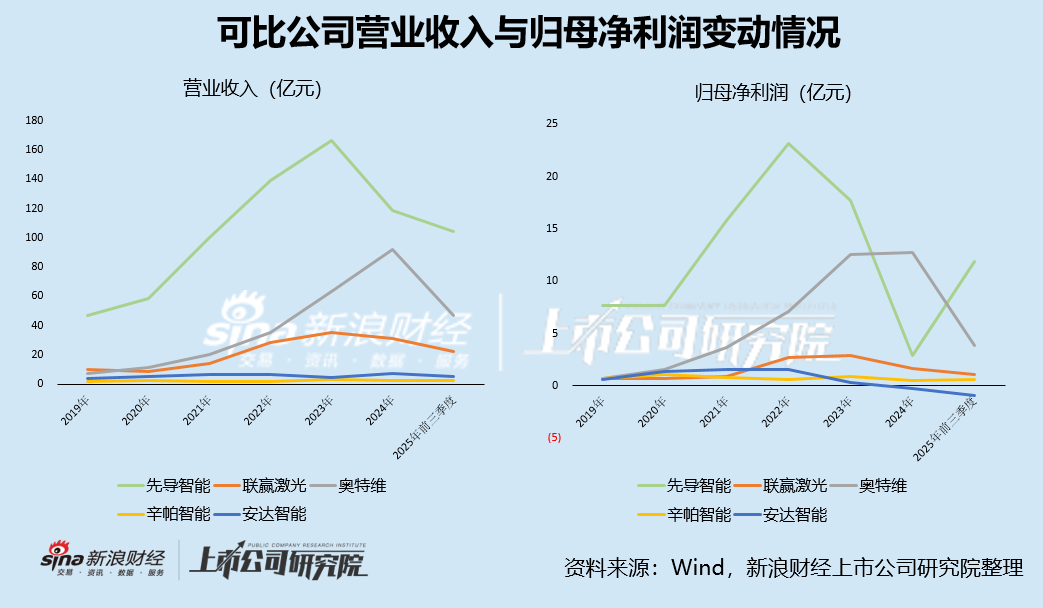
Xin Lang Cai Jing· 2026-02-06 08:46
Core Viewpoint - Efort is planning to acquire Shanghai Shengpu Fluid Equipment Co., Ltd. through a combination of share issuance and cash payment, aiming to diversify its product offerings and enter the photovoltaic fluid control equipment sector [1][2]. Group 1: Efort's Financial Performance - Efort has been in continuous loss since 2016, with projected losses expected to reach between 4.5 billion to 5.5 billion yuan in 2025, marking a year-on-year increase of 186.34% to 249.97% [8]. - The company's revenue showed growth from 11.47 billion yuan in 2021 to 18.86 billion yuan in 2023, but is projected to decline by 27.21% to 13.73 billion yuan in 2024 [6]. - Efort's net profit for 2023 to the first three quarters of 2025 is reported as -0.47 billion yuan, -1.57 billion yuan, and -2.00 billion yuan, indicating an expanding loss [7]. Group 2: Shengpu's Business and IPO Attempt - Shengpu, established in 2007, focuses on precision fluid control equipment and attempted an IPO in 2022 but withdrew its application in 2024 due to industry challenges, including overcapacity and price wars in the photovoltaic sector [2][3]. - The company's revenue was reported at 1.77 billion yuan in 2020 and 2.64 billion yuan in 2021, with growth rates of 40.76% and 49.12% respectively, reflecting a favorable market environment at that time [2]. - Shengpu's previous financing rounds saw its pre-investment valuation increase from 5 billion yuan in July 2021 to 8.4 billion yuan in December 2021, a 68% rise in just five months [5]. Group 3: Industry Context and Challenges - The photovoltaic equipment sector has faced significant pressure in 2023, with four out of five comparable companies experiencing severe profit declines [3]. - The prices of key materials such as lithium carbonate and polysilicon have shown volatility, impacting the overall market dynamics and profitability within the industry [9][13]. - Efort's acquisition of Shengpu is seen as a strategic move to mitigate reliance on the automotive sector by integrating precision fluid equipment into its product portfolio, potentially enhancing its market position [6].