郑和宝船模型

Search documents
特稿丨宝船作序 文化和鸣——中非文明对话续写时代新篇
Xin Hua She· 2025-12-15 06:46
Core Viewpoint - The article emphasizes the historical and cultural significance of the Zheng He treasure ship model as a symbol of Sino-African dialogue and cooperation, highlighting the long-standing relationship between China and Africa through cultural exchanges and mutual understanding [1][2][5]. Group 1: Historical Context - Zheng He, a Chinese navigator from the Ming Dynasty, made seven voyages to the West, reaching the eastern coast of Africa and the Red Sea, which marked a significant chapter in the history of Sino-African cultural exchanges [1]. - The treasure ship model gifted by former Seychelles President James Michel symbolizes the enduring legacy of these exchanges and the principles of equality, mutual respect, and dialogue [2][5]. - Archaeological findings in Kenya and Tanzania reveal that Chinese artifacts, such as Tang Dynasty porcelain, predate Zheng He's voyages, indicating a long history of interaction between the two civilizations [2][3]. Group 2: Modern Implications - The principles of "harmony in diversity" and "mutual respect" are highlighted as essential for contemporary Sino-African relations, contrasting with the colonial narratives of Western exploration [5][9]. - The establishment of the "Future Port" in Kilwa, built by Chinese enterprises, represents modern cooperation and development between China and Africa [3]. - The upcoming 2026 "Year of Sino-African Cultural Exchange" aims to strengthen ties through various cultural activities, fostering deeper connections between the peoples of both regions [8]. Group 3: Academic and Cultural Collaboration - Joint archaeological projects, such as the Sino-Kenyan collaboration on prehistoric studies, are reshaping the understanding of human origins and promoting a more inclusive narrative in global history [6][9]. - Increased academic cooperation and think tank exchanges are enhancing development practices and fostering a shared vision for modernization that respects cultural uniqueness [9]. - The upcoming events, including the first United Nations "International Day of Civilizational Dialogue," emphasize the importance of dialogue in achieving peace and mutual understanding [6][8].
在德国博物馆看世界海图上的中国航海文明
Xin Hua She· 2025-05-19 02:24
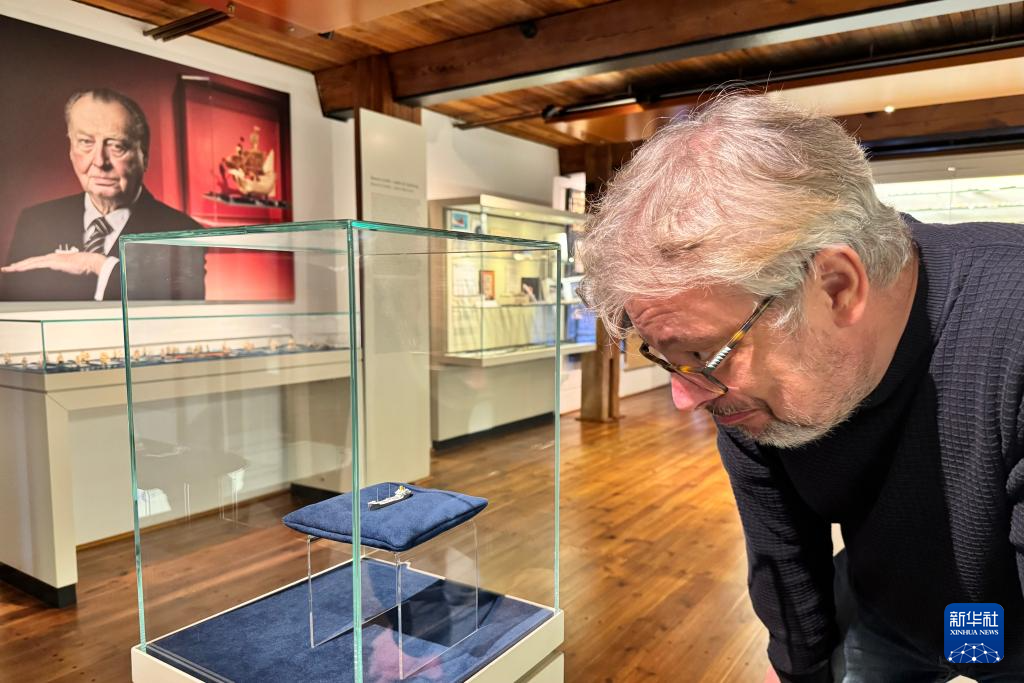
Core Viewpoint - The Hamburg International Maritime Museum showcases the significant role of Chinese maritime history and figures, particularly Zheng He, in the global narrative of maritime exploration and trade [4][6][8]. Group 1: Museum Overview - The museum, converted from an old port warehouse, spans 10 floors with over 12,000 square meters of exhibition space, primarily featuring the collection of the late Hamburg maritime historian Peter Tamm [4]. - Exhibits include Chinese ship models, Qing Dynasty naval uniforms, ivory ship carvings, maritime documents, and porcelain, presenting China as a key player in global maritime civilization rather than a mere observer [4]. Group 2: Zheng He and Maritime History - Zheng He is highlighted as an essential figure in global maritime history, alongside Columbus and Magellan, with a statue prominently displayed in the museum [6][8]. - The museum features a model of Zheng He's treasure ship, emphasizing China's early exploration efforts, which predate European discoveries by about 100 years [8]. Group 3: Modern Maritime Connections - The museum houses a model of the "Capricorn" cargo ship, donated by COSCO Shipping, representing modern China's global shipping capabilities and its connection to Hamburg [9][10]. - Historical data indicates that China has been Hamburg's largest trading partner for several years, with projected container throughput from China reaching 2.2 million standard containers in 2024, accounting for nearly 30% of the port's total throughput [10]. Group 4: Sino-German Maritime Relations - The museum contains historical documents related to the Chinese armored cruiser Dingyuan, built in the 19th century, symbolizing early Sino-German maritime interactions [11]. - The construction and delivery of the Dingyuan enhanced mutual understanding between China and Germany, marking a significant chapter in their maritime history [11].