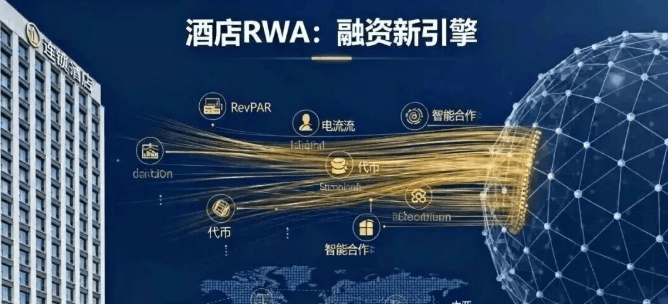
酒店RWA代币

Search documents
1个酒店背后有10000个“数字房东”,酒店RWA代币上线3分钟售罄!
Sou Hu Cai Jing· 2025-12-17 22:43
Group 1 - The hotel industry faces significant challenges due to its heavy asset nature, with high initial investments and low liquidity, leading to difficulties in financing and operational efficiency [3][5] - RWA (Real World Asset tokenization) offers a solution by converting physical hotel assets and operational rights into tradable digital tokens, enhancing liquidity and creating new financing models [4][12] - The tokenization process allows for the division of core hotel assets into smaller, tradable digital tokens, significantly reducing financing costs and improving access to capital for hotel operators [4][6] Group 2 - RWA enables the securitization of future cash flows, allowing hotels to issue tokens backed by expected revenues, thus providing a more efficient and cost-effective method for raising funds compared to traditional asset-backed securities [8][12] - The tokenization of receivables in the hotel supply chain can improve cash flow management, allowing suppliers to convert their receivables into digital debt certificates for quicker financing [10] - RWA transforms traditional hotel membership programs into digital asset certificates, enhancing user engagement and loyalty while providing investment opportunities for consumers [11][15] Group 3 - The future of the hotel industry is moving towards a "light asset + digital" model, where RWA not only serves as a financing tool but also redefines the business model of hotels [12][14] - RWA facilitates a shift from heavy asset ownership to asset management and brand output, allowing hotel owners to focus on high-margin operational management [15] - Investors gain access to more flexible investment opportunities, shifting from purchasing entire properties to acquiring fractional ownership in hotel revenues, thus sharing in the industry's recovery [15]

一间房拆成10万份!酒店RWA全球疯玩,国内为何不敢跟?
Sou Hu Cai Jing· 2025-11-27 22:51
Core Insights - The Trump Organization plans to build the "Trump Maldives International Hotel" (TMG) in November 2025, integrating blockchain technology into the investment model, allowing investors to purchase "tokens" to secure rights to hotel rooms before construction begins [1][18] - The hotel asset RWA (Real World Asset) model aims to democratize high-end hotel investments by lowering entry barriers and increasing liquidity, enabling fractional ownership of hotel rooms [3][4][7] Group 1: RWA Mechanism - The RWA model involves converting physical hotel rooms into digital assets on the blockchain, allowing them to be divided into smaller ownership shares for trading [3][4] - This model significantly reduces investment thresholds, enabling ordinary individuals to invest in high-end hotels with smaller amounts of capital [3][4] - Blockchain technology enhances transparency and security in transactions, making it difficult to manipulate ownership records [6][7] Group 2: Domestic Context - In China, the approach to RWA is cautious, with regulatory frameworks still developing, and current policies do not permit the tokenization of real estate assets [8][10] - Some regions, like Hainan and Shenzhen, are experimenting with blockchain for property registration but are not yet allowing the direct trading of property rights [8][10] - Local attempts to adopt RWA models often involve innovative but legally cautious strategies, such as offering "usage rights" instead of ownership rights [10] Group 3: Challenges for Implementation - Legal frameworks in China do not currently recognize digital tokens as property rights, complicating the implementation of RWA models [11] - Technical challenges include the need for standardized blockchain solutions and integration with existing hotel management systems, which can be costly and complex [13] - Public trust is a significant barrier, as past financial scandals have made investors wary of new investment models, necessitating third-party audits and transparency in operations [14] Group 4: Industry Transformation - The hotel industry is seeking a "light asset" revolution to reduce reliance on heavy asset models that have proven risky during economic downturns [15][16] - RWA can provide immediate funding for hotels before they open, alleviating financial pressure and allowing for more flexible investment strategies [15][16] - The integration of data from token holders can enhance operational efficiency and customer engagement, making the hotel experience more tailored and responsive [15][16]