重型消防无人机

Search documents
香港大火,为什么会烧这么大?
商业洞察· 2025-11-30 09:22
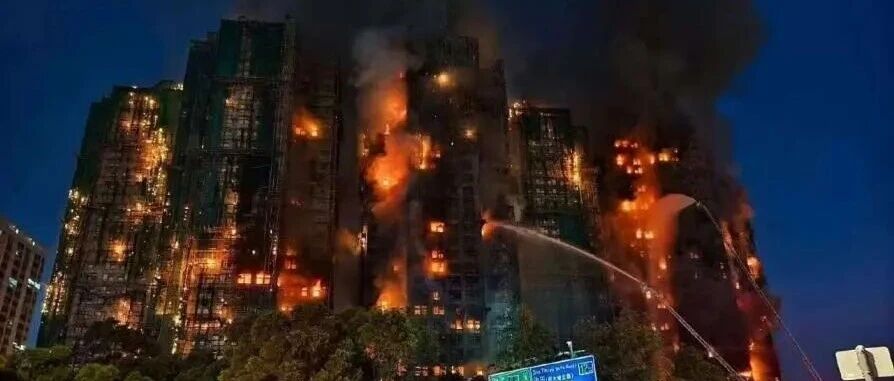
Core Viewpoint - The article discusses the tragic fire incident at Hong Kong's Hong Fuk Court, analyzing the underlying causes and systemic issues that contributed to the disaster, particularly focusing on the use of bamboo scaffolding and the inefficiencies in local governance [6][55]. Group 1: Fire Incident Analysis - The fire at Hong Fuk Court was exacerbated by the building's design, which featured a "chimney effect" that allowed flames and toxic smoke to spread rapidly [8][12]. - The initial fire ignited in the lower levels, quickly spreading due to the presence of flammable materials like foam boards and bamboo scaffolding, which acted as conduits for the fire [16][22]. - Bamboo scaffolding is widely used in Hong Kong construction, with nearly 80% of new and renovation projects employing this method, despite its high flammability [22][28]. Group 2: Governance and Regulatory Issues - The article highlights the inefficiencies in the management of older buildings, where the "Owners' Corporation" system has led to a lack of effective governance and maintenance, resulting in unresolved fire safety issues [56][60]. - The Hong Kong government has historically adopted a "non-intervention" policy regarding private property management, which has allowed safety concerns to be neglected [66][68]. - The fire incident underscores the need for a reevaluation of the existing governance structures and the potential for reform to enhance public safety [80][91]. Group 3: Cultural and Structural Challenges - The reliance on bamboo scaffolding is rooted in local tradition and economic factors, creating resistance to adopting safer, modern alternatives like metal scaffolding [25][32]. - The entrenched interests of the bamboo scaffolding industry, supported by various trade associations, have hindered regulatory changes despite known fire hazards [40][42]. - The article argues that the psychological legacy of colonial governance continues to influence Hong Kong's approach to safety and regulation, leading to a preference for outdated standards over more effective solutions [70][72].