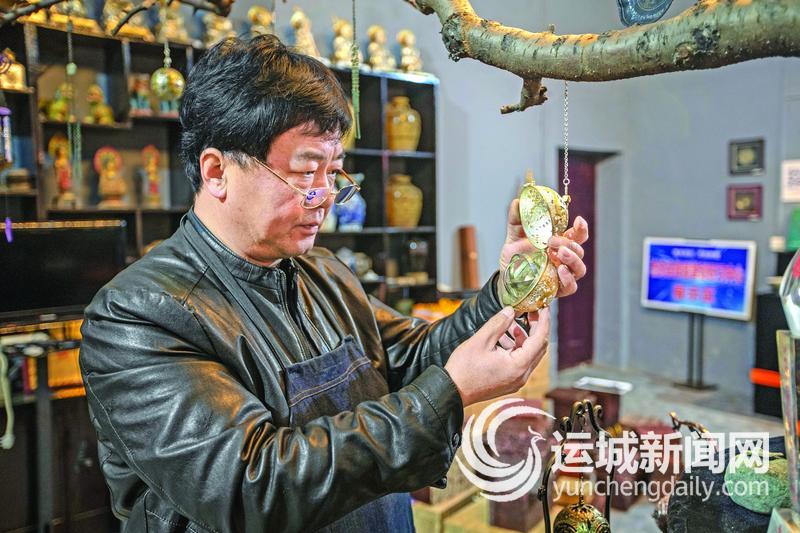
金银细工产品

Search documents
守正创新 非遗产业“破圈”生长
Xin Lang Cai Jing· 2026-02-09 05:09
Core Insights - The traditional craftsmanship of gold and silver products in Wudui Village combines innovation with a commitment to cultural heritage, demonstrating that traditional industries can thrive in a modern economy [1][3] Group 1: Craftsmanship and Value Creation - The value of gold and silver craftsmanship lies in the meticulous handwork and the time-intensive processes involved, with some complex pieces taking months to complete, which enhances their uniqueness and scarcity [1] - Wudui Village emphasizes the importance of labor time in pricing, reflecting respect for artisans and rational pricing of scarce resources, allowing them to maintain a competitive edge in a market often driven by price wars [1] Group 2: Market Positioning and Diversification - The success of Wudui Village is attributed to its understanding of market demands, leading to a diverse product matrix that caters to various consumer groups, including cultural relic replicas, religious items, and everyday accessories [2] - This strategic positioning helps overcome the challenges of non-material cultural heritage, allowing gold and silver craftsmanship to penetrate multiple sectors such as consumption, business, and cultural exchange [2] Group 3: Innovation and Development - Wudui Village balances tradition with innovation, expanding product offerings to include various materials and appealing to younger consumers through creative products, while also enhancing distribution channels through immersive experiences and digital platforms [2] - The village's approach to preserving craftsmanship while fostering innovation has resulted in sustained revenue growth, demonstrating the potential for traditional industries to adapt and thrive [2] Group 4: Economic Empowerment through Heritage - The practices in Wudui Village illustrate that intangible cultural heritage can be a valuable asset for economic development, emphasizing the need to integrate traditional skills with modern market strategies for broader impact [3] - More non-material cultural heritage projects should follow the example of Wudui Village by preserving cultural roots, understanding market needs, and embracing innovation to achieve sustainable industrialization [3]
金银流转间 产业焕新颜
Xin Lang Cai Jing· 2026-02-09 05:09
Core Viewpoint - The article highlights the thriving gold and silver craftsmanship industry in Wudui Village, which has a rich history of nearly 200 years, emphasizing the importance of traditional techniques and innovation in driving economic value and market relevance [3][11]. Industry Overview - Wudui Village has developed an industry cluster centered around the intangible cultural heritage of gold and silver craftsmanship, with dozens of enterprises and workshops engaged in this field [3]. - The craftsmanship involves intricate manual processes, with products requiring extensive labor and time, leading to higher prices compared to mass-produced items [3][5]. Market Positioning - The core consumer groups for Wudui's gold and silver products include traditional culture enthusiasts, religious institutions, customized clients, and the general public, leading to a diverse product matrix of high-end customizations and mass-market offerings [6][8]. - The products are categorized into various types, including replicas of historical artifacts, Buddhist-themed items, and lifestyle products, catering to both collectors and everyday consumers [7]. Innovation and Growth - The industry is focused on innovation while preserving traditional techniques, introducing new materials and designs to meet diverse consumer preferences, particularly targeting younger demographics [9]. - Sales channels are diversified, with a strong emphasis on both offline experiences and online platforms, utilizing social media and e-commerce to reach a broader audience [10]. Economic Impact - The gold and silver craftsmanship not only preserves cultural heritage but also serves as a significant economic resource for the village, enhancing the livelihoods of local residents [11].