铁路客货运输

Search documents
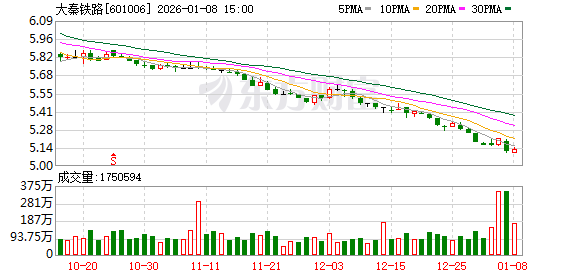
大秦铁路:估值提升计划推动投资价值合理反映公司质量
Zheng Quan Ri Bao· 2026-01-08 14:11
Core Viewpoint - Daqin Railway has announced a valuation enhancement plan aimed at improving operational stability and efficiency, focusing on strengthening its core railway passenger and freight transport business [2] Group 1: Valuation Enhancement Plan - The plan includes measures such as implementing continuous, stable, and high cash dividends [2] - The company aims to strengthen investor relations management and continuously improve the quality of information disclosure [2] - Daqin Railway will consider share buybacks and encourage shareholder increases to reflect the company's investment value appropriately [2] Group 2: Future Disclosure - Detailed information regarding the valuation enhancement plan will be disclosed on April 30, 2025 [2]


国铁集团前三季度营收9122亿元创新高 负债率连续5次下降
Zhong Guo Jing Ying Bao· 2025-11-01 09:19
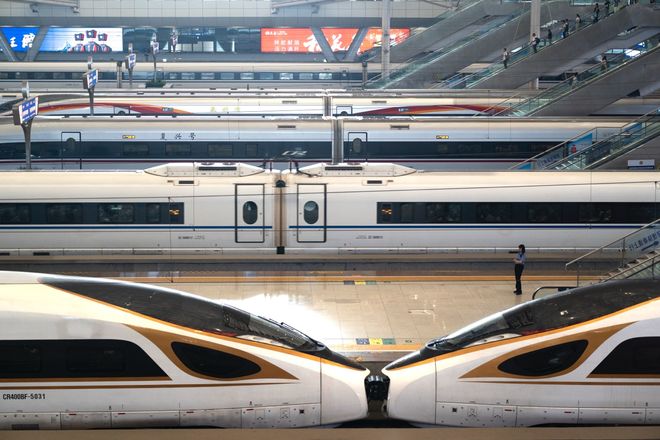
Core Insights - China National Railway Group Co., Ltd. (referred to as "the Company") reported a total operating revenue of 912.23 billion yuan for the first three quarters of 2025, representing a year-on-year increase of 1.28%, while net profit decreased by 9.43% to 11.72 billion yuan [3][4] - The Company's total liabilities reached 6.27 trillion yuan, a year-on-year increase of 0.80%, while total assets grew to 9.98 trillion yuan, up 2.99% year-on-year, resulting in a debt-to-asset ratio decline to 62.83% from 64.19% in the same period last year [3][4] - The debt-to-asset ratio has decreased for five consecutive times, returning to levels not seen in 12 years [3][4] Financial Performance - The Company achieved a net profit of 11.72 billion yuan, a decrease of 9.43% compared to the previous year [3] - Total operating revenue for the first three quarters was 912.23 billion yuan, reflecting a modest growth of 1.28% year-on-year [3] Debt Management - The Company’s total liabilities increased to 6.27 trillion yuan, while total assets rose to 9.98 trillion yuan, leading to a reduction in the debt-to-asset ratio to 62.83% [3][4] - The debt-to-asset ratio has shown a consistent decline, with a drop from 65.56% in 2023 to 63.52% in 2024, and further to 62.84% in the first half of 2025 [3][4] Operational Efficiency - The Company has improved cash flow through increased passenger and freight transport, which supports debt repayment [4] - Investment structure optimization has led to record-breaking fixed asset investments, focusing on network connectivity and efficiency [4] - Market-oriented reforms, including freight pricing and dynamic ticket pricing for high-speed trains, have enhanced asset utilization [4] Transportation Metrics - In the first three quarters, the Company transported 3.54 billion passengers, a year-on-year increase of 6%, and 3.03 billion tons of cargo, with daily loading averaging 185,300 cars, reflecting increases of 3.4% and 4.3% respectively [5] - The Company achieved a historical high in both passenger and freight transport levels [5] Investment and Infrastructure Development - Fixed asset investment reached 593.7 billion yuan, a year-on-year increase of 5.8%, marking a historical high for the same period [5] - A total of 968 kilometers of new railway lines were put into operation, contributing to a total operational railway mileage of 163,000 kilometers [5] - Significant progress was made on key railway projects, including new high-speed rail lines and ongoing construction of various infrastructure projects [5]
直击股东大会丨广深铁路:广州东站改造“目标越来越近” 公司已制定市值管理相关办法
Mei Ri Jing Ji Xin Wen· 2025-06-19 06:39
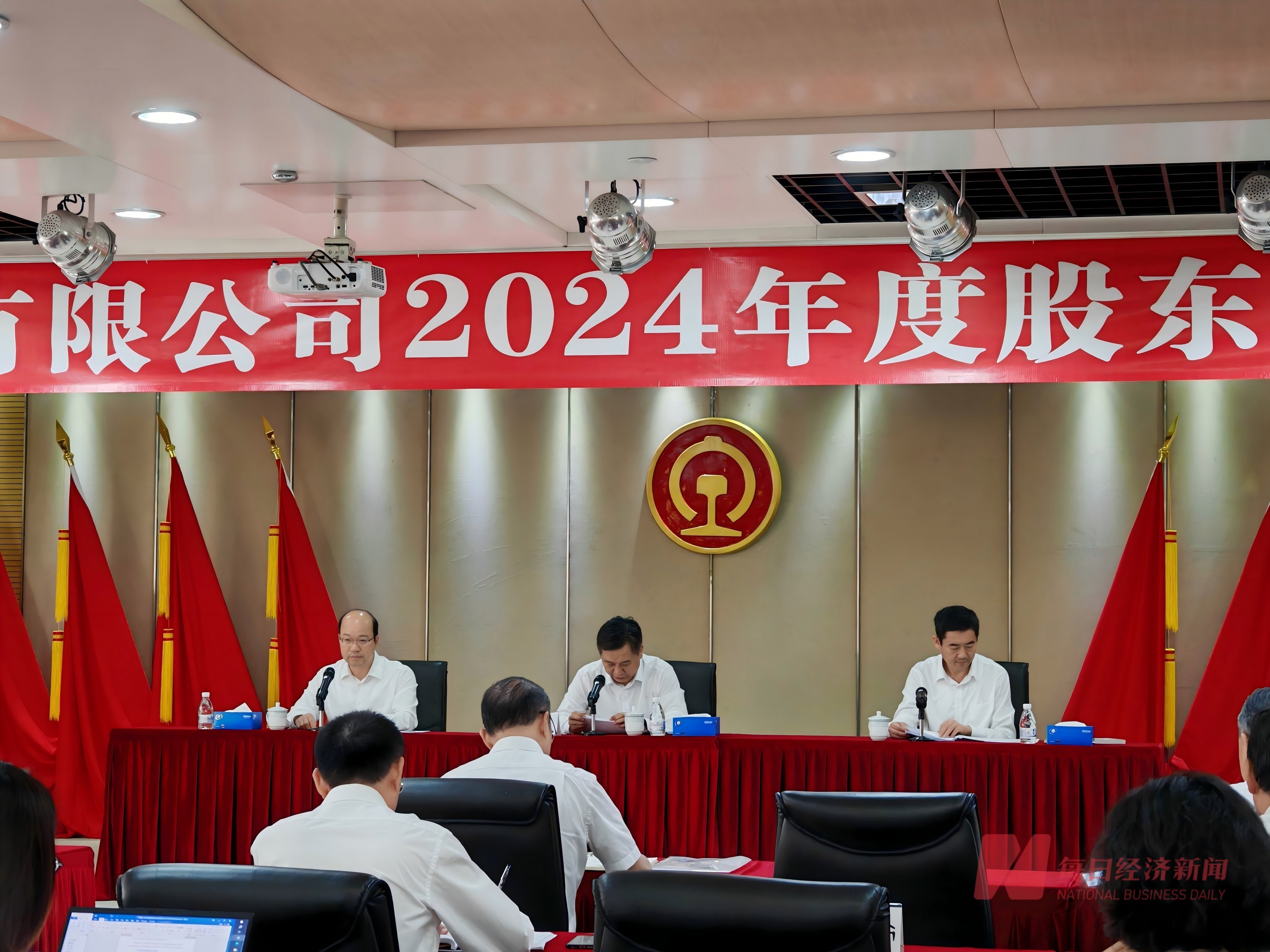
Core Viewpoint - Guangshen Railway is focusing on modernizing its operations and enhancing shareholder value while addressing challenges in cargo transportation and station upgrades [1][4][8] Group 1: Company Operations - Guangshen Railway reported a passenger volume of 69.11 million in 2024, a year-on-year increase of 16.51%, while cargo volume decreased to 14.10 million tons, down 12.05% [4] - The company plans to increase passenger volume to 71.30 million and cargo volume to 14.80 million tons in 2025, indicating a growth strategy for both segments [5] - In 2024, the company's total revenue was 27.09 billion yuan, with cargo revenue contributing only 1.62 billion yuan, suggesting limited impact on overall performance [5][6] Group 2: Strategic Initiatives - The company is transitioning its freight operations towards modern logistics, aligning with national policies for green development and cost reduction in logistics [6] - The management emphasizes the importance of this transition as a strategic opportunity, especially with the expansion of the high-speed rail network [6] Group 3: Infrastructure Development - The Guangzhou East Station upgrade is a significant focus, with the project currently in the planning phase and facing challenges due to existing busy rail lines [7] - The upgrade aims to expand the station's capacity significantly, with an estimated cost in the hundreds of millions, and involves complex logistics and asset management [7] Group 4: Shareholder Engagement - The management is actively addressing shareholder concerns regarding market capitalization, noting that the stock price is currently below net asset value and outlining plans for value enhancement [8]