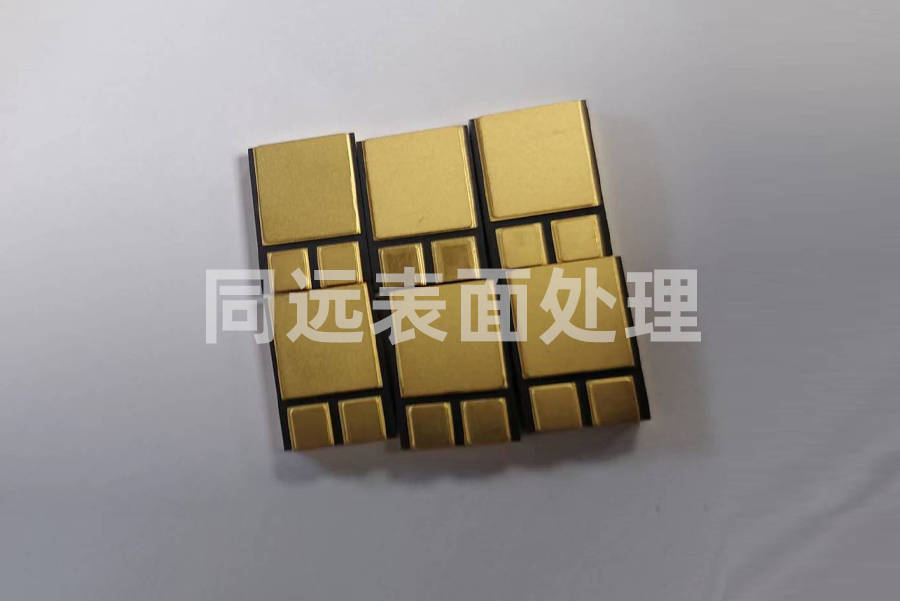
镀金加工服务

Search documents
深圳镀金加工厂:中国智造看深!加工技术领先全国|同远表面处理
Sou Hu Cai Jing· 2026-01-15 04:43
Core Insights - Shenzhen gold plating factories leverage industrial cluster advantages and technological accumulation to provide core surface treatment solutions for sectors such as electronic communications, aerospace, and medical devices [1] - The gold plating process is not merely a surface modification; its technical level directly influences the reliability and performance ceiling of end products [1] Group 1: Core Process Pathways - The core processes include electroplating (electrochemical gold plating) and chemical gold plating, each with differentiated applications [3] - Electroplating includes hard gold plating, which achieves a hardness of 800-2000 HV for wear resistance, and soft gold plating, which optimizes ductility for precision components [3] - Chemical gold plating relies on redox reactions for layer deposition without external power, ensuring uniformity suitable for complex parts like PCB boards [3] Group 2: Key Technical Parameters - Precision control of current parameters is crucial, with pulse current mode used for high-frequency devices to ensure uniformity within ±3% [5] - The plating solution's temperature must be stabilized at 45±2°C, and pH values adjusted dynamically based on substrate types to optimize deposition rates and quality [5] Group 3: Quality Control Processes - Initial detection uses X-ray thickness gauges with a tolerance of ±0.1 μm, while intermediate tests verify corrosion resistance through salt spray tests [6] - Advanced quality assurance includes adhesion strength tests and wear resistance evaluations, ensuring components withstand over 5000 insertions without significant wear [6] Group 4: Technological Upgrade Directions - Shenzhen gold plating factories are transitioning towards green and intelligent manufacturing in response to tightening environmental regulations and rising high-end demands [8] - The adoption of cyanide-free gold plating processes has become mainstream, significantly reducing toxicity and aligning with EU standards [8] - Smart upgrades include AI visual inspection systems for real-time defect detection and automated feedback systems for uniformity control, enhancing production efficiency [8]

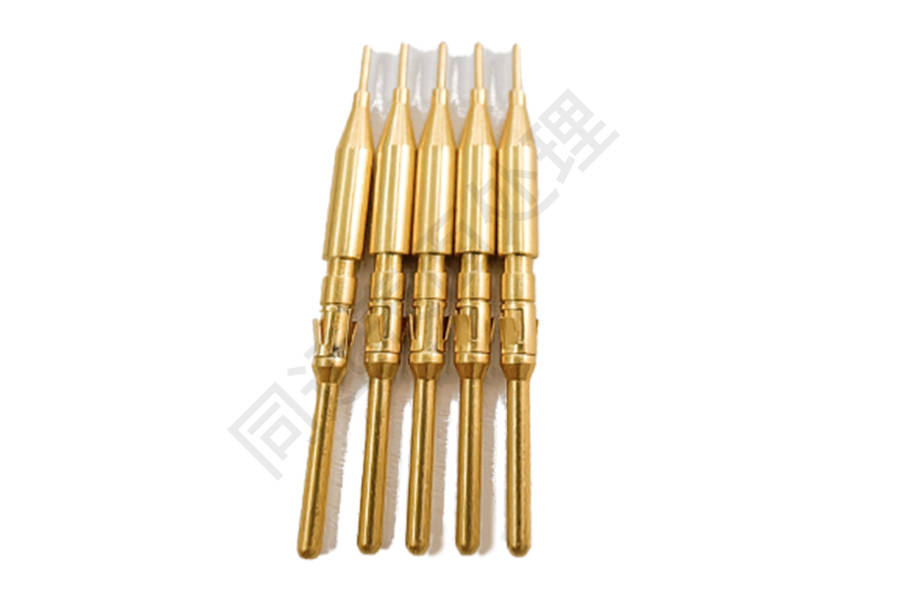
深圳镀金加工厂:“毗邻港澳”,紧跟国际潮流工艺|同远表面处理
Sou Hu Cai Jing· 2026-01-08 05:15
Core Viewpoint - Shenzhen gold plating factories play a crucial role in the high-end manufacturing supply chain, providing core surface treatment solutions for various sectors such as electronics, aerospace, and medical devices, with a focus on technological innovation and quality control [1] Group 1: Process Foundation - The main technology paths for gold plating include electroplating and chemical plating, with electroplating being the most widely used method, further divided into hard gold and soft gold plating based on performance requirements [3] - Hard gold plating enhances hardness and wear resistance, suitable for electronic components requiring frequent connections, while soft gold plating focuses on ductility, ideal for precision components like IC packaging [3] Group 2: Core Technical Parameters - The stability of plating quality relies on precise control of key process parameters, with Shenzhen factories developing an optimization system for different substrates and applications [4] - Current control methods include pulse current for high-frequency devices, ensuring uniformity deviation within 3%, and constant current for high-precision connectors, maintaining fluctuations within ±0.1A [4] - The plating thickness is tailored to application needs, with precision sensors requiring a gold layer of only 0.1-0.5μm, while deep-sea exploration components need a thickness of 5μm [4] Group 3: Quality Control - Shenzhen gold plating factories implement a three-tiered quality control system, monitoring all stages from raw material intake to finished product delivery [6] - Initial testing involves X-ray thickness measurement with a precision of 0.01μm, while intermediate testing includes salt spray tests for corrosion resistance [6] - Final testing covers adhesion, wear resistance, and electrical performance, ensuring components withstand over 5000 insertion cycles [6] Group 4: Technological Upgrade Directions - Shenzhen gold plating factories are transitioning towards greener and smarter manufacturing in response to tightening environmental regulations and rising high-end manufacturing demands [8] - Cyanide-free gold plating technology has become mainstream, significantly reducing toxicity and achieving over 95% recovery of gold ions through wastewater recycling [8] - Smart upgrades include AI visual inspection systems for defect detection and automated feedback systems for real-time adjustment of plating parameters, enhancing production efficiency and product quality [8]