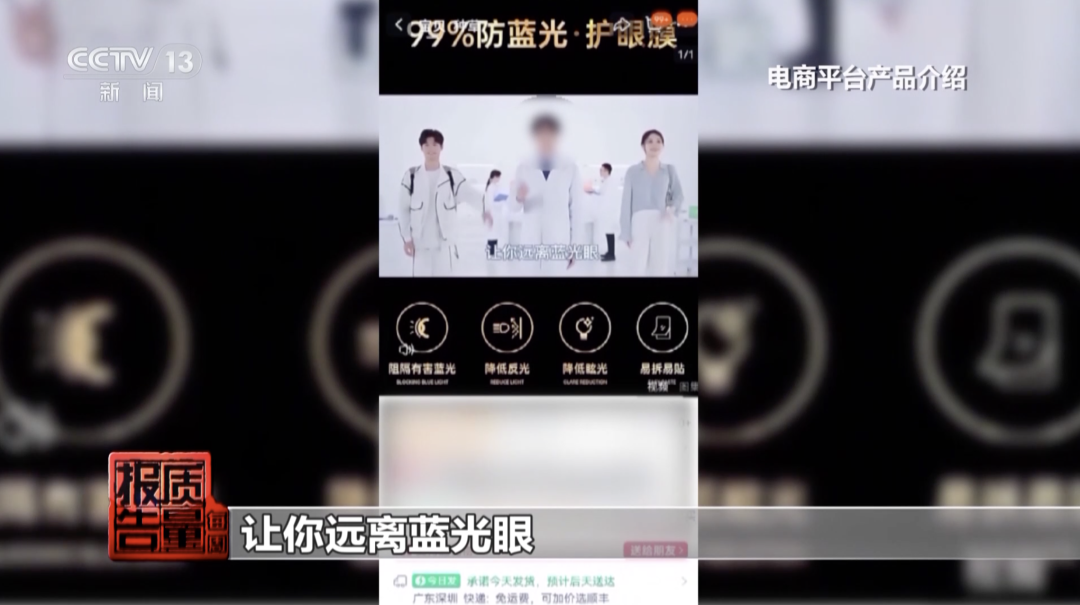
防蓝光手机膜

Search documents
“防蓝光”手机膜真有效吗?记者调查揭开真相:个别的效果等于保鲜膜
Yang Shi Xin Wen· 2025-09-01 02:46
Core Viewpoint - The effectiveness of "blue light blocking" phone screen protectors is questioned, as many products do not meet the claims made by sellers, with some offering minimal to no blue light protection [1][17][21]. Group 1: Market Overview - Many online and offline retailers promote phone screen protectors with claims of "99% blue light blocking" and other eye protection features [4][6]. - A variety of products were purchased for testing, with prices ranging from 9.8 yuan to 140 yuan, all claiming to have blue light blocking capabilities [7]. Group 2: Product Testing Results - Testing revealed that some products had blue light blocking rates as low as 0.1% to 16.4%, with only a few achieving rates between 40% and 50% [12]. - A specific product tested showed a blue light blocking rate of 42.2% and a light transmittance of 91.2% [11]. Group 3: Expert Insights - Experts indicate that many products do not effectively block blue light, with some performing similarly to household plastic wrap [14][16]. - The effectiveness of blue light blocking is not solely determined by the blocking rate but also depends on the intensity of the light source from the device itself [19][20]. Group 4: Industry Standards and Consumer Misleading - There are currently no mandatory national standards for blue light blocking phone protectors, leading to confusion and misleading claims by some sellers [11][26]. - The industry lacks strict standards, resulting in some sellers misrepresenting ordinary screen protectors as "blue light blocking" products [26][28]. Group 5: Health Implications - Prolonged exposure to high-energy blue light can potentially harm eye health, contributing to eye fatigue and possibly affecting retinal health [29][31]. - Experts recommend managing screen time effectively to mitigate potential eye strain, emphasizing the importance of breaks during prolonged use [33].

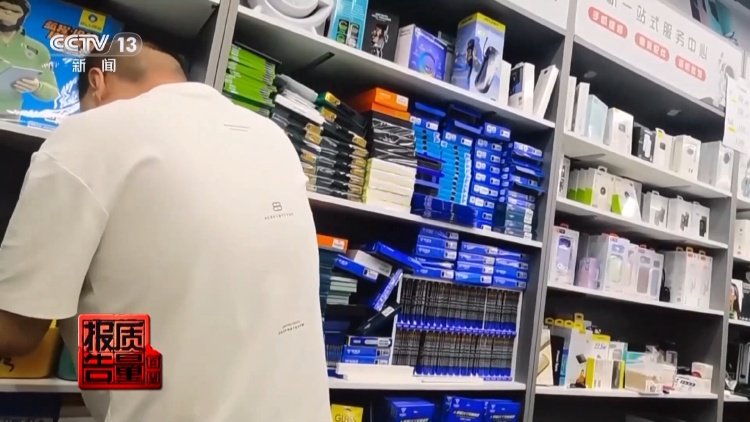
央视曝光:部分商家将普通手机膜冒充为防蓝光膜销售,个别防蓝光手机膜效果等于保鲜膜
Qi Lu Wan Bao· 2025-09-01 02:31
Core Viewpoint - The effectiveness of "blue light blocking" phone screen protectors is questioned, as many products do not meet the advertised claims of blocking 99% of harmful blue light, leading to potential consumer deception [1][8]. Group 1: Product Effectiveness - Many online and offline retailers promote phone screen protectors with claims of "blue light blocking" capabilities, with prices ranging from 9.8 yuan to 140 yuan [3]. - Testing revealed that some products only block 42.2% to 52.1% of blue light, with others showing rates as low as 0.1% to 16.4% [3][5]. - Some products' blue light blocking effectiveness is comparable to that of household plastic wrap, indicating a significant gap between marketing claims and actual performance [5]. Group 2: Industry Standards and Practices - There are currently no mandatory national standards for blue light blocking phone protectors, with the industry generally referencing recommended standards that suggest a minimum blue light blocking rate of 20% [5]. - The production of effective blue light blocking films requires a combination of coating technology, substrate material, and optical design to ensure user experience, but many products on the market do not meet these criteria [11]. Group 3: Consumer Awareness and Education - Experts suggest that evaluating blue light blocking effectiveness should consider the phone's own light intensity, as a 50% block may still allow harmful levels of blue light to reach the eyes [7]. - The marketing of products claiming to block 99% of blue light is often seen as misleading, as complete blocking would distort color accuracy and visual experience [8]. - Consumers can initially assess the authenticity of blue light blocking coatings by observing color changes under specific lighting conditions [11]. Group 4: Health Implications - Prolonged exposure to high-energy blue light can lead to eye strain and potential retinal damage, particularly in children and adolescents [12]. - Experts emphasize that proper eye care practices, such as taking regular breaks from screens, are crucial for eye health, rather than solely relying on blue light blocking products [14].