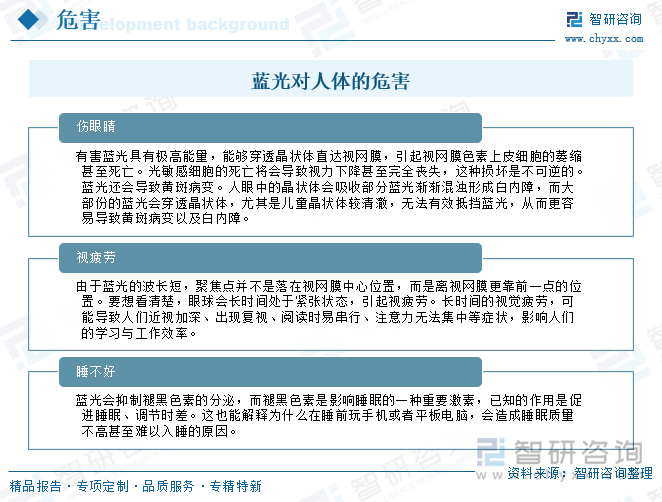
防蓝光

Search documents
防蓝光产品热销 眼科专家厘清认知误区
Zhong Guo Jing Ji Wang· 2025-12-18 00:35
Core Viewpoint - The article discusses the growing concern over blue light exposure from electronic devices and the proliferation of blue light protection products, while highlighting the misconceptions consumers have about their effectiveness and the importance of good eye care habits over reliance on such products [1][3][7]. Group 1: Blue Light Understanding - Blue light is a visible light with a wavelength range of 400nm-500nm, where long-wave blue light (greater than 455nm) is beneficial for regulating biological rhythms and improving mood, while short-wave blue light can be harmful only under high intensity and prolonged exposure [1][2]. - The energy characteristics of blue light mean that only when the irradiance exceeds safety thresholds can it potentially damage retinal cells, with normal electronic device screens operating well below these thresholds [2]. Group 2: Effectiveness of Blue Light Protection Products - There is currently no reliable scientific evidence that blue light protection products can effectively prevent myopia or slow the progression of eye diseases, and their effectiveness may only provide slight relief from eye fatigue compared to adjusting screen brightness and maintaining proper distance [3][4]. - A study revealed that among nine different blue light protection films, four had a blue light blocking rate of less than 20%, with the best performing product only blocking 52.1%, indicating widespread ineffective protection in the market [3]. Group 3: Eye Care Recommendations - Good eye care habits account for 90% of effective eye protection, with outdoor activities and proper eye usage being crucial, while blue light protection products serve as a minor supplementary measure [6][5]. - Experts recommend the "20-20-20" rule, increasing outdoor activity, optimizing visual environments, and regular eye check-ups as essential components of a comprehensive eye care strategy [6]. Group 4: Role of AI in Health Management - AI applications like Ant Financial's "Ant Aifu" are emerging as intelligent partners in personal health management, helping users cultivate healthy habits, including eye care, through features like health diaries and goal setting [7]. - The article emphasizes that consumers should focus on developing healthy lifestyles rather than succumbing to "blue light anxiety," advocating for proactive health management based on scientific understanding rather than reliance on single products [7].
“戴不坏”的老花镜!30年国货老牌放话:戴坏一年内免费换新
凤凰网财经· 2025-11-10 13:40
Core Viewpoint - The article emphasizes the increasing prevalence of presbyopia among older adults in China and promotes a specific brand of blue light blocking reading glasses as a solution to this issue, highlighting their features and benefits [6][10][50]. Group 1: Market Context - Approximately 700 million people in China suffer from presbyopia, with around 70% of individuals over 40 affected [6]. - Many older adults resort to low-quality reading glasses, often purchased at low prices, which can exacerbate their vision problems [8][10]. Group 2: Product Features - The recommended product, 康迪防蓝光老花镜, is endorsed by a celebrity and features high blue light blocking capabilities, with a beneficial blue light transmission rate of 97% [14][43]. - The glasses are designed with lightweight materials, making them comfortable for prolonged wear, and they are available in various styles for both men and women [18][27][90]. - The glasses are durable, made from 316L medical-grade stainless steel, and can withstand significant wear and tear, including being pressure-resistant [93][95]. Group 3: Pricing and Offers - The retail price for the 康迪防蓝光老花镜 is set at 198 yuan, but a promotional price of 69 yuan is offered through the platform [48][50]. - Each purchase includes a microfiber cleaning cloth and a protective case, enhancing the value proposition for consumers [52][103].


“防蓝光”手机膜真有效吗?记者调查揭开真相:个别的效果等于保鲜膜
Yang Shi Xin Wen· 2025-09-01 02:46
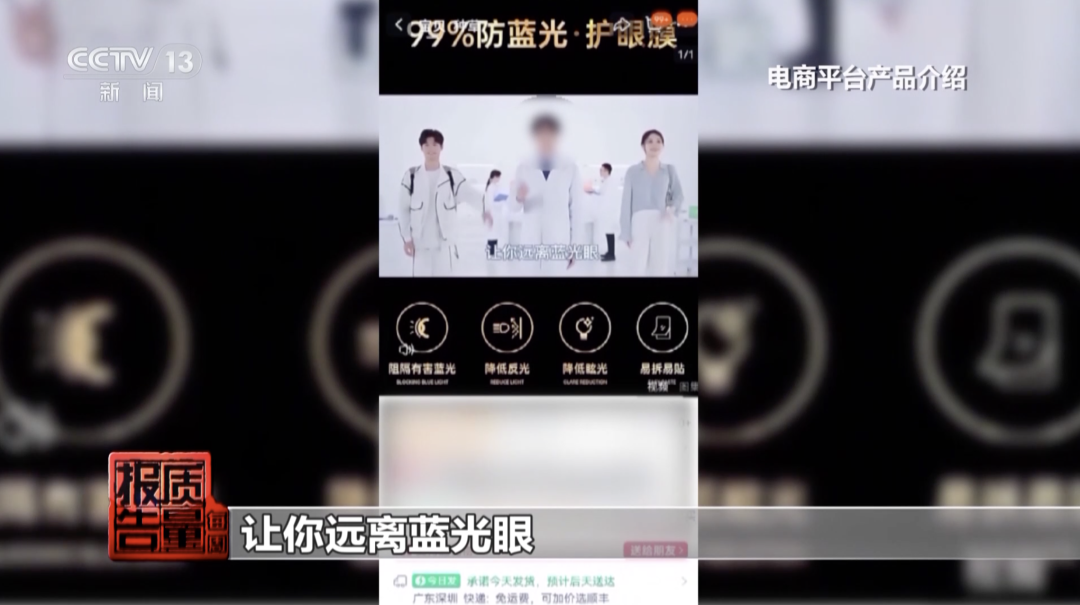
Core Viewpoint - The effectiveness of "blue light blocking" phone screen protectors is questioned, as many products do not meet the claims made by sellers, with some offering minimal to no blue light protection [1][17][21]. Group 1: Market Overview - Many online and offline retailers promote phone screen protectors with claims of "99% blue light blocking" and other eye protection features [4][6]. - A variety of products were purchased for testing, with prices ranging from 9.8 yuan to 140 yuan, all claiming to have blue light blocking capabilities [7]. Group 2: Product Testing Results - Testing revealed that some products had blue light blocking rates as low as 0.1% to 16.4%, with only a few achieving rates between 40% and 50% [12]. - A specific product tested showed a blue light blocking rate of 42.2% and a light transmittance of 91.2% [11]. Group 3: Expert Insights - Experts indicate that many products do not effectively block blue light, with some performing similarly to household plastic wrap [14][16]. - The effectiveness of blue light blocking is not solely determined by the blocking rate but also depends on the intensity of the light source from the device itself [19][20]. Group 4: Industry Standards and Consumer Misleading - There are currently no mandatory national standards for blue light blocking phone protectors, leading to confusion and misleading claims by some sellers [11][26]. - The industry lacks strict standards, resulting in some sellers misrepresenting ordinary screen protectors as "blue light blocking" products [26][28]. Group 5: Health Implications - Prolonged exposure to high-energy blue light can potentially harm eye health, contributing to eye fatigue and possibly affecting retinal health [29][31]. - Experts recommend managing screen time effectively to mitigate potential eye strain, emphasizing the importance of breaks during prolonged use [33].
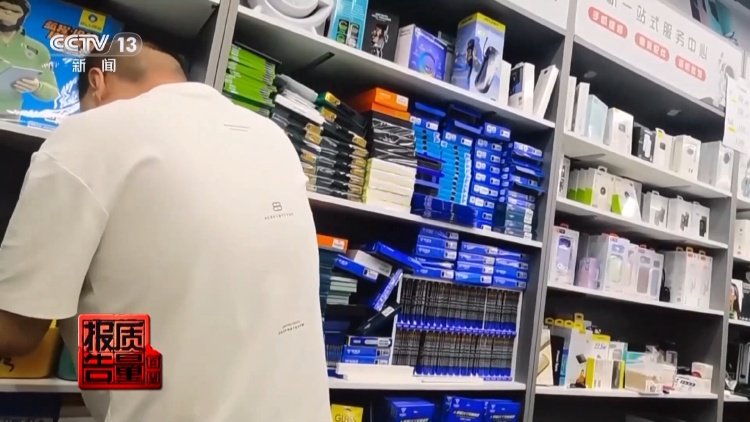
央视曝光:部分商家将普通手机膜冒充为防蓝光膜销售,个别防蓝光手机膜效果等于保鲜膜
Qi Lu Wan Bao· 2025-09-01 02:31
Core Viewpoint - The effectiveness of "blue light blocking" phone screen protectors is questioned, as many products do not meet the advertised claims of blocking 99% of harmful blue light, leading to potential consumer deception [1][8]. Group 1: Product Effectiveness - Many online and offline retailers promote phone screen protectors with claims of "blue light blocking" capabilities, with prices ranging from 9.8 yuan to 140 yuan [3]. - Testing revealed that some products only block 42.2% to 52.1% of blue light, with others showing rates as low as 0.1% to 16.4% [3][5]. - Some products' blue light blocking effectiveness is comparable to that of household plastic wrap, indicating a significant gap between marketing claims and actual performance [5]. Group 2: Industry Standards and Practices - There are currently no mandatory national standards for blue light blocking phone protectors, with the industry generally referencing recommended standards that suggest a minimum blue light blocking rate of 20% [5]. - The production of effective blue light blocking films requires a combination of coating technology, substrate material, and optical design to ensure user experience, but many products on the market do not meet these criteria [11]. Group 3: Consumer Awareness and Education - Experts suggest that evaluating blue light blocking effectiveness should consider the phone's own light intensity, as a 50% block may still allow harmful levels of blue light to reach the eyes [7]. - The marketing of products claiming to block 99% of blue light is often seen as misleading, as complete blocking would distort color accuracy and visual experience [8]. - Consumers can initially assess the authenticity of blue light blocking coatings by observing color changes under specific lighting conditions [11]. Group 4: Health Implications - Prolonged exposure to high-energy blue light can lead to eye strain and potential retinal damage, particularly in children and adolescents [12]. - Experts emphasize that proper eye care practices, such as taking regular breaks from screens, are crucial for eye health, rather than solely relying on blue light blocking products [14].
2025年中国防蓝光眼镜行业概述、产业链、市场规模、竞争格局及发展趋势研判:随着电子产品的普及,防蓝光眼镜行业发展空间巨大[图]
Chan Ye Xin Xi Wang· 2025-07-31 01:12
Core Insights - The increasing prevalence of blue light exposure from electronic devices has raised concerns about eye health, leading to a growing demand for blue light blocking glasses, particularly among children and adolescents [1][12][19] - The market for blue light blocking glasses in China is projected to reach 197 million yuan in 2024, reflecting an 8.1% year-on-year increase [1][12] - The high myopia rates among children and adolescents, with overall rates at 52.7% and as high as 80.5% in high school students, are driving the demand for vision protection products [1][12] Industry Overview - Blue light blocking glasses are designed to prevent blue light from damaging the eyes, utilizing coatings or materials that reflect or absorb harmful blue light [2][4] - The harmful blue light, particularly in the wavelength range of 415 to 455 nanometers, poses a risk to eye health, necessitating protective measures [2][4] Market Dynamics - The industry is experiencing significant growth due to the widespread use of electronic devices and the increasing internet penetration rate in China, which reached 78.6% in 2024 [6][12] - The sales channels for blue light blocking glasses include e-commerce platforms, optical hospitals, and retail stores, with optical hospitals being a key channel due to their professional services [8][10] Competitive Landscape - The market is becoming increasingly competitive, with both international brands like Essilor and Carl Zeiss and domestic brands like Wanxin and Mingyue vying for market share [14][15] - Companies are focusing on product quality and technological innovation to differentiate themselves in a crowded market [14][19] Industry Trends - Future developments in the blue light blocking glasses industry will be driven by technological innovations, leading to smarter and more personalized products [19][20] - The integration of online and offline sales channels is expected to enhance consumer access and improve overall shopping experiences [20] - There is a growing trend towards personalized and diverse consumer demands, with an emphasis on comfort and aesthetics in addition to basic blue light protection [21]