隆顶BIPV

Search documents
面对极端天气光伏电站该如何守护工商业屋顶
Xin Hua Wang· 2025-10-17 02:54
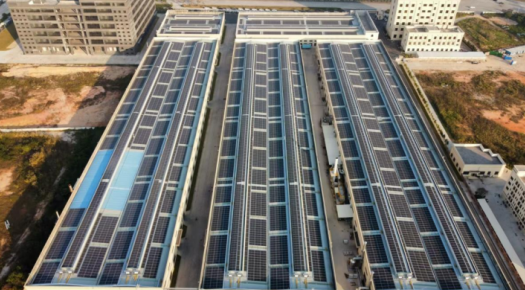
Core Insights - The article highlights the resilience of integrated photovoltaic (BIPV) systems developed by LONGi Green Energy and Sentech in the face of extreme weather events, particularly Typhoon Haikui, which caused significant damage to traditional solar installations [1][2][3] - The integration of photovoltaic technology into building structures is presented as a dual-value model, providing both energy generation and enhanced structural protection against severe weather [3] Group 1: Impact of Typhoon Haikui - Typhoon Haikui resulted in severe damage across various regions in Guangdong, with multiple factories experiencing roof damage and economic losses [1] - Traditional solar installations faced significant risks during the typhoon, while the BIPV projects by LONGi and Sentech remained intact, showcasing their superior resilience [1] Group 2: Technological Advancements - The BIPV products, such as LONGi Longtop 5, demonstrate advanced wind resistance capabilities, withstanding pressures up to 11.2 kPa, equivalent to a Category 17 super typhoon [3] - The use of seamless roofing panels and water diversion technology effectively eliminates leakage risks, enhancing the overall safety of the installations [3] Group 3: Strategic Value for Businesses - The integration of photovoltaic systems into building designs transforms them from mere additions to essential protective layers, providing three core values: asset safety, operational continuity, and unified green benefits [2] - The shift towards building-integrated photovoltaics represents a significant advancement in addressing the challenges posed by extreme weather, moving away from the traditional model that increased risks [3]
历经台风,工商业屋顶如何“安然无恙”
Jing Ji Wang· 2025-10-14 09:38
Core Insights - The article highlights the resilience of integrated photovoltaic (BIPV) systems developed by LONGi Green Energy and Sentech in the face of extreme weather events, particularly Typhoon "Hagupit" [1][5][6] Group 1: Impact of Typhoon "Hagupit" - Typhoon "Hagupit" caused significant economic losses in Guangdong, with multiple instances of roof damage and structural failures reported [1] - Traditional photovoltaic systems were found to exacerbate roof vulnerabilities during the typhoon, leading to increased risks [1] Group 2: Performance of BIPV Projects - BIPV projects by LONGi and Sentech demonstrated reliable performance during the typhoon, with systems at various sites remaining intact and operational [2][3] - Specific examples include the Taishan Diheng Power Plant and Shenzhen Baoan Airport, where the BIPV systems maintained power supply and structural integrity [2][4] Group 3: Technological Advancements - The BIPV products feature advanced flexible connection technology, allowing them to withstand wind pressures up to 11.2 kPa, equivalent to a Category 17 super typhoon [6] - The LONGi Hi ROOF S system shows a 23% improvement in wind resistance compared to traditional photovoltaic solutions, underscoring the technological edge of integrated systems [6] Group 4: Value Proposition for Businesses - The integration of photovoltaic systems into building structures offers dual benefits of energy generation and enhanced safety, positioning them as essential for modern construction [5][7] - The article emphasizes that for commercial property owners, safety translates to significant economic benefits, making BIPV a preferred choice in the context of increasing extreme weather events [7]