
建筑光伏一体化

Search documents
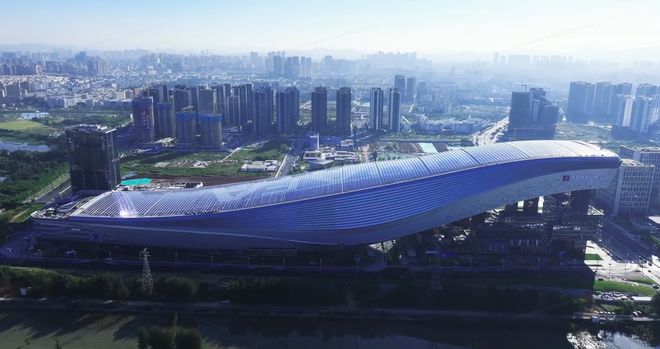
探寻深圳前海冰雪世界项目背后的科技奥秘
Huan Qiu Wang Zi Xun· 2026-02-11 01:21
Core Viewpoint - The "Qianhai Ice and Snow World" project showcases an innovative building-integrated photovoltaic (BIPV) system that combines aesthetic design with high-performance solar energy generation, addressing both structural and aesthetic challenges in the construction industry [1][3]. Group 1: Project Overview - The project features a unique rooftop photovoltaic system that efficiently generates power while integrating with the building's aesthetic [1]. - The rooftop's initial design did not account for photovoltaic installation, leading to a challenge in meeting both weight and wind resistance requirements [3]. Group 2: Technical Innovations - A novel solution was developed using a 0.7mm stainless steel corrugated structure, which enhanced structural strength and wind resistance while maintaining a lightweight design [3][5]. - The project overcame the challenge of aesthetic appeal by using a light blue and white color scheme for the photovoltaic panels, integrating them into the urban landscape [5]. Group 3: Material Breakthroughs - The team developed a high-performance surface glaze that allows for light transmission while maintaining durability, addressing the aesthetic demands of BIPV [5][7]. - The innovative design included blue dot-shaped perforations in the glaze, which increased light absorption without compromising visual appeal, resulting in improved photovoltaic efficiency [7]. Group 4: Performance Metrics - The photovoltaic components' conversion efficiency increased from 17.5% to 20%, with a total installed capacity of approximately 6.4 megawatts across 35,000 square meters of panels [7]. - The expected annual electricity generation rose from 5.76 million kilowatt-hours to 6.33 million kilowatt-hours, fulfilling about 20% of the project's annual operational electricity needs [7].

学习规划建议问答 | 如何理解发展分布式能源
Xin Hua She· 2026-02-06 00:23
Core Viewpoint - The development of distributed energy is emphasized as a crucial component of the new energy system, aimed at optimizing energy structure, promoting energy conservation and emission reduction, and advancing sustainable economic and social development [1][2]. Group 1: Considerations for Development - The deployment of distributed energy is aimed at better achieving carbon peak and carbon neutrality, as it aligns with the resource and technical characteristics of renewable energy [2]. - It addresses the diverse energy needs of the population through flexible operational modes, particularly benefiting remote areas and high-demand users like hospitals and industrial parks [2]. - The development enhances energy security by increasing clean energy supply and reducing reliance on large energy systems [2]. - It stimulates social investment and related industry growth due to lower investment thresholds and diverse application scenarios [2]. Group 2: Key Development Areas - Focus on constructing zero-carbon parks that integrate various energy sources to meet diverse energy demands [3]. - Promote zero-carbon rural development through distributed solar and wind energy projects [3]. - Advance building-integrated photovoltaics by retrofitting existing structures and incorporating solar systems in new constructions [3]. - Strengthen the integration of clean energy with transportation by developing charging and hydrogen stations along transport routes [3]. - Strategically build distributed natural gas energy stations to support peak shaving and backup needs [3]. Group 3: Cautions for High-Quality Development - Avoid blind expansion of scale by carefully planning the development scale and layout of distributed energy [4]. - Ensure adequate supporting infrastructure by scientifically constructing distribution networks and enhancing the capacity for renewable energy [4]. - Prevent unfair competition by regulating the development and management of distributed solar energy, fostering a fair market environment [4].
新国标发布 筑牢建筑防火“第一道闸门”
Zhong Guo Jing Ji Wang· 2026-02-02 03:12
Core Viewpoint - The newly revised mandatory national standard "Classification of Combustion Performance of Building Materials and Products" (GB 8624-2025) will be implemented on January 1, 2027, marking a significant upgrade in China's building fire safety standards since its last comprehensive revision in 2012 [1][3]. Group 1: Key Changes in the New Standard - The new standard categorizes building materials and products into three main categories and nine subcategories, with building insulation materials further divided into five subcategories, enhancing precision in management [2]. - The scope of application has been significantly expanded to include new classifications, testing methods, and criteria for fire safety performance of building insulation materials and photovoltaic components [2]. - A multidimensional evaluation of combustion performance has been established, incorporating key additional grading information such as smoke production characteristics, burning droplets, and smoke toxicity into a four-dimensional evaluation system [2]. Group 2: Implications of the New Standard - The implementation of the new standard introduces a QR code and electronic labeling system for building insulation materials, creating a comprehensive fire safety supervision scheme from development to application [3]. - The standard provides a technical basis for the development of building-integrated photovoltaics, compelling manufacturers to enhance flame-retardant processes and purifying the market by eliminating substandard products [3]. - The new standard serves as a "safety red line" for building design, a "technical measurement" for material quality control, and a "legal basis" for fire safety acceptance, significantly contributing to the prevention of major fire safety risks in the construction sector [3].
光伏50ETF(159864)涨超5.5%,行业前景获机构关注
Mei Ri Jing Ji Xin Wen· 2026-01-23 03:08
Core Viewpoint - The photovoltaic (PV) sector is experiencing robust growth in both domestic and international demand, leading to increased attention from institutions [1] Domestic Demand - From January to October 2025, China's newly installed photovoltaic capacity is expected to reach approximately 252.87 GW, representing a year-on-year increase of 39.5%, with rapid growth observed in the first five months [1] International Demand - During the same period, exports of silicon wafers, battery cells, and modules have increased by 8.3%, 91.4%, and 6% year-on-year, respectively [1] Supply Side Adjustments - Production adjustments have been noted on the supply side, with a year-on-year decline in the output of polysilicon and silicon wafers, while battery cell and module production has increased year-on-year [1] Price Recovery and Profitability - The price recovery in the industry has led to improved profitability, with year-on-year increases in polysilicon and module prices, and a significant reduction in losses for major industry players in the third quarter compared to the second quarter [1] Policy Support - The government is promoting the integrated development of new energy, encouraging innovative applications such as building-integrated photovoltaics and "light-storage-direct-flexible" solutions [1] Future Outlook - Starting from April 1, 2026, the export tax rebate for photovoltaic products will be canceled, which may impact the market dynamics [1] - Under the "West-to-East Electricity Transmission" initiative, the application fields for photovoltaic products are expected to expand, with potential innovations in technologies like HJT and perovskite in commercial aerospace scenarios [1] ETF Overview - The photovoltaic 50 ETF (159864) tracks the photovoltaic industry index (931151), which includes listed companies across the entire industry chain, from upstream silicon materials to downstream photovoltaic power station construction and operation [1]
京东方A接待20家机构调研,包括淡水泉(北京)投资管理、天风证券、百年保险资管、华泰证券资管等
Jin Rong Jie· 2026-01-06 02:16
Core Viewpoint - BOE Technology Group (京东方A) has significant advantages in the perovskite solar cell sector, leveraging its long-term experience in the display industry to enhance perovskite research and production capabilities, achieving a record time of 38 days from the setup of its pilot line to the first sample output [1][3]. Group 1: Advantages of Perovskite Technology - Perovskite solar cells offer lower theoretical costs, simplified processes, and lower fabrication temperatures compared to traditional silicon solar cells [4]. - They possess flexible, impact-resistant, and anti-cracking properties, making them more reliable during transportation and application [4]. Group 2: Application and Development - The company has accelerated the demonstration of perovskite technology, launching the world's first perovskite BIPV (Building-Integrated Photovoltaics) project, "Zero Carbon House," which received national certification and the "Energy Storage Application Award" [2][5]. - Collaborations with leading consumer electronics companies are underway to develop innovative products such as photovoltaic price tags and autonomous vehicles [5]. Group 3: Project Progress and Efficiency - The company is developing rigid, flexible, and stacked component technology in parallel, achieving industry-leading efficiency levels across its three research platforms [6][7]. - Rigid components have reached a steady-state efficiency of 27.37%, while flexible components have achieved efficiencies of 21.39% in experimental lines and 16.6% in pilot lines, with the latter being the largest and highest power flexible components in the industry [7]. Group 4: Focus Areas and Future Plans - The company is concentrating on improving the efficiency and lifespan of perovskite cells, with plans to establish outdoor verification stations to assess stability under various environmental conditions [8]. - Future plans include increasing R&D investment to enhance conversion efficiency, stability, and lifespan, while accelerating the transition from pilot line technology to large-scale production to reduce costs [8].


京东方A(000725) - 001-2026年1月5日投资者关系活动记录表
2026-01-06 00:54
Group 1: Company Overview and Investor Engagement - The investor relations activity involved a specific audience survey and on-site visit at Hefei BOE Technology Co., Ltd. on January 5, 2026 [1][2] - Participants included representatives from various financial institutions such as Tianfeng Securities and China Life Insurance [1][2] Group 2: Advantages of Perovskite Technology - Perovskite solar cells are recognized for their high efficiency, lightweight, and flexibility, making them suitable for a wide range of applications [2][3] - The company has achieved a record time of 38 days to complete the pilot line, showcasing its manufacturing capabilities [2] Group 3: Comparison with Traditional Silicon Technology - Perovskite technology offers lower theoretical costs and simplified processes compared to traditional silicon solar cells, with lower preparation temperatures [3] - The flexibility and impact resistance of perovskite cells enhance reliability during transport and application [3] Group 4: Application Scenarios - The company has established the world's first BIPV (Building-Integrated Photovoltaics) project using perovskite technology, receiving national recognition [4] - Collaborations with leading consumer electronics companies are underway to develop innovative products like photovoltaic price tags and autonomous vehicles [4] Group 5: Project Progress and Efficiency - The company is developing rigid, flexible, and stacked component technologies, achieving industry-leading efficiency levels [5][6] - Rigid components have reached a steady-state efficiency of 27.37%, while flexible components have achieved efficiencies of 21.39% and 16.6% [5][6] Group 6: Focus Areas and Future Plans - The company is concentrating on improving the efficiency and lifespan of perovskite products, addressing challenges in industrialization [7] - Plans include building demonstration power stations and developing solutions that meet ISOS and IEC standards [7] Group 7: Unique Advantages of Pilot and Experimental Lines - The company leverages its expertise in glass-based thin-film processing and packaging technology to establish a fully automated flexible perovskite production line [8] - This flexible production model allows for adjustments and expansions in the early stages of the industry [8] Group 8: Future Business Strategy - The company aims to increase R&D investment to enhance the conversion efficiency, stability, and lifespan of perovskite components [9][10] - There is a commitment to accelerate the industrialization process and reduce costs while fostering an open innovation ecosystem with global partners [10]
住建部:在更大范围推广智能建造、绿色建造、装配式装修
Zheng Quan Shi Bao Wang· 2025-12-31 10:22
Core Viewpoint - The Ministry of Housing and Urban-Rural Development has released opinions aimed at enhancing housing quality, emphasizing the development of new construction methods [1] Group 1: New Construction Methods - Accelerate the integration of the construction industry with advanced manufacturing technologies and next-generation information technologies [1] - Promote intelligent construction, green construction, and prefabricated decoration on a broader scale [1] Group 2: Digital Technology and BIM - Expand the application scenarios of digital technology in engineering and advance the use of Building Information Modeling (BIM) technology throughout the entire process of housing design, construction, and operation [1] - Promote the application of intelligent construction equipment [1] Group 3: Waste Management and Resource Utilization - Accelerate the reduction and resource utilization of construction waste [1] Group 4: Green Building Initiatives - Ensure that all new urban housing is built as green buildings and increase the proportion of high-star green buildings [1] - Promote energy-saving and carbon reduction in building operations and strengthen energy efficiency limit management [1] Group 5: Energy Efficiency and Renewable Energy - Establish a building energy efficiency grading system and compile carbon emission statistical accounting standards [1] - Promote the electrification of building energy use, conduct integrated photovoltaic pilot projects, and enhance the utilization of renewable energy [1] - Accelerate the transformation of the energy structure used in buildings [1]
森特士兴集团股份有限公司第五届董事会第七次会议决议公告
Shang Hai Zheng Quan Bao· 2025-12-30 21:47
Group 1 - The company held its fifth board meeting on December 30, 2025, to discuss various proposals, all of which were approved unanimously by the board members present [2][5][14] - The board approved a proposal to apply for a comprehensive bank credit limit of up to 10.8 billion yuan for 2026, which will be used for various financing needs [4][15] - The company also approved a proposal for estimated daily related transactions for 2026, amounting to 1.235 billion yuan, which will require shareholder approval [7][20] Group 2 - The company announced a delay in several fundraising investment projects, including the R&D center, design center, and project management information system platform, extending the completion date to December 2026 [11][31][45] - The delay in the R&D center project is attributed to market demand changes and the need for technological upgrades, ensuring the company maintains its competitive edge [32][34][39] - The design center project is delayed due to the need for new business applications and the training of BIM professionals, which are essential for the company's future business expansion [40][42] Group 3 - The company emphasized that the delays in fundraising projects will not adversely affect its normal operations and are in line with long-term interests [45][46] - The board's decisions regarding the fundraising projects and related transactions were made following necessary internal procedures and comply with relevant regulations [46]

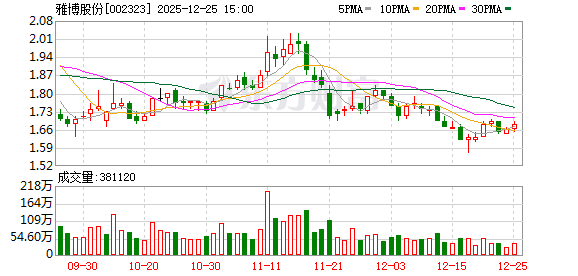
雅博股份:公司目前聚焦金属屋面与建筑光伏一体化BIPV融合方向
Zheng Quan Ri Bao· 2025-12-25 12:47
Group 1 - The company is currently focusing on the integration of metal roofing and building-integrated photovoltaics (BIPV) [2] - The company aims to cultivate design and engineering teams to prepare for the future explosion of the building-integrated photovoltaics market [2]

广州:大力推进光伏、生物质能、氢能等新能源开发利用 增加本地绿色电力供应
Xin Lang Cai Jing· 2025-12-16 06:57
Core Viewpoint - The Guangzhou Municipal Government has released the "Beautiful Guangzhou Construction Planning Outline (2025-2035)", emphasizing the development and utilization of new energy sources while ensuring coal and natural gas remain integral to the energy mix [1] Group 1: Energy Development - The plan aims to actively develop and utilize new energy sources, including solar, biomass, and hydrogen energy, to increase local green electricity supply [1] - There is a focus on reducing coal consumption through substitution and promoting clean and efficient use of coal [1] - The initiative includes the promotion of distributed solar photovoltaic power generation and the exploration of integrated construction and operation models for building photovoltaic systems [1] Group 2: Natural Gas and Hydrogen - The government plans to continue advancing the use of natural gas and to promote its application in transportation and power sectors [1] - There is a commitment to the demonstration and large-scale application of hydrogen energy in various fields [1] - The outline also includes forward-looking measures for the exploration and industrialization of natural gas hydrates [1]