霁蓝釉天球瓶(带西洋铜饰)

Search documents
在澳门,遇见千年丝路故事
Xin Lang Cai Jing· 2026-01-16 23:10
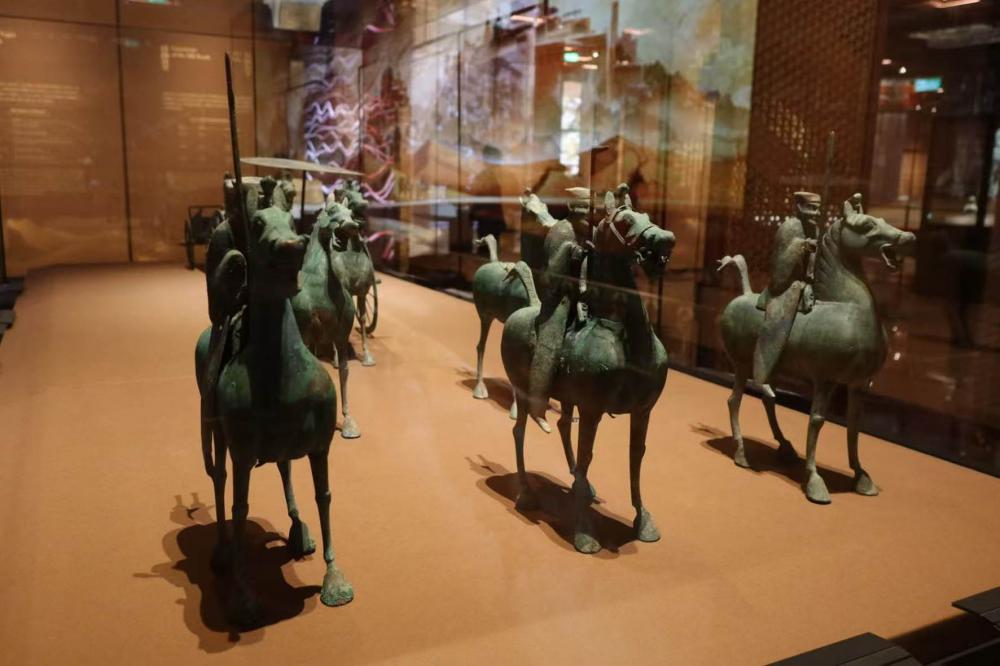
Core Perspective - The exhibition "Silk Road" at the Macau Poly MGM Museum showcases over 200 precious artifacts that illustrate the historical and cultural exchanges along the Silk Road, emphasizing the integration of Eastern and Western civilizations over a millennium [1][11]. Group 1: Historical Significance - The Silk Road, initiated by Zhang Qian in 138 BC, established a vital communication and trade route between the East and West, evolving from a sporadic exploration path to a stable civilizational link [3]. - The exhibition features a significant artifact, a bronze chariot and horse figurine set from the Han Dynasty, symbolizing the grandeur and ambition of the Han Empire in safeguarding Silk Road trade [3]. Group 2: Artistic and Cultural Exchange - The Silk Road facilitated not only trade but also the exchange of artistic techniques and cultural ideas, as seen in the evolution of Chinese porcelain and its integration with Western metalwork [8]. - The exhibition includes a unique blue-glazed celestial vase from the Yongzheng period, showcasing the fusion of Eastern porcelain artistry and Western decorative techniques [8]. - A notable exhibit, the Dragon Pattern Throne Carpet, exemplifies the intricate weaving techniques and the blending of silk and wool, reflecting the historical craftsmanship along the Silk Road [9]. Group 3: Contemporary Interpretations - Contemporary artists like Xu Bing and Zao Wou-Ki are featured in the exhibition, using the theme of the Silk Road to explore philosophical concepts of cultural production and the interplay between Eastern and Western aesthetics [10]. - The exhibition conveys a modern interpretation of the Silk Road's spirit, emphasizing the importance of seeking resonance in differences and enriching each other through cultural exchanges [12].