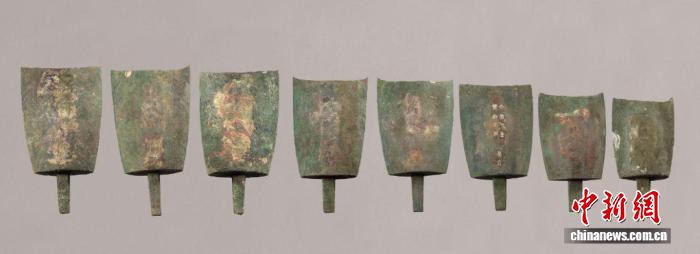
青铜句鑃

Search documents
视频丨独家揭秘!十五运开幕式主火炬并非真火焰 机器人敲响的是两千年前的它
Yang Shi Xin Wen Ke Hu Duan· 2025-11-10 06:46
Core Points - The opening ceremony of the 15th National Games showcased a blend of traditional culture and modern technology, highlighting the unique characteristics of the Guangdong-Hong Kong-Macao Greater Bay Area [1][9] - The event featured a synchronized flag-raising ceremony among Guangdong, Hong Kong, and Macao, marking a historic collaboration [9][10] - The use of a robotic arm to play ancient bronze instruments demonstrated the integration of heritage and innovation [1][3] Group 1: Cultural Highlights - The performance included the ancient bronze percussion instrument "Judi," which is significant in the history of Lingnan music and was discovered in the Southern Yue Kingdom [3][7] - Various traditional cultural elements such as Cantonese opera, dragon boat racing, and lion dances were prominently featured, showcasing the rich heritage of the region [9][12] - The "Aoyue" fish, a cultural symbol, was introduced for the first time in a major sports event, representing the transition of the carp to a dragon [9][10] Group 2: Technological Innovations - The main torch of the ceremony was ignited using electric light and water mist, marking the first time a non-flame torch was used in the history of the National Games [9][10] - The integration of digital technology in the performance created an immersive experience, merging ancient sounds with modern robotics [1][7] Group 3: Collaborative Spirit - The event marked the first time Hong Kong and Macao served as co-hosts for the National Games, emphasizing regional unity [9][12] - The ceremony featured iconic landmarks from the Greater Bay Area, symbolizing the interconnectedness and vibrant energy of the region [10][12]


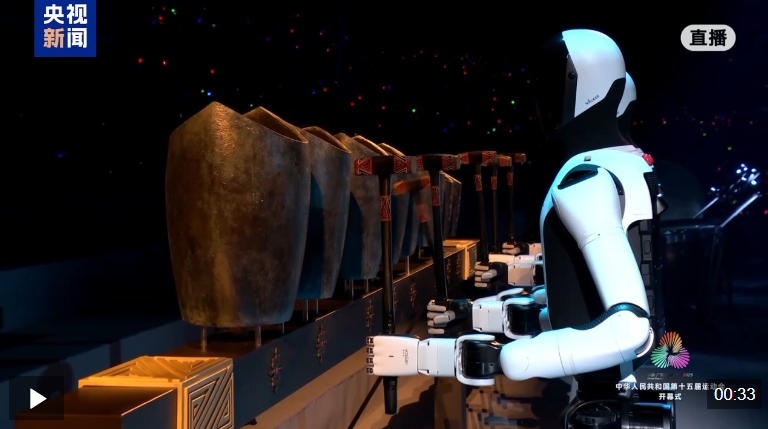
视频丨独家揭秘开幕式四大“名场面”!机器人敲响的竟是两千多年前的它
Yang Shi Xin Wen Ke Hu Duan· 2025-11-10 06:32
Core Viewpoint - The opening ceremony of the 15th National Games showcased a blend of ancient culture and modern technology, highlighting the significance of the bronze percussion instrument "ju zhi" and the collaboration of the Guangdong-Hong Kong-Macao Greater Bay Area [3][4][18]. Group 1: Cultural Significance - The bronze percussion instrument "ju zhi" is a significant representation of Chinese ritual and music culture, marking an important chapter in the history of Lingnan music [4]. - The performance featured a perfect harmony between the ancient instrument and modern robotic technology, creating a powerful auditory experience [6]. Group 2: Technological Integration - The opening ceremony utilized advanced digital technology to sample the sounds of the ancient instrument, enhancing the immersive experience for the audience [3]. - The main torch of the ceremony was ignited using electric energy rather than real flames, marking a historical first for the National Games [15]. Group 3: Regional Collaboration - This edition of the National Games is the first to be co-hosted by Guangdong, Hong Kong, and Macao, with athletes from these regions entering the venue together, symbolizing unity [18]. - Iconic landmarks from the Greater Bay Area were featured during the ceremony, showcasing the vibrant connectivity of the region [18]. Group 4: Artistic Performances - The ceremony included various traditional performances such as lion dances, dragon boat races, and Cantonese opera, emphasizing the rich cultural heritage of the Lingnan region [8][9]. - The inclusion of classic Cantonese songs during the ceremony resonated with the shared memories of the people from Hong Kong, Macao, and the mainland, reinforcing cultural ties [20].
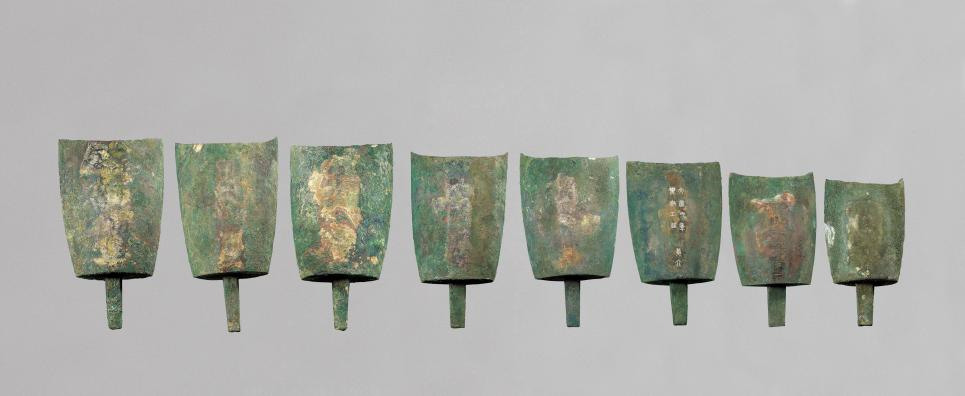
(粤港澳全运会)十五运会开幕式上智能机器人敲响千年青铜乐器
Zhong Guo Xin Wen Wang· 2025-11-09 23:36
Core Points - The opening ceremony of the 15th National Games featured a performance by modern robots playing ancient bronze musical instruments, specifically the bronze "ju diao," creating a dialogue between ancient and modern cultures [1][3]. Group 1: Instrument Overview - The bronze "ju diao" is a percussion instrument originating from the Wuyue region during the Eastern Zhou period, with significant findings in provinces such as Anhui, Jiangsu, Zhejiang, Hubei, and Shandong, particularly in Jiangsu and Zhejiang [3]. - The "ju diao" is classified as one of the eight musical categories based on material, specifically falling under the metal category due to its bronze composition [3]. - It is typically used in rituals and banquets, requiring a base for stability during performance, and produces two distinct sounds: the main drum sound and the side drum sound [3]. Group 2: Historical Significance - The existing bronze "ju diao" set, discovered in the Western Han Dynasty Nanyue King Tomb, is notable for being one of the few complete sets, consisting of eight pieces, weighing a total of 191 kilograms, with the largest piece measuring 64 centimeters in height and weighing 40 kilograms [4]. - This set is significant as it represents the first large-scale discovery of such instruments in Lingnan, showcasing the practical use of these instruments in the royal court [3][4]. - The Nanyue King Tomb, belonging to the second-generation king Zhao Mo, contained a total of 121 burial items, including the bronze "ju diao," indicating the cultural importance of music in the burial practices of the time [4].