
科技融合

Search documents
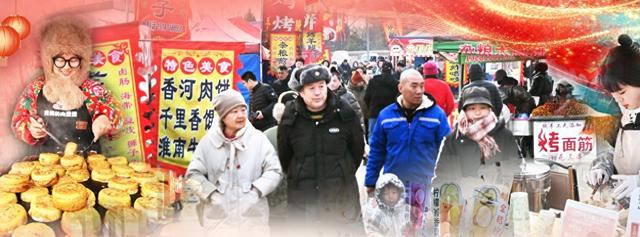
不拘传统 常逛常新
Xin Lang Cai Jing· 2026-02-03 10:29
Core Insights - The article highlights the transformation of the Taihu Market into a vibrant space that integrates traditional culture with modern technology, enhancing the urban experience while preserving its historical essence [1][5]. Group 1: Market Transformation - The Taihu Market has undergone significant changes, evolving from a simple agricultural gathering to a diverse space that combines folk customs, technology, and daily life [1][3]. - The market features over 700 stalls, making it a well-known cultural hub in the Beijing-Tianjin-Hebei region and a key traditional market in Beijing [3][4]. Group 2: Cultural Integration - The market hosts various performances, including traditional shadow puppetry and acrobatics, which attract audiences of all ages, showcasing the charm of traditional culture [4][5]. - The integration of technology, such as interactive robots, enhances the traditional performances, appealing to younger visitors and creating a unique experience [4][5]. Group 3: Seasonal Festivities - As the Chinese New Year approaches, the market is filled with festive decorations and traditional foods, creating a vibrant atmosphere that embodies the spirit of the holiday [6][7]. - Various stalls offer a wide range of seasonal products, including nuts, dried fruits, and decorative items, contributing to the festive ambiance [6][7]. Group 4: Culinary Offerings - The market features a variety of traditional Beijing snacks and local delicacies, providing visitors with an authentic taste of the region [7][9]. - The bustling environment, with vendors actively engaging customers, creates a lively and inviting atmosphere for food lovers [7][9]. Group 5: Accessibility and Services - The market operates on specific days of the lunar calendar, with additional events planned for the New Year, ensuring a continuous flow of visitors [8][17]. - Convenient transportation options are available, including ample parking and public transit access, making it easy for visitors to reach the market [8][18].

研判2026!中国线上DTC网络解决方案行业产业链、市场规模、竞争格局、重点企业及发展趋势分析:国内本土企业优势加速扩大,国际巨头份额被挤压[图]
Chan Ye Xin Xi Wang· 2026-01-23 01:26
Core Viewpoint - The tennis court industry in China is experiencing significant growth, driven by increased participation in tennis and the development of infrastructure, with the number of courts expected to reach 53,805 by 2024, up from 49,767 in 2021 [1][6]. Group 1: Industry Overview - Tennis is one of the most commercially valuable sports globally, with a rapidly growing industry in China due to economic development and improved living standards [5][6]. - The construction of tennis courts is essential for supporting various activities such as events, training, and leisure, thereby enhancing the industry's capacity [6]. Group 2: Market Statistics - By 2024, the distribution of tennis courts in China will be as follows: Central South region (32%), East China (25%), and North China (20%) [6]. - Guangdong province leads with 6,700 courts (12.45% of the total), followed by Sichuan with 4,450 courts (8.27%), and Beijing with 3,380 courts (6.28%) [6]. Group 3: Industry Chain - The upstream of the tennis court industry includes materials like elastic acrylic, plastic, clay, artificial grass, and flooring, along with lighting systems and foundational materials [7]. - The midstream involves the design, construction, and integration of courts, while the downstream focuses on the operation and application of these facilities [7]. Group 4: Development Environment - The Chinese government is prioritizing tennis as part of its sports development strategy, with policies aimed at increasing court facilities and promoting community engagement in tennis [10]. Group 5: Competitive Landscape - The tennis court construction industry in China is characterized by a "large market, small enterprises" structure, with no dominant national players [12]. - Key companies in the industry include Beijing Olympic Sailing Sports Facilities Engineering Co., Ltd., Greensborough Sports Group, and others [12]. Group 6: Future Trends - The trend towards health-conscious lifestyles is driving the popularity of tennis among high-income and educated individuals, with increasing participation rates [12]. - Future tennis courts will focus on integrating technology and enhancing user experience, including smart management systems and immersive viewing experiences [13].

趋势研判!2026年中国网球场地行业政策、产业链、数量规模、区域及省市分布、主要企业及发展趋势分析:中国网球场在全球的占比位列第二[图]
Chan Ye Xin Xi Wang· 2026-01-23 01:26
Core Viewpoint - The tennis court industry in China is experiencing significant growth, driven by increased participation in tennis and the development of infrastructure, with the number of courts expected to reach 53,805 by 2024, up from 49,767 in 2021 [1][6]. Group 1: Industry Definition and Classification - Tennis courts are specialized venues for tennis, with standard dimensions of at least 36.60m x 18.30m, and require buffer zones around the playing area [2]. - Courts can be categorized into outdoor and indoor types, with various surfaces such as grass, clay, and hard courts [3]. Group 2: Current Development Status - Tennis is one of the most commercially valuable sports globally, and in China, the sport is rapidly gaining popularity due to economic growth and international success in competitions [5][6]. - The number of tennis courts in China is projected to grow significantly, with major regions being Central South (32%), East China (25%), and North China (20%) [6]. Group 3: Industry Chain - The upstream of the tennis court industry includes materials like elastic acrylic, plastic, and artificial grass, while the midstream involves design and construction, and the downstream focuses on operation and application [7]. Group 4: Population and Participation - The number of tennis players in China is expected to reach approximately 25.19 million by 2024, with a near-equal gender distribution [9]. - The growth in tennis participation is attributed to various factors, including the influence of sports stars and increased public interest [9]. Group 5: Policy Environment - The Chinese government is prioritizing tennis as part of its sports development strategy, with initiatives aimed at increasing court availability and promoting tennis in schools [10]. Group 6: Competitive Landscape - The tennis court construction industry in China is characterized by a large market with many small enterprises, lacking a dominant national player [12]. Group 7: Future Development Trends - The trend towards healthier lifestyles is driving the popularity of tennis, with advancements in court technology and user experience expected to enhance participation [13]. - Future tennis courts will integrate smart technologies and user-friendly designs to improve operational efficiency and attract community involvement [13].

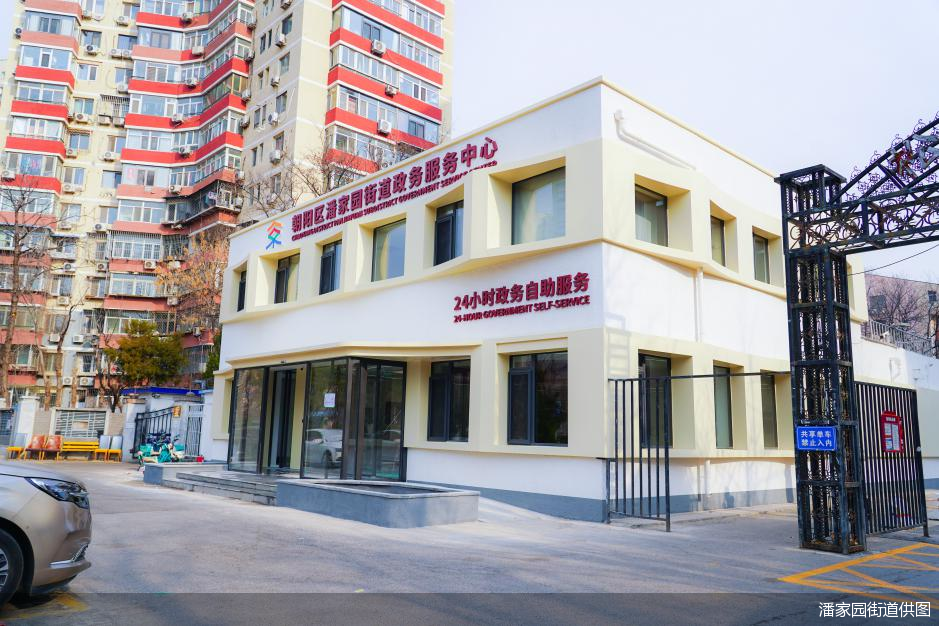
将“无界”理念融入为民情怀,潘家园街道打造基层“朝阳服务”新标杆
Bei Jing Shang Bao· 2025-12-22 07:04
Core Viewpoint - The Panjiayuan Street has implemented the "boundaryless" concept in public services and grassroots governance, focusing on equal access to services and innovative reforms in government service delivery [1][3]. Group 1: Boundaryless Concept Implementation - The "boundaryless" concept has been extended from public services to grassroots governance, creating a new landmark for public services along the Third Ring Road [1]. - The Panjiayuan Street has successfully established a "no-wall museum" through the China Panjiayuan Cultural Industry Alliance, promoting the integration and revitalization of cultural resources [1]. Group 2: Service Equalization and Accessibility - The government service center has achieved service equalization, integrated processes, and scenario-based services, focusing on "all people, all areas, all times, and all processes" [1]. - The street has addressed the challenges of social security services by enabling cross-district handling of 41 high-frequency social security tasks, allowing residents to process these services with just their ID cards [3]. Group 3: 24-Hour Self-Service and Business Support - A 24-hour self-service area has been established to cater to the needs of working individuals and students, integrating over 400 high-frequency services for "self-service" [3]. - The street has collaborated with local human resources and social security departments to streamline 385 high-frequency business-related services, reducing costs for enterprises [3]. Group 4: Innovative Service Models - The traditional counter service has been replaced with an open "immersive service space," allowing staff to work collaboratively with citizens [6]. - The introduction of 10 comprehensive digital service islands has reduced processing times by 60% compared to traditional methods [6]. Group 5: Technology-Driven Employment Services - A digital employment guidance center named "Whale House" has been launched to provide tailored services for job seekers, linking industry needs with employment supply [8]. - The integration of AI systems and big data has enabled the creation of detailed "talent profiles" for job seekers, addressing the dual challenges of employment and recruitment [8]. Group 6: Continuous Support for New Employment Groups - The street has included new employment groups, such as delivery workers, in its service framework, providing 24-hour access to essential services [10]. - Initiatives like the "job map" and skills training programs have been implemented to ensure comprehensive support for new employment groups [10]. Group 7: Future Directions - The Panjiayuan Street aims to further develop the "boundaryless" service concept, enhancing the "Chaoyang Service" brand to improve the ease and satisfaction of public service access [10].
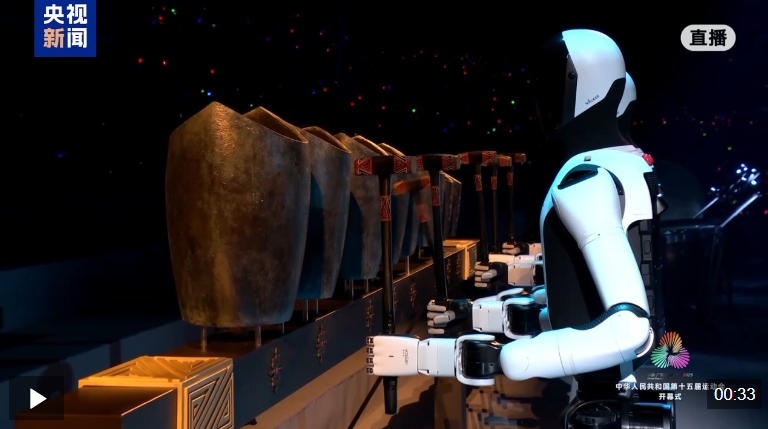
视频丨独家揭秘!十五运开幕式主火炬并非真火焰 机器人敲响的是两千年前的它
Yang Shi Xin Wen Ke Hu Duan· 2025-11-10 06:46
Core Points - The opening ceremony of the 15th National Games showcased a blend of traditional culture and modern technology, highlighting the unique characteristics of the Guangdong-Hong Kong-Macao Greater Bay Area [1][9] - The event featured a synchronized flag-raising ceremony among Guangdong, Hong Kong, and Macao, marking a historic collaboration [9][10] - The use of a robotic arm to play ancient bronze instruments demonstrated the integration of heritage and innovation [1][3] Group 1: Cultural Highlights - The performance included the ancient bronze percussion instrument "Judi," which is significant in the history of Lingnan music and was discovered in the Southern Yue Kingdom [3][7] - Various traditional cultural elements such as Cantonese opera, dragon boat racing, and lion dances were prominently featured, showcasing the rich heritage of the region [9][12] - The "Aoyue" fish, a cultural symbol, was introduced for the first time in a major sports event, representing the transition of the carp to a dragon [9][10] Group 2: Technological Innovations - The main torch of the ceremony was ignited using electric light and water mist, marking the first time a non-flame torch was used in the history of the National Games [9][10] - The integration of digital technology in the performance created an immersive experience, merging ancient sounds with modern robotics [1][7] Group 3: Collaborative Spirit - The event marked the first time Hong Kong and Macao served as co-hosts for the National Games, emphasizing regional unity [9][12] - The ceremony featured iconic landmarks from the Greater Bay Area, symbolizing the interconnectedness and vibrant energy of the region [10][12]

视频丨独家揭秘开幕式四大“名场面”!机器人敲响的竟是两千多年前的它
Yang Shi Xin Wen Ke Hu Duan· 2025-11-10 06:32
Core Viewpoint - The opening ceremony of the 15th National Games showcased a blend of ancient culture and modern technology, highlighting the significance of the bronze percussion instrument "ju zhi" and the collaboration of the Guangdong-Hong Kong-Macao Greater Bay Area [3][4][18]. Group 1: Cultural Significance - The bronze percussion instrument "ju zhi" is a significant representation of Chinese ritual and music culture, marking an important chapter in the history of Lingnan music [4]. - The performance featured a perfect harmony between the ancient instrument and modern robotic technology, creating a powerful auditory experience [6]. Group 2: Technological Integration - The opening ceremony utilized advanced digital technology to sample the sounds of the ancient instrument, enhancing the immersive experience for the audience [3]. - The main torch of the ceremony was ignited using electric energy rather than real flames, marking a historical first for the National Games [15]. Group 3: Regional Collaboration - This edition of the National Games is the first to be co-hosted by Guangdong, Hong Kong, and Macao, with athletes from these regions entering the venue together, symbolizing unity [18]. - Iconic landmarks from the Greater Bay Area were featured during the ceremony, showcasing the vibrant connectivity of the region [18]. Group 4: Artistic Performances - The ceremony included various traditional performances such as lion dances, dragon boat races, and Cantonese opera, emphasizing the rich cultural heritage of the Lingnan region [8][9]. - The inclusion of classic Cantonese songs during the ceremony resonated with the shared memories of the people from Hong Kong, Macao, and the mainland, reinforcing cultural ties [20].

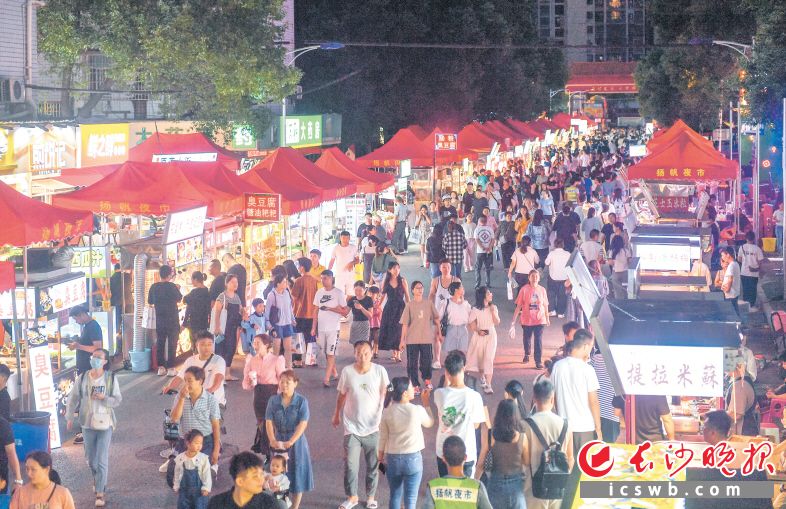
夜间消费带动超100万人就业 长沙连续三年入选“中国城市夜经济影响力十强”
Chang Sha Wan Bao· 2025-10-12 02:35
Core Insights - The night economy in Changsha has become a significant driver of overall commercial revenue, with night-time consumption accounting for 60% of total consumption, leading to over 1 million jobs [2][7] - Changsha has been recognized as one of the top ten cities in China for night economy influence for three consecutive years, indicating a shift from a "internet celebrity" phase to a sustainable "long-lasting ecosystem" [2][8] Group 1: Night Economy Development - The peak consumption period in Changsha is from 6 PM to 2 AM, highlighting the importance of night-time foot traffic for businesses [2] - The city has established a goal to become a "24-hour city," with initiatives such as the first night economy service center in Tianxin District and the cultivation of 10 night economy demonstration districts [7] Group 2: Innovative Consumption Experiences - High-end dining establishments are embracing local flavors, with innovative events like the "Xiangjiang Night" festival at luxury hotels, allowing consumers to enjoy gourmet experiences at affordable prices [3] - Traditional dining venues are also adapting by offering unique experiences, such as themed performances and community-focused food options, enhancing the diversity of the night economy [3][6] Group 3: Cultural and Technological Integration - The integration of technology and culture is evident in events like the Dawang Mountain Starlight Fireworks season, which combines drone displays with cultural themes, attracting significant attention and participation [4][5] - The introduction of smart lighting management along the Xiangjiang River enhances the visual appeal of the city at night, contributing to the overall night economy experience [5] Group 4: Entertainment and Cultural Offerings - The rise of small theaters and immersive cultural experiences, such as the new Chinese-style Xiang opera, is reshaping the entertainment landscape, drawing large audiences and enhancing cultural engagement [6] - Future plans include the development of over 100 unique performance spaces that integrate dining and night tours, promoting local culture and contemporary consumer experiences [6][7] Group 5: Economic Impact and Community Engagement - Major events, such as concerts, have demonstrated the economic impact of night-time activities, with surrounding businesses seeing a boost in revenue, exemplified by a concert that generated over 500 million yuan in tourism consumption [7] - The city's approach to enhancing night economy services reflects a commitment to improving citizen satisfaction and providing a model for other cities to follow [7][8]
北京市属公园迎来秋季赏花潮,40余处赏秋花境亮相
Xin Jing Bao· 2025-09-21 23:05
Core Points - Beijing parks are experiencing a surge in autumn flower viewing, with over 40 small yet beautiful flower displays announced for visitors to enjoy and take photos [1][2] - The displays incorporate various themes and local flora, showcasing the integration of cultural elements and natural beauty [1][2][3] Group 1: Flower Displays - The "Yuan Zhi Chun Hua Qiu Shi" display at Summer Palace combines Jiangnan's seasonal beauty with agricultural culture, featuring local flowers in pink, blue, gold, and white [1][3] - "Golden Wind Letter" at Xiangshan Park features oversized artistic envelopes and postcards, with over 20 seasonal flowers creating a picturesque autumn scene [1][2][4] - "Colorful Star River" at Yuyuantan Park uses 10 colors of threads to create a rainbow effect, attracting many visitors for photos [2][4][7] Group 2: Thematic Elements - The "Ten Thousand Lives" display at Beijing Zoo includes five thematic viewing points representing grains, silkworms, vegetables, fruits, and flowers, designed to create a dynamic landscape [2][3] - "Day and Night Shine on Beijing" at Jingshan Park integrates the distant Wanchun Pavilion with lush greenery, creating a beautiful visual narrative [2][4] - "Autumn Whisper" at Xiangshan Park features a design that evokes romantic autumn sentiments through artistic elements and seasonal flowers [4][7] Group 3: Visitor Experience - Many displays include interactive elements such as photo spots and seating areas, enhancing visitor engagement and experience [2][3][4] - The use of technology, such as AI robots and astronaut figures, adds a modern twist to the traditional garden experience [2][7] - The integration of educational elements, such as QR codes for cultural learning, enhances the cultural significance of the displays [7]

智汇彩云之南 创意驱动未来
人民网-国际频道 原创稿· 2025-09-18 06:50
Group 1 - The Creative Yunnan Cultural Industry Expo (2025) serves as an important platform for showcasing Yunnan's unique cultural resources, creative products, and achievements in cultural industry development [2] - The theme "Intelligent Yunnan, Creative Future" highlights the exhibition's focus on six key areas: film, performing arts, publishing (copyright), cultural creativity, cultural tourism, and "culture + technology" [2] - In 2024, the cultural industry value added in Yunnan Province is expected to exceed 80 billion yuan, with 766 large-scale cultural enterprises established as of mid-year [2] Group 2 - The exhibition emphasizes the empowerment of cultural creativity and the integration of technology, featuring an AI and culture fusion area with immersive interactive experiences [3] - Advanced technologies such as AR/VR, 3D printing, and XR imaging are showcased to illustrate the deep integration of cultural digitalization and creative design with everyday life [3] - The event aims to expand international perspectives and deepen cultural exchanges by leveraging the influence of mainstream media to tell the story of Yunnan to the world [3]
以“青春盛宴”拥抱AI新时代 滨江区政协活动周启幕
Mei Ri Shang Bao· 2025-07-15 03:01
Core Insights - The "Embrace AI New Era, Gather Youth International Binjiang" themed event week has officially launched, showcasing the vibrant energy and contemporary style of the high-tech zone (Binjiang) through various activities such as exhibitions, interactive discussions, open classes, and specialized lectures [1] Group 1: Event Overview - The event features a week-long "Youth Feast" that integrates technological innovation with cultural creativity, highlighting the achievements and services of the Binjiang District [1] - A total of 18 customized service projects were announced, aimed at meeting the specific needs of communities, enterprises, parks, and schools [1] Group 2: Service Offerings - The "Send Culture" initiative includes activities such as youth lectures, voice-over teaching, intangible cultural heritage displays, and calligraphy training [1] - The "Send Education" program features practical activities on harmonious coexistence with nature and plant and meteorology science popularization [1] - The "Send Health" initiative offers traditional Chinese medicine services and psychological counseling [1] - The "Send Law" program includes public legal education, commercial mediation, and business protection lectures [1] - The "Send Technology" initiative presents digital therapy experiences, an AI marketplace, entrepreneurial guidance, and drone driving lectures [1] - The "Send Sports" program features Olympic champions visiting schools and sports training summer camps [1] Group 3: Technology and Cultural Integration - The AI Binjiang Market showcases technology products and intangible cultural heritage skills, with highlights including a mobile experience vehicle featuring AI time restoration, AI perfume creation, and smart robotic dogs [2] - The market also features a traditional craft display of rock color enamel, showcasing the unique charm of precious traditional heritage [2] Group 4: Upcoming Activities - A series of specialized lectures and open classes are scheduled, covering topics such as intellectual property protection, creating quality video content in the AI era, and the integration of silicon-based and carbon-based intelligence [2] - Additional sessions will focus on business mediation, traditional culture, digital finance, and health management, providing practical guidance for enterprise development and healthy living [2]