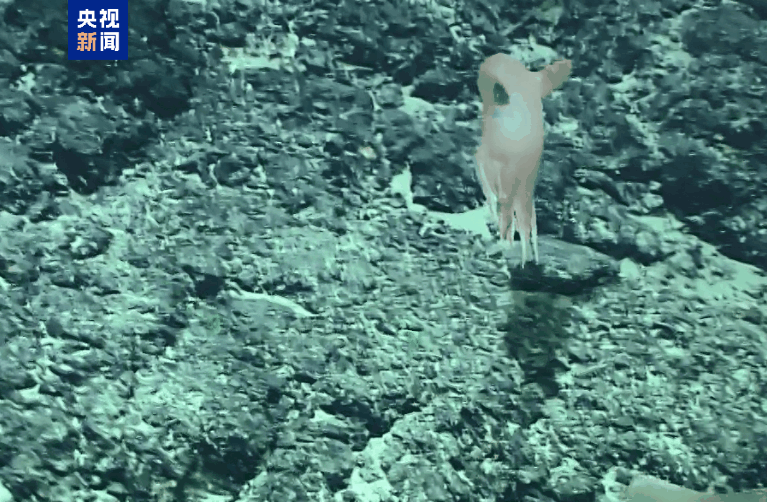
飞天烟灰蛸

Search documents
我国科学家发现深海章鱼新物种
Zhong Guo Zi Ran Zi Yuan Bao· 2025-08-06 02:15
Group 1 - The Chinese Academy of Sciences has discovered and named a new deep-sea octopus species called "Flying Ash Octopus," which was published in the journal "Biodiversity and Evolution" [3] - The new species was found at a depth of 1240 meters in the Caroline Seamount of the western Pacific, measuring approximately 20 centimeters in length, with a translucent orange-red body and soft, gelatinous skin [3] - The name "Flying Ash Octopus" is inspired by the "Flying Apsaras" in Dunhuang murals, reflecting the octopus's graceful movements in water [3] Group 2 - The research team confirmed the taxonomic status of the Ash Octopus genus based on genetic information analysis, providing evidence for its monophyly [4] - The study supports recent taxonomic revisions of the octopus subclass, confirming that the suborder can be divided into two monophyletic groups: the Octopodiformes and the Vampyropoda [4] - The research explores deep-sea octopus adaptation strategies at the mitochondrial genome level, suggesting that deep-sea octopuses may reduce active swimming and lower movement speed to decrease metabolic demands, allowing them to thrive in high-pressure, low-temperature, and hypoxic deep-sea environments [4]

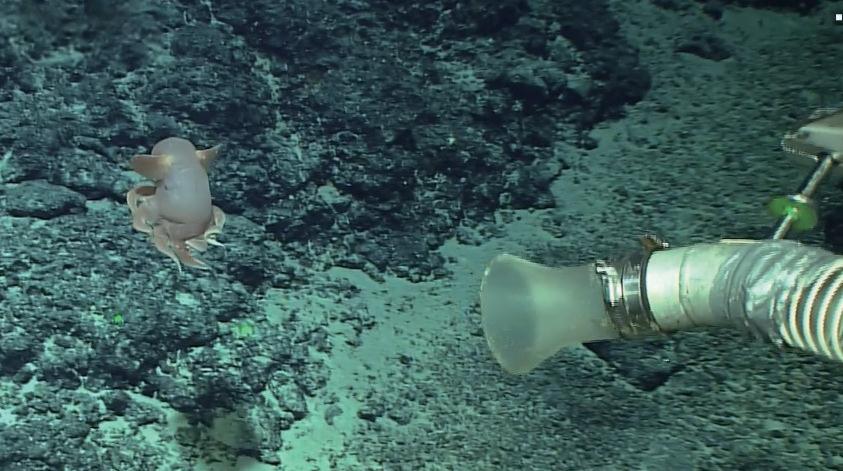
翩翩起舞酷似仙女“飞天” 我国科学家发现罕见深海章鱼新物种
Yang Shi Xin Wen· 2025-07-28 08:47
Core Insights - A new deep-sea octopus species named "Flying Ash Octopus" has been discovered by the Institute of Oceanology, Chinese Academy of Sciences, highlighting the biodiversity in deep-sea environments [1][4] - The research provides evidence supporting the taxonomic classification of the Ash Octopus genus and suggests a revision in the classification of recent octopuses [3][4] Group 1: Discovery and Classification - The Flying Ash Octopus was found at a depth of 1240 meters in the Caroline Seamount of the western Pacific, measuring approximately 20 centimeters in length and exhibiting a translucent orange-red color [1] - The study confirmed the monophyly of the Ash Octopus genus and provided new evidence for the classification of the suborder with two distinct superfamilies [3] Group 2: Adaptation Mechanisms - The research explored the deep-sea adaptation strategies of octopuses, indicating that they may reduce active swimming and lower movement speed to decrease metabolic demands, allowing mitochondrial respiration to function normally [4] - These adaptations enable the octopus to thrive in extreme deep-sea conditions characterized by high pressure, low temperature, and low oxygen [4]